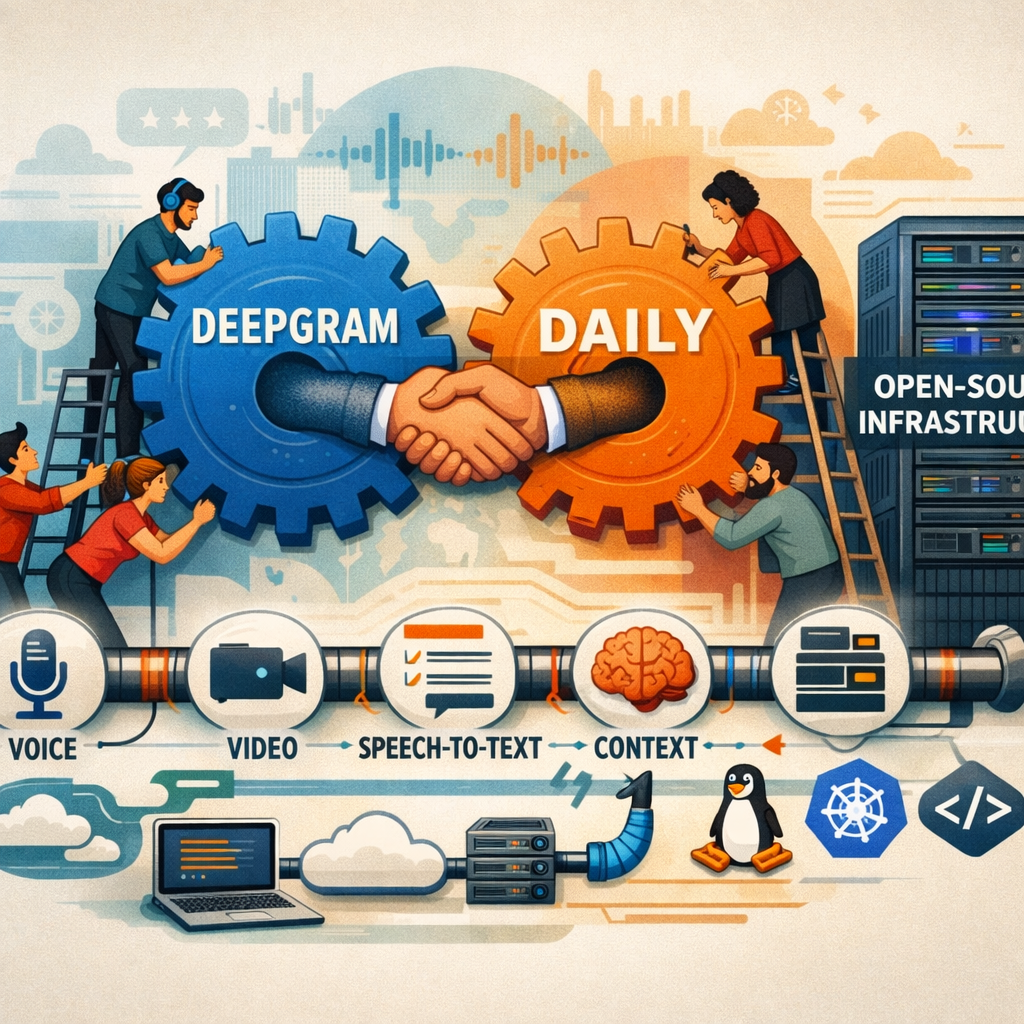
Deepgram has finalized its acquisition of Daily, the company behind the open-source framework Pipecat, in a move meant to sharpen its edge in voice AI infrastructure. The deal terms weren’t disclosed, but Deepgram and Daily both emphasized their commitment to keeping Pipecat open-source.
Pipecat is a system designed to manage workflows involving voice and video streaming along with tools like speech-to-text, text-to-speech, and large language models — all while aiming to cut down latency. Daily’s hosted services already support voice and video communication at scale; the acquisition gives Deepgram direct access to that infrastructure.
Background & Strategic Fit
Daily, founded in 2016, has raised over $62 million from investors such as Tiger Global and Nat Friedman. Deepgram, which itself became a unicorn earlier in 2026 following a $130 million Series C round, shares a history with Daily: both startups went through the same Y Combinator batch. These shared roots likely smoothed the deal and aligned culture.
According to Daily co-founder Kwindla Kramer, Pipecat emerged from the company’s experimentation after GPT-4, when they started exploring ways for AI to work with humans via voice and text. Daily viewed the engineering culture and long-term open-source commitment from Deepgram’s leadership—particularly CEO Scott Stephenson—as deciding factors in agreeing to the acquisition.
Open Source, Real-Time, and What Comes Next
Deepgram sees Pipecat as a key to building more expressive, end-to-end voice agents. Its architecture allows plugging in different models, using a context bus to connect all parts of the stack. With the acquisition, Deepgram is also launching the Real-Time Context Standard (RCS), an open protocol co-developed with the Pipecat team. RCS captures metadata from audio—like whispers or environmental cues—and gives models instructions on how to respond, including style and content.
While voice AI models like those from ElevenLabs and Gradium have gotten attention (and funding), there’s also growing demand for infrastructure that delivers low latency, real-time performance. Deepgram now has enhanced capabilities across voice, video, model orchestration, and agent frameworks. The acquisition also opens doors for Deepgram to move beyond just voice, as Pipecat already supports real-time communication in varied formats.
What this means is that Deepgram is doubling down on open voice AI, aiming to not only deliver improved latency, flexibility, and developer tooling, but also to shape standards like RCS in a way that benefit a wider ecosystem. The company’s approach is that open-source and vendor neutrality aren’t just values—they’re competitive advantages.
That said, some questions remain: how broadly Pipecat will be adopted outside Deepgram’s existing customer base, how the new standard will fare against proprietary protocols, and whether Deepgram’s own models can match up in areas where partners may still outperform. What’s clear is this acquisition signals a new phase of investment in infrastructure, tooling, and openness in voice AI.