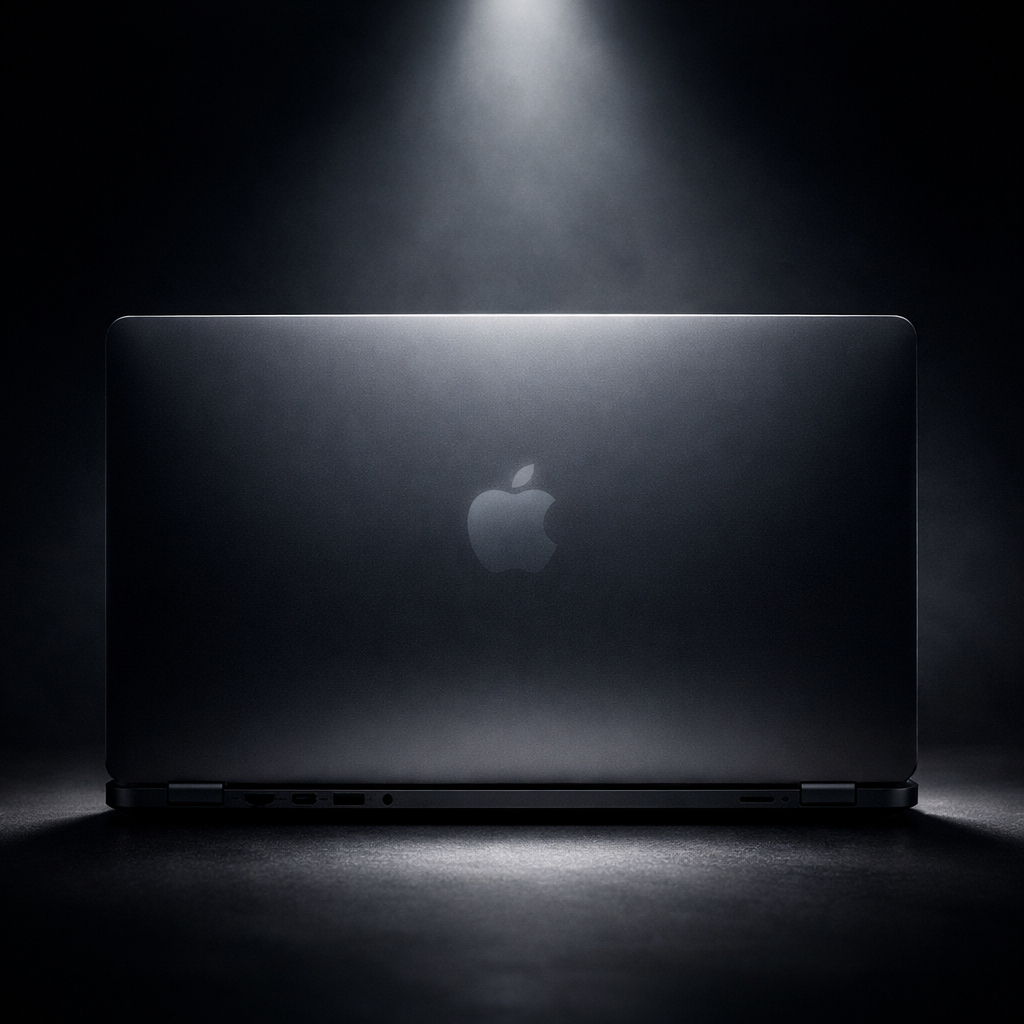
Apple may be preparing to bring back one of its most iconic design features on the next MacBook Pro. A recent video posted by Mac hardware chief John Ternus’ social media team showcases what appears to be the rear chassis of a MacBook Pro, complete with a spotlight sweeping upward before the footage fades to a blank wall. The visual, in classic teaser fashion, is being read by many as a signal that the glowing Apple logo could return.
Visual Clues Spark Logo Revival Speculation
The brief clip doesn’t explicitly show the glowing logo, but the setting—the back of a laptop under stage lighting—feels familiar to older MacBook designs where the illuminated emblem was front and center. With Apple having removed that feature in recent models, enthusiasts see this as a strong hint that the next MacBook Pro might revive it.
Context matters: previous leaks have hinted at a significant refresh of the MacBook Pro lineup, including OLED displays and potentially touchscreen integration. The teaser aligns tightly with those rumors, reinforcing ideas that not only hardware design but also display technology may be getting a makeover.
Why the Glowing Logo Matters
The glowing Apple logo isn’t just branding—it was an aesthetic signature during the pre-Retina and early Retina eras of MacBook Pro. Its return could signal a broader design philosophy shift, possibly that Apple is more willing to embrace visual flair now that performance and battery life have caught up. In recent years, the logo was removed to allow for thinner screens, better power efficiency, or to reduce distractions. Its comeback would mark a return to nostalgia as well as a marketing opportunity.
While Apple has yet to confirm anything, this tease raises expectations for a MacBook Pro announcement—perhaps soon. Given typical Apple product cycles, a launch tied to the holiday season wouldn’t be surprising.
What this means is that Apple might be blending the old and the new: iconic design cues meets modern hardware. If the glowing logo returns, it may reflect greater confidence in display and chassis innovations, and could set design trends for high-end laptops broadly. It’s a reminder that companies can refresh not just what’s inside their products, but how they look—and why that still matters in consumer tech.