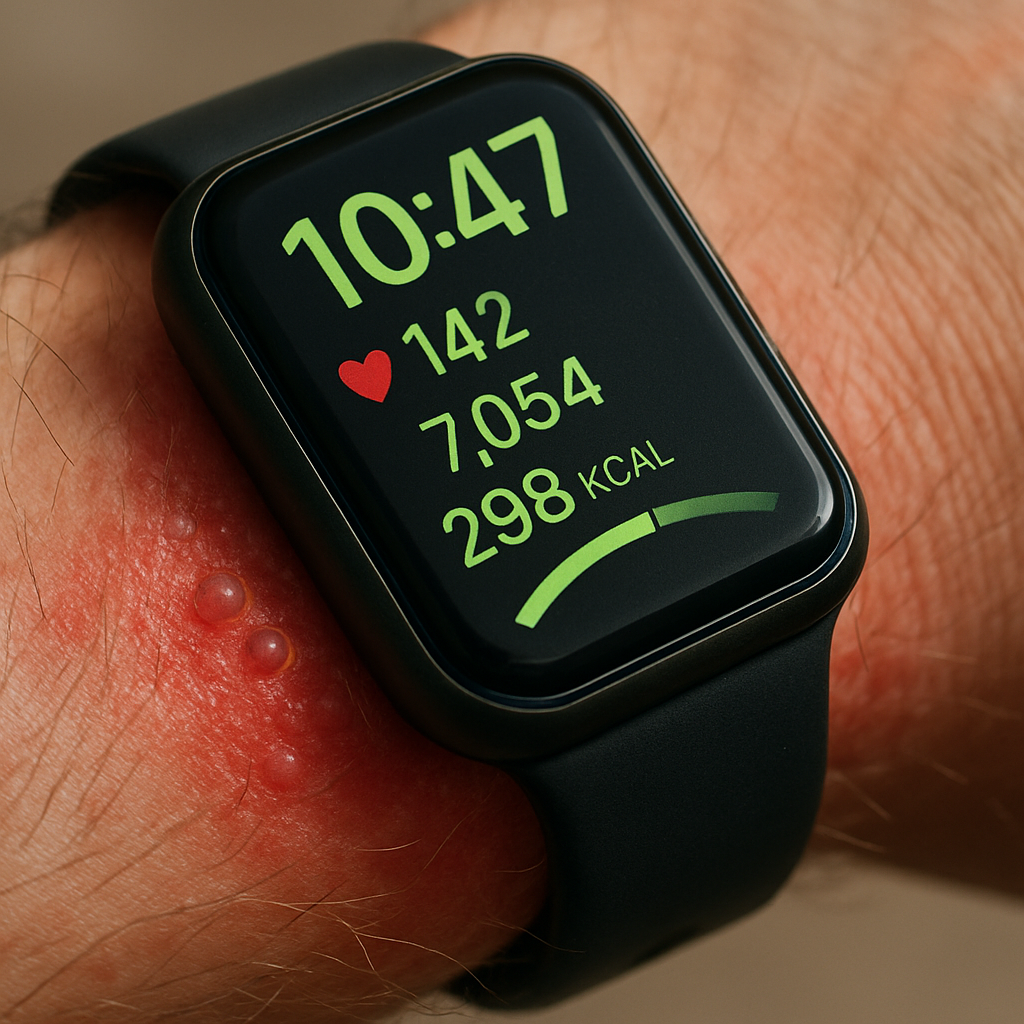
A Galaxy Watch 5 Pro user has reported severe skin burns and blisters after wearing the watch overnight under what appears to be normal use. The incident was shared in a Reddit post and brought to wider attention by Android tech outlets, showing red marks and open blisters on the wearer’s arm. What distinguishes this from typical irritation is that this reaction reportedly occurred without any known trigger beyond routine wear.
The user said they went to bed with the watch fully charged; by morning, not only had the 590mAh battery fully depleted, but the watch wouldn’t turn back on. The combination of a dead battery and visible burn marks suggests the device ran hot enough overnight to damage the wearer’s skin.
Other Samsung Devices Have Seen Similar Issues
This isn’t an isolated occurrence. Past reports point to battery and overheating problems across several Samsung wearables. Users of the Galaxy Watch Ultra, Watch Ultra 2, Galaxy Watch 8, and even the Galaxy Ring have expressed concerns of either overheating or discomfort—though in most cases without actual burns. In comparison, this latest Watch 5 Pro case seems more serious, with skin damage beyond simple irritation or dermatitis.
Typically, Samsung’s wearables have been considered safe, and several reviews over the years have found no overheating events that resulted in visible skin harm. While skin redness and irritation—often classified as contact dermatitis—aren’t uncommon, they usually fade without lasting damage. The recent Watch 5 Pro incident, however, includes blistering, which users say is more serious than the usual complaints.
Possible Causes and Unknowns
The user’s report raises questions. How did the battery drain so thoroughly through the night? Was the watch running a heavy workload? Or did the device encounter a fault—whether in battery hardware, firmware, or external condition? The user believes neither choice of strap nor skin condition explains the severity. Since the device would not power back on, evidence that something failed internally is strong.
Sensors, processor loads, or misbehaving software could all contribute to overheating. Long battery drain is often accompanied by high power draw—whether from task scheduling, network use, display inhibitors, or unforeseen software glitches. But without detailed diagnostic logs, it’s difficult to pinpoint cause.
What Samsung Could Do, and What Users Should Know
Samsung would likely need to review this incident for potential recall or software patch. If this problem becomes more common, it could become a safety hazard. Meanwhile, users should monitor wearables overnight—unusual heat, swelling, or skin marks are warnings. Ensuring straps are clean, fitting correctly, and that the watch isn’t exposed to direct sources of heat may help avoid risks.
From a broader perspective, devices with lithium-ion batteries running through a full discharge while seemingly idle over many hours are handling more than just low-power states. If hardware, firmware, or their interaction mismanages state transitions like sleep or powered-off screens, devices can draw unexpected power and generate heat.
Risk aside, Samsung’s wearables still offer strong value. But this incident underscores a growing concern: smartwatches are not just accessories—they carry real risk when anything goes wrong. Users and manufacturers must treat comfort and safety with the same priority as features and battery life. Moving forward, customers will be watching closely for both acknowledgments and solutions.