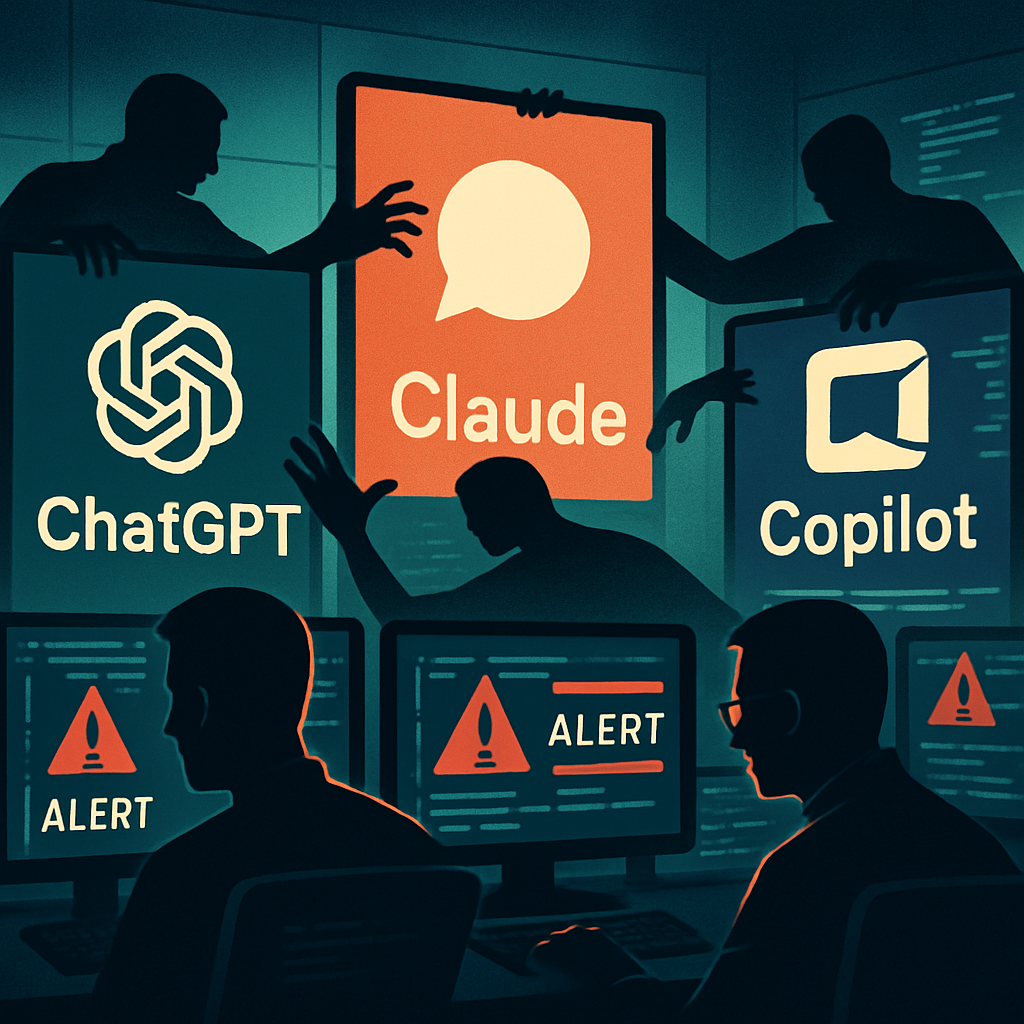
US-based companies are facing a growing wave of AI-themed scams where attackers impersonate trusted AI platforms to distribute malware, steal credentials, and compromise browser sessions. From April to October 2026, nearly 1,300 sandbox analyses were linked to campaigns masquerading as services like Claude, ChatGPT, GitHub Copilot, and Gemini. These fake-AI attacks now make up 16% of all incidents aimed at US organizations. #Security News has the details.
How These AI Impersonation Scams Work
Attackers craft facades using familiar AI brands to trick employees. Threat actors lure victims through fake sponsored search results, counterfeit download pages, shared AI conversation interfaces, and misleading authentication portals. One detailed example showed a “Claude” installation page. It urged users to download a file via Windows, but after following the directions, they actually launched a malicious chain. The commands triggered legitimate Windows tools like PowerShell, mshta.exe, and encoded HTA files—making detection by static tools extremely challenging.
These campaigns are particularly troublesome for managed security service providers (MSSPs) because indicators such as malicious domains or fake downloads change constantly. Though the underlying behavior—encoded payloads, impersonated brands, collection of credentials—stays consistent, the surface signs shift. This makes it hard to spot similarities across clients without robust detection systems.
The Strains on MSSPs and How They’re Coping
MSSPs are feeling operational pressure in at least three interconnected ways: detection and monitoring, triage and escalation, and threat hunting. High rotation in domain names and infrastructures stretches monitoring capabilities. Escalation pathways swell when ambiguous alerts must be aggressively escalated. And without threat intelligence reuse, every new variant requires explorers to rediscover attack infrastructure repeatedly.
Security operations centers led by MSSPs currently manage metrics like mean time to detect (MTTD), mean time to respond (MTTR), escalation rates, investigation costs, and service level agreement (SLA) compliance. The rise in fake AI attacks is driving up these numbers. Analysts are increasingly burdened by non-actionable alerts until the full attack chain becomes visible in behavioral analysis environments.
Tools and Tactics to Fight Back
Behavioral investigation tools, such as interactive sandboxing, help MSSPs reduce uncertainty. These environments simulate risky user actions—like clicking a fake download link—to observe hidden activity, including script executions or encoded file loads. This lets Tier 1 analysts decide whether a case is benign, requires escalation, or can be closed without senior involvement—saving time and freeing up resources.
Threat intelligence (TI) feeds are also pivotal. By gathering indicators of compromise (IOCs) from real incidents—such as suspicious PowerShell commands, usage of mshta.exe, encoded downloads, or browser-launching tasks—MSSPs can stitch together patterns across campaigns. Unique indicators, domain relationships, and infrastructure mappings are shared and used to both detect ongoing variants and hunt for related activity in their client base.
Real Impacts from Better Tools
Organizations using sandbox + TI integrations report meaningful performance gains. Detection rates rise by roughly 36% while analysts identify up to 58% more threats in early stages. In investigations, response times decrease by about 21 minutes on average, and escalation from junior (Tier 1) staff to senior (Tier 2) is reduced by approximately 30%. These improvements help preserve SLA compliance and allow senior analysts to focus on the most complex attacks.
Altogether, the operational impact comes down to two things: efficiency and consistency. Intelligent triage based on observable behavior—rather than relying on static indicators alone—enables MSSPs to scale defenses without proportionally increasing headcount or costs.
Fake AI campaigns are proving that attackers can leverage beloved brand names and trusted software delivery channels to sow confusion inside companies. Detection tools that work across environments, threat intelligence that is timely and unique, and strong threat hunting practices are becoming essential.
Going forward, MSSPs must put special focus on correlation across customers: when one environment is hit, there’s a high chance others are vulnerable to the same tricks. Building detection models that lean heavily on behavior—such as PowerShell misuse, browser session theft, or scheduled tasks running unexpected code—can help surface campaigns before major breach events occur.