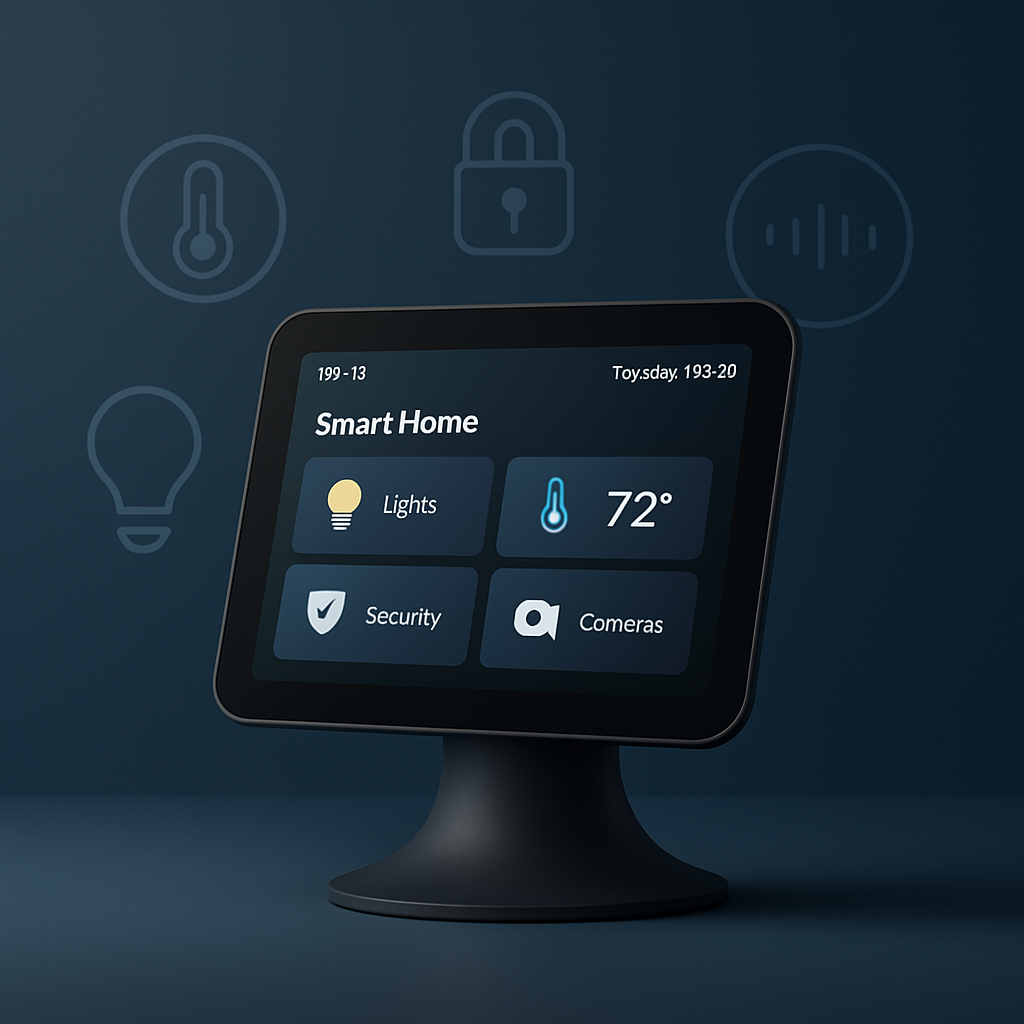
Google’s Nest Hub hasn’t seen any major updates in nearly half a decade, even as the smart home display category has continued to evolve. When the original Google Home Hub launched in 2018—later rebranded as Nest Hub—it introduced visual responses to voice commands, video streaming, camera feeds, and other features beyond what smart speakers offered. A second-gen Nest Hub and a larger Hub Max followed, but since then, the line has been largely static.
While the hardware design has remained mostly unchanged, Google did perform a stealthy overhaul behind the scenes. The operating system was swapped out quietly, and under the hood, Gemini was integrated into smart display functions much as it has been on smart speakers. Still, none of this has translated into standout new features or performance upgrades visible to most users.
Competition Is Moving
Meanwhile, rivals have pressed ahead. Amazon keeps pushing new form factors with its Echo Show line—including a 15-inch model that runs Fire TV software. Apple has lately joined the fray with “Homeview”—a seven-inch display with an iMac-style stand that also mounts to walls. It supports familiar capabilities: voice-based visual responses, recognizing different users—features first introduced by Google with the Nest Hub and Hub Max—but offers speed, display quality, and polish that seem designed to highlight Google’s lag.
Where Google Is (and Isn’t) at Work
Google has not figured prominently in rumors surrounding a new Hub, though there are hints of something on the horizon. “Google Home Display” appeared in code earlier this year—possibly signaling plans for a successor—but no full product announcement has materialized. Users have suggested improvements like detachable displays (similar to the Pixel Tablet), better screen quality, and smoother performance.
Its smart home strategy has progressed in other areas: the revamped Home app, more robust support for third-party devices, the Nest Cam refresh, and Gemini’s ability to handle more knowledge-based requests. Google Home chief Anish Kattukaran last year described smart displays as “the ultimate form factor” for the smart home. Still, it’s Apple—not Google—that delivered a major new display product in this space first.
For users, the Nest Hub still handles essentials: smart home controls, timers, casting video, responding visually to voice commands, and on the Hub Max, acting also as a security cam. Although reliable, these basics haven’t significantly changed in years.
The silence around a new Nest Hub is notable not because the current model fails, but because the market has matured—and Google’s rivals are launching more polished alternatives. As smart displays become a key category for integrating home, entertainment, and voice AI, not updating hardware risks losing ground. If Google wants to keep its lead in utility and ecosystem integration, now is the time to deliver. Products named in code or teased in developer tools won’t cut it when competitors are shipping real, tangible alternatives. Watch for what Google does next—whether that’s a true second-generation device or something entirely new to redefine what a smart display can do.