Apple’s newly announced HomeView hub, starting at $299, has drawn attention not just for its smart home capabilities but for how it chooses to mount — or rather, fails to offer compatibility with the widely used VESA standard. With no industry-standard screw-holes on its rear panel, the device limits mounting flexibility until third-party accessories arrive.
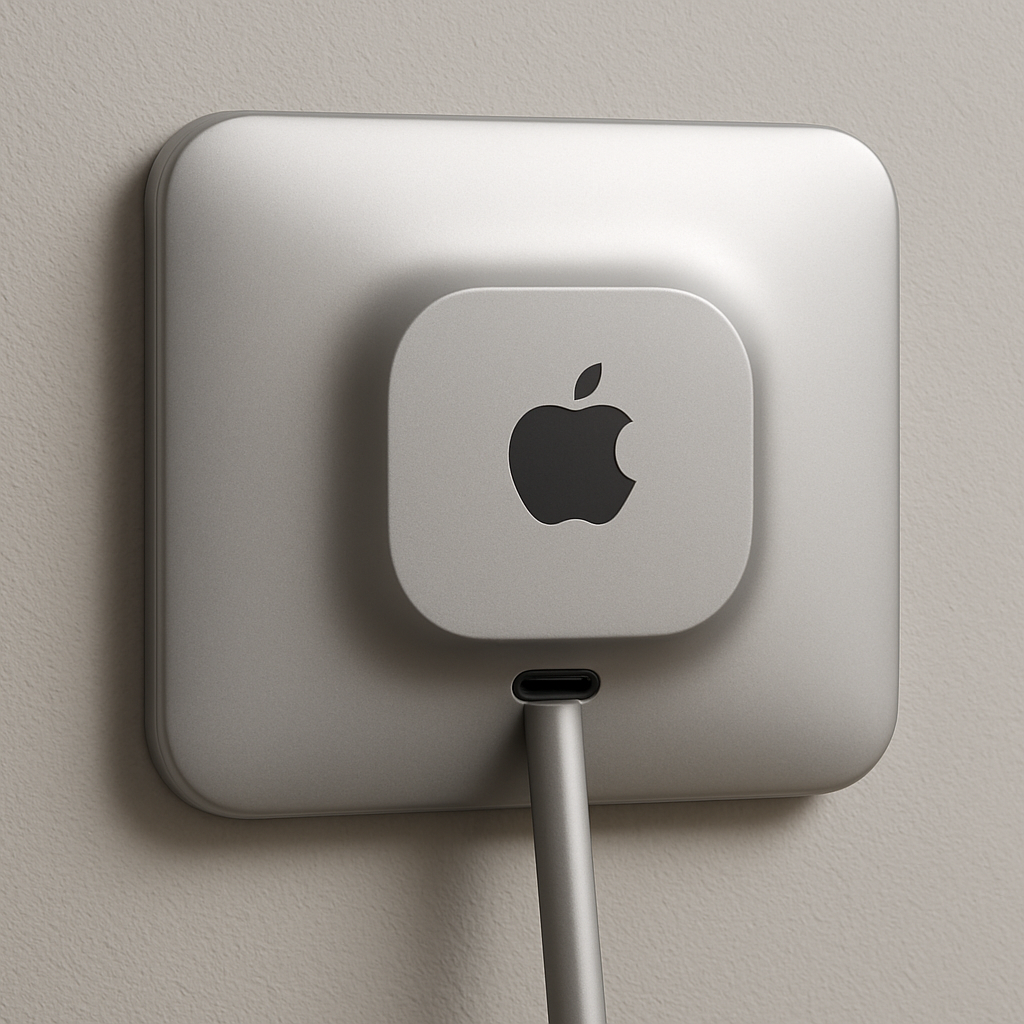
The HomeView is sold with different mounting options. Buyers can go with the standard setup that includes a stand-speaker hybrid, or choose the version intended for wall mounting. The latter offers two official mounting accessories: a $59.95 “Power Mount” which plugs into a nearby outlet, and a $79.95 hardwired option that installs directly into the home’s electrical system. Both mounts have been developed in partnership with Schneider Home.
No VESA, No Versatility
Despite its wall-mounted variant, the HomeView doesn’t ship with VESA-compatible holes or mounting pattern. The back includes a USB-C port and a small bump apparently intended for a custom mounting solution, but not for traditional mounts. Customers hoping to use existing VESA arms, brackets, or multi-mount setups will find none of that supported directly.
Apple does plan to add a hardwired Power over Ethernet (PoE) mount priced at $129.95 in the future, which would also give the HomeView wired internet. However, this doesn’t change the lack of VESA support — it’s another proprietary mount rather than a bridge to the standard.
Why It Matters
VESA (Video Electronics Standards Association) mounts are common across monitors, displays, and device enclosures, enabling versatility in storage, positioning, and aesthetics. Without it, HomeView users are squarely tied to Apple or Schneider’s mounting hardware—or must wait for third-party solutions that adapt to Apple’s proprietary design.
For many, this design choice represents more than a minor inconvenience: it touches on user autonomy, ecosystem lock-in, and accessory cost. Opting out of a standard like VESA increases dependence on brand-specific enclosures—typically more expensive and slower to come.
Apple worked its partner Schneider Home on the existing wall-mount hardware, both for power-supplied and hardwired setups. But without VESA support, customers who want to mount HomeView outside of the officially offered accessories are out of luck for now.
What this means:Unless you have one of Apple’s mounts or Schneider-made hardware, mounting HomeView on your own terms is off the table for now. It’s a strategic decision that could frustrate users who prefer flexibility or already invested in VESA-based mounts. Moving forward, watch for any announcement on third-party VESA adapters—or for Apple possibly shifting stance if demand pushes back hard.