Google is preparing a next-generation version of its Google TV Streamer, bringing major upgrades including built-in microphones, presence detection, and more storage and power. The new device keeps the overall look of the current streamer, but adopts a slimmer, narrower profile while adding new hardware features to improve user experience.
What’s Changing in Hardware
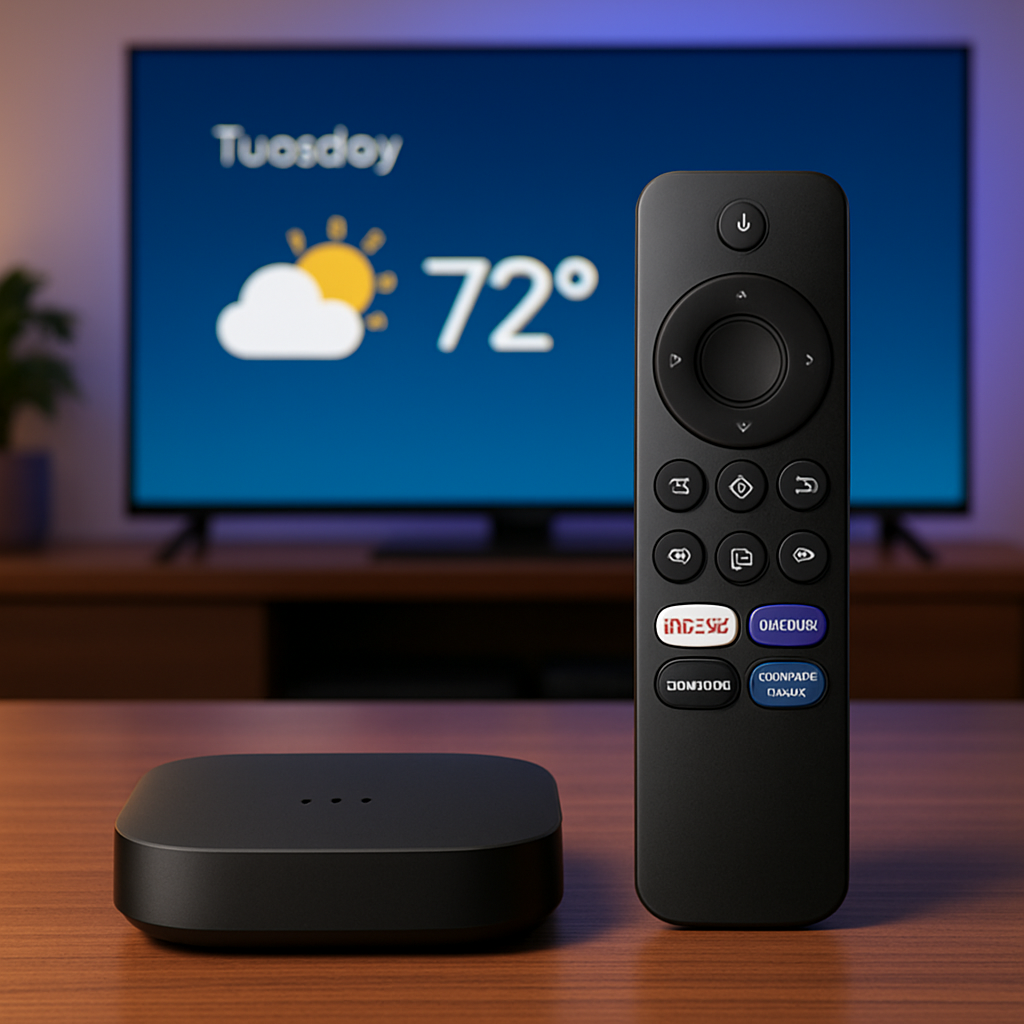
The standout update is that the streamer itself gains microphones embedded in a slanted, pill-shaped surface. These mic cutouts enable “Hey Google” voice commands directly from the device—a shift from relying solely on the remote or external mics. Alongside this, Google is integrating presence sensing: the streamer will detect when someone walks into the room and trigger visuals like ambient info (time, weather) or a Google Photos screensaver automatically.
Internally, the upgrades continue. The new device will use a faster processor and offer more storage than the current model’s 32 GB, addressing performance and space complaints. The remote, meanwhile, retains its recognizable shape and much of its button layout, but adds two extra shortcut buttons to join the existing YouTube and Netflix keys. The familiar Find My Remote feature remains on the back.
Timing, Price, and What to Watch
No official release date is yet confirmed. This renewal follows a four -year interval between the 4K Chromecast with Google TV and the first Google TV Streamer, though Google added a lower-end HD dongle in the interim. The refresh comes shortly after Google increased the price of the current streamer by $50 in August, potentially foreshadowing pricing pressures on the upcoming model.
These enhancements show Google pushing to close gaps with rival streamers that already offer voice control, smart sensors, and more storage. For users, the voice-activation built in to the device itself could streamline navigation and reduce dependence on the remote. Improved storage and compute power should also help with smoother performance and future-proofing software updates.
Watch for official announcements on pricing, availability, and regional rollout. Software features tied to the new hardware—especially presence sensing and on-device voice recognition—may depend heavily on firmware updates and partnerships with content providers.
Why this matters: This is more than just a spec bump. By embedding microphones and presence sensors, Google is turning the TV streamer into a more autonomous, context-aware device. As smart home and entertainment systems evolve, features like voice control and ambient awareness are becoming expectations, not extras. If Google nails the execution, the next-gen streamer could reset competitive standards in streaming hardware—assuming consumers are willing to absorb any price increase.