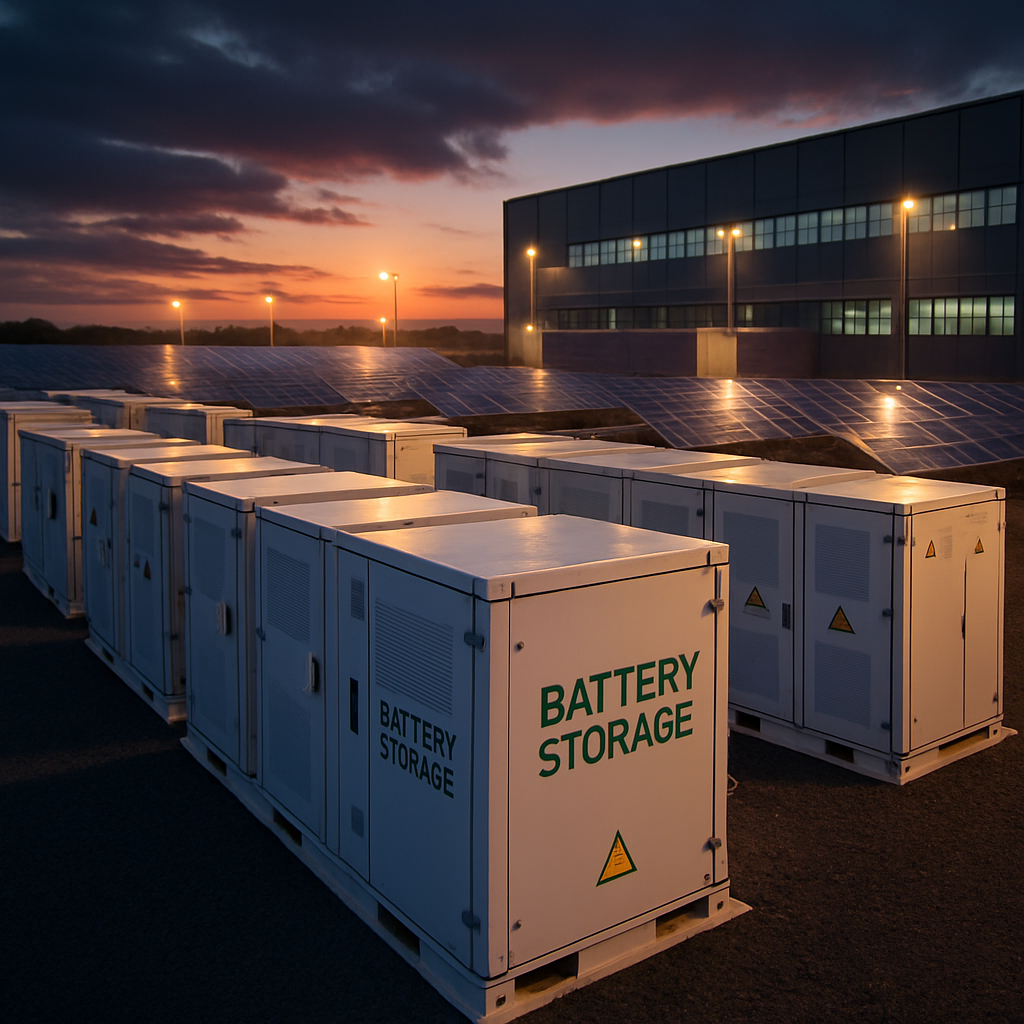
New analysis from Wood Mackenzie reveals that four-hour battery storage systems are now less costly than open-cycle natural gas turbines in all 43 global markets where the two have been compared. For data center developers—who often rely on gas turbines for peaker power—this marks a turning point in energy economics. The levelized cost of electricity (LCOE) from batteries is falling, while the costs tied to natural gas plants are ticking upward.
Why Batteries Are Winning
Several forces are reshaping the cost dynamics. On the battery side, scaling up manufacturing, improving materials, and technology gains are pushing down both capital and operational costs. On the flip side, open-cycle gas turbines—valued for their simplicity and peaker functionality—are facing rising supply chain delays, fuel price volatility, and longer procurement times. In many regions, the wait for a gas turbine has stretched to two to four years, and closed-cycle turbine orders are backed up into the early 2030s.
Regional Snapshot: Middle East, Africa, U.S.
In the Middle East and Africa, battery storage costs are forecast to drop from about US$120 per megawatt-hour to roughly US$80/MWh by 2035. That decline would make batteries systematically cheaper than gas peaking across every gas market in the region. Solar, meanwhile, already leads as the least expensive form of new electricity in that area.
China stands out globally with energy storage costs currently over 55% below the Asia-Pacific average, reflecting advantages in manufacturing scale and local supply chains.
In the U.S., the trend holds but is complicated by policy and trade friction. State-level carbon pricing, import tariffs, and restrictions on solar equipment are pushing up component and module costs. Still, for projects starting operations in 2026, four-hour battery storage is estimated to be 65%-75% cheaper than new open-cycle gas turbine peakers. A large portion of utility-scale solar in the U.S.—about 168 GW—benefits from “safe harbor” protections under federal laws, insulating these projects somewhat from near-term cost increases.
Solar PV using single-axis trackers appears as the cheapest new-build generation option in 43 of 48 markets modeled in Wood Mackenzie’s study, with onshore wind leading in the remaining five.
Data centers, notorious for their electricity demands, have played a pivotal role in accelerating these shifts. As demand grows, the pressure on utilities and manufacturers raises the cost of gas turbines and fuels, making alternatives like battery storage more attractive.
Meanwhile, the narrowing gap between cost of battery storage and cost of new gas peakers is altering investment strategies. Regions with favorable solar and wind resources increasingly view batteries not just as backup or peaking sources, but as central parts of new generation portfolios.
What this means: The cheapest electricity source globally is no longer dominated by fossil fuel peaker plants. Batteries and renewables are becoming the financial frontrunners in market after market.
Analytical angle:This is more than just a cost comparison—it’s a signal that the grid-edge is shifting. For data center operators, utilities, and investors, planning that still relies on natural gas peakers risks locking in higher costs and stranded assets. The accelerating descent in battery storage costs, coupled with the rising political, logistical, and supply chain hurdles facing gas infrastructure, suggests that the real competition going forward will be between different forms of renewable plus storage systems—not between fossil or non-fossil. Watch how regulatory policies—import tariffs, carbon pricing, and incentives—shape not just where batteries win, but how fast they scale.