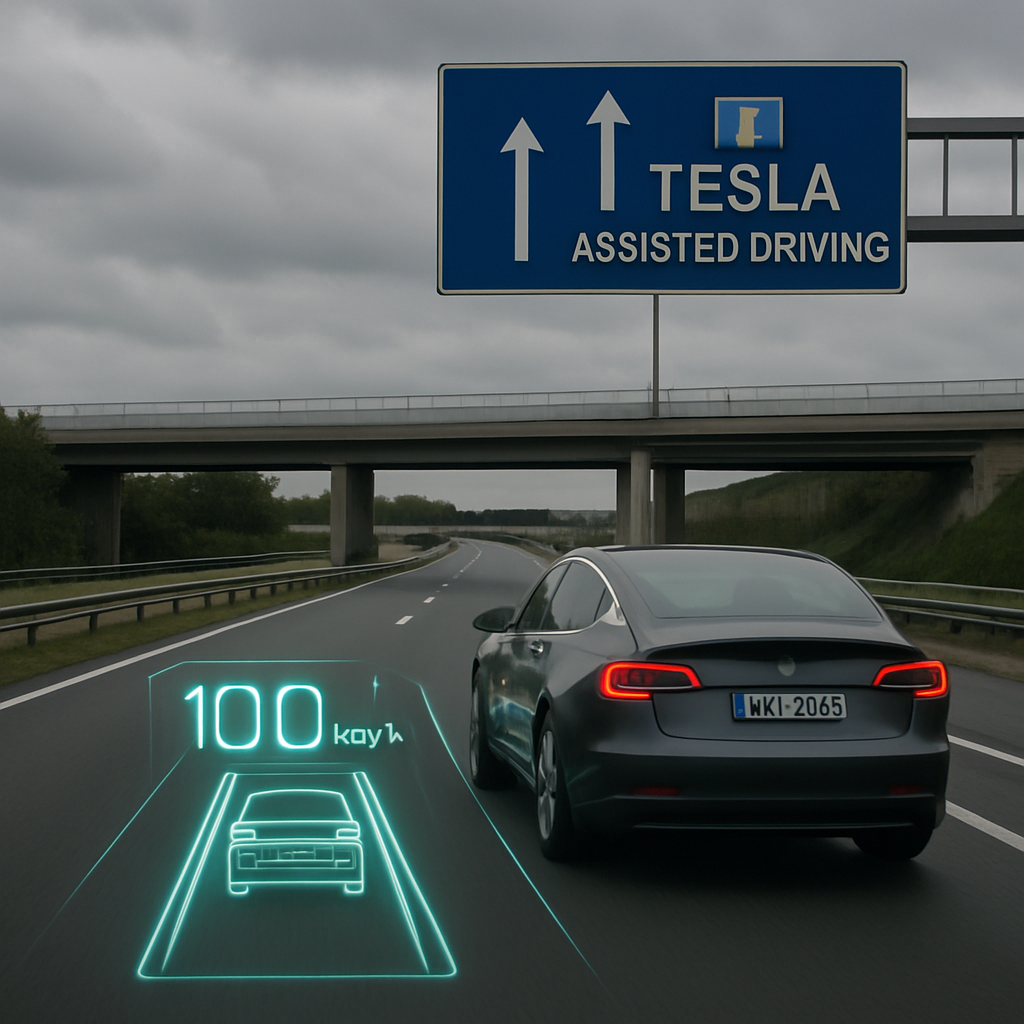
Tesla has officially replaced its “Full Self-Driving (Supervised)” label in Europe with “Tesla Assisted Driving” following objections from Germany’s transport ministry. The renaming reflects pushback over the earlier term, which critics argued exaggerated the system’s capabilities. The new name aims to satisfy regulators without altering the underlying technology or its current operating demands.
Regulatory Clash Over Terminology
Germany’s transport minister, Steffen Bilger, expressed concerns that the name “Full Self-Driving” gave the wrong impression, since the system doesn’t fully automate driving and still requires human oversight. Bilger met with Tesla last month, after which the company proposed the name change. He now intends to push for the adoption of “Tesla Assisted Driving” throughout Europe ahead of a vote in the European Union later this year.
CEO Elon Musk acknowledged Bilger’s concerns publicly. Musk had long pushed for approval of the “Full Self-Driving (Supervised)” system in Europe, arguing it would enhance safety for both vehicle occupants and vulnerable road users such as pedestrians and cyclists. Over time, Tesla has expanded what the system can do — from basic lane-holding and adaptive cruise control to tasks such as navigating surface roads, handling parking maneuvers, and even intervening in some situations to avoid collisions.
Safety Record and Legal Risks Remain in Focus
While Tesla has evolved the technology behind its driver-assistance software, it continues to face regulatory scrutiny and legal challenges. The earlier brand, “Autopilot,” was discontinued earlier this year following a court decision that ruled Tesla had misled customers about what its systems could do. That legal ruling helped set the stage for questions about the appropriateness of using terms like “Full Self-Driving.”
The Netherlands recently became the first European country to officially approve the system under its former name. Still, reports from local regulators suggested that some of Tesla’s safety research and studies influencing the approval process were viewed as flawed or subject to substantial criticism.
What the System Truly Is
The technology retains its current design: even with the most advanced driver-aid modes, a human must always stay alert, ready to take over. Tesla’s system now permits automated parking maneuvers and navigation across a range of road types. Additionally, there are emergency overrides wherein the software can intervene to prevent collisions, whether or not Tesla Assisted Driving is fully engaged.
It’s important to note that this rebranding doesn’t alter safety features, legal responsibility, hardware, or how drivers are expected to operate the system. Tesla isn’t introducing autonomy; it’s shifting how it describes the existing system under European laws that demand transparency and accurate representations.
Keeping consumers, regulators, and courts satisfied may rest more on precise rules than on marketing language. Tesla’s move shines a light on how terminology can influence regulatory acceptance, public perception, and legal accountability.
Analytical take: This renaming is more than semantics. In the current regulatory climate — especially in the EU, where transparency and consumer protection are central — how you label advanced driver-assistance systems and where you draw the line between human control and machine autonomy can mean the difference between legal acceptance and liability. Moving forward, manufacturers will need to not just prove technical safety, but align naming, marketing, and operation with regulators’ expectations. For Tesla, this change could ease the path toward broader European adoption — but it’s still beholden to strict oversight and likely further changes as rules tighten.