A new strain of Windows-based infostealer known as Warden Stealer is rapidly gaining traction among cybercriminal circles thanks to a flexible delivery model that includes modified CAPTCHA pages, malvertising, cracked software, and fake game cheats. Launched as a malware-as-a-service operation, it allows operators to customize builds, pick targets, and use their own command-and-control infrastructure.
Delivery Channels: Social Engineering & Pirated Tools
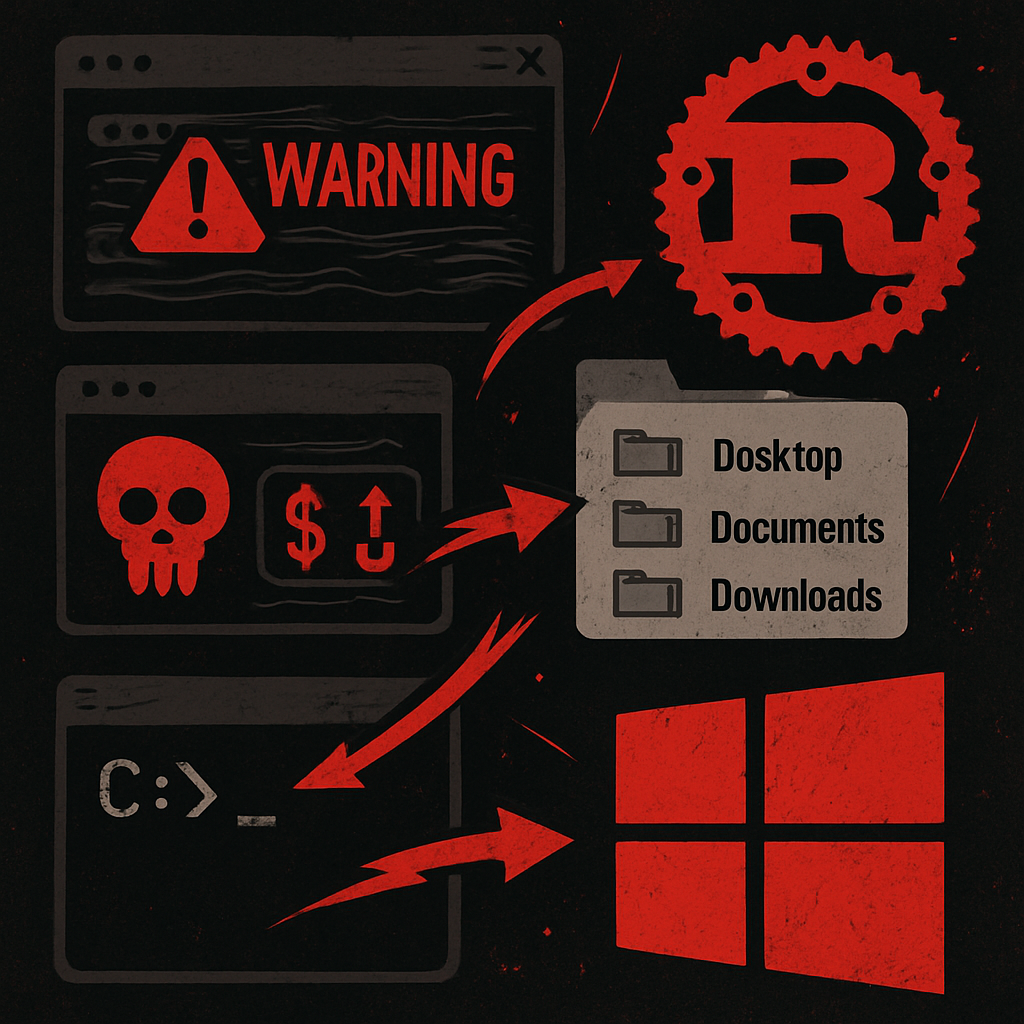
One of the primary infection vectors for Warden Stealer is a scheme dubbed “ClickFix.” Victims are directed through fake browser verification pages—CAPTCHAs or Cloudflare-style checks—that prompt them to copy and run a command. That innocuous-looking action quietly pulls in the loader, which then kickstarts the attack chain. This approach leverages human trust in site prompts and often evades static-download security filters.
Other infection routes include malvertising—where poisoned search results lead users to sites offering fake updates, tools, or utilities—and downloads of cracked software. Those expecting warning dialogs, password-protected archives, or even instructions to disable antivirus, may find malware nestled in what seems to be game cheats or utility mods.
Stealth & Theft: Loader, Payload, AI Agent Exploitation
Built in Rust, Warden Stealer is engineered for stealth. Each build is heavily obfuscated, with distinct loader behavior and frequent sample churn, making analysis and detection tough. The loader stores encrypted payloads in memory, reconstructs them, decodes them using custom base64-like encodings, and decompresses before injecting into running Windows processes—often the shell, sometimes background names like msiexec.exe or dllhost.exe. It also checks for virtual machines or sandbox environments and halts certain operations if detected.
Once active, the malware grabs browser data (especially from Chromium and Gecko families), cookie stores, credentials, and cryptocurrency wallet extensions. A standout feature is its attempt to bypass Chromium Application-Bound Encryption (ABE): it searches for master keys in browser memory and uses them to decrypt protected browser data. It also targets AI assistants—tools like Claude, Codex, Grok, and Cursor—seeking project context, saved credentials, tokens, and chat databases. Additionally, it supports downloading additional payloads via legitimate tools like certutil.exe, allowing the attacker to deploy more malware following initial infection.
Origins, Scope, & Indicators
Warden Stealer first appeared in early May 2026, with public promotion by its creators beginning around August. It’s now considered among the most common credential stealers detected alongside families like Vidar, Amatera, and Remus.
Detected indicators include a set of SHA-256 hashes tied to both loader and stealer builds, and dozens of command-and-control (C2) domains used to manage infections. Those domains carry suspicious names and extensions—some designed to look like legitimate file portals or software services.
Mitigation & Response Steps
Organizations are urged to block identified domains, search for known file hashes, and review any systems where users entered clipboard-pasted commands following CAPTCHA or verification prompts. Security teams should watch for unusual certutil.exe activity, unanticipated process injection events, use of Windows APIs like CreateRemoteThread, and behaviors linked to temporary folder execution.
For those compromised, the recommended recovery steps include isolating devices, changing passwords from clean machines, revoking sessions in browsers and AI services, rotating API keys and connected credentials, and reviewing account activity. Prevention still hinges on using only official software sources, avoiding cracks and cheats, and never executing arbitrary code from verification-style prompts.
Warden Stealer represents more than just another credential harvester: it combines multiple sophisticated techniques—memory injection, AI token theft, loader-driven infection, and clipper functionality—to expand its reach and impact. Its rise highlights the evolving nature of endpoint threats, where attackers not only steal data but also weave in tools that reshape what gets targeted. Organizations should treat exposure to browser credentials, cookies, wallet data, and AI assistant tokens as serious risks—and adjust defenses accordingly.