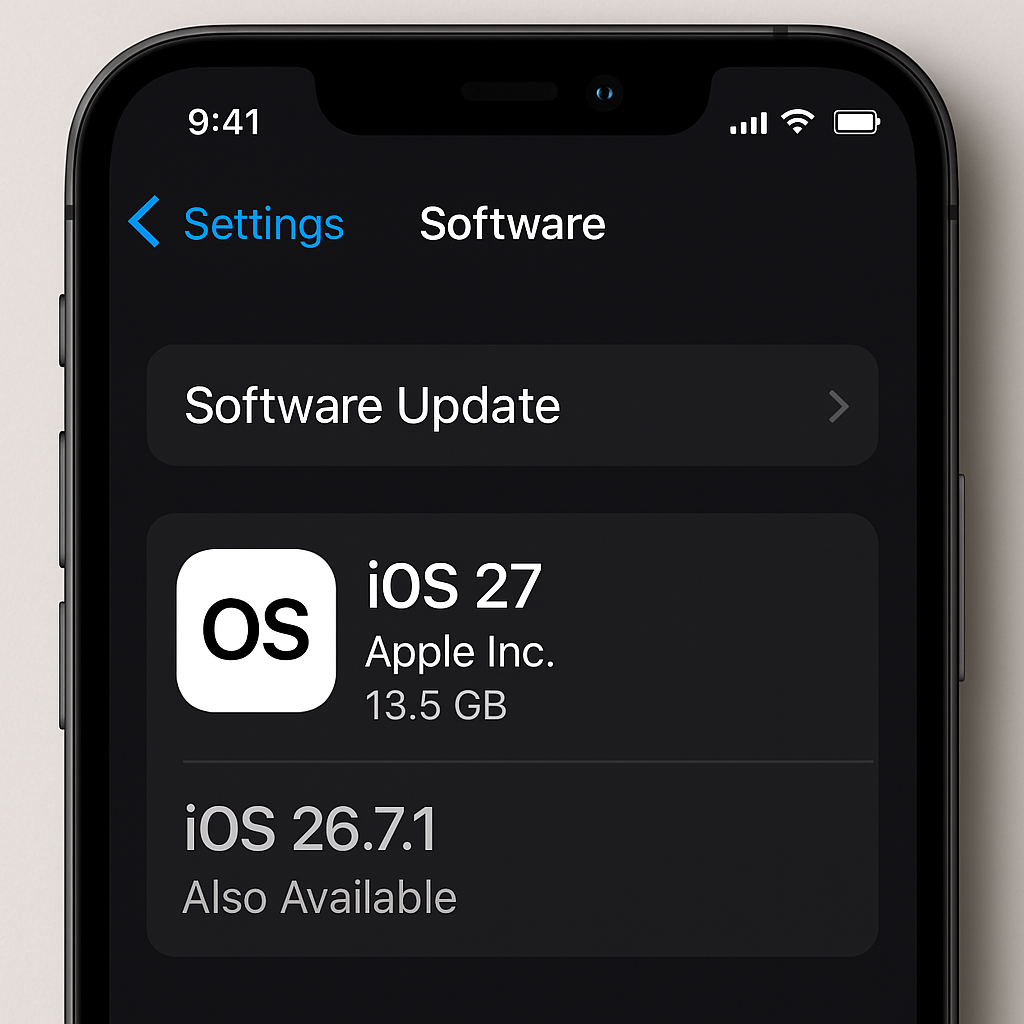
Starting October 8, 2026, Apple has shifted how iOS updates are presented on iPhones still running iOS 26. Users now see iOS 27.0.1 as the primary software update under Settings → General → Software Update. Previously, older updates like iOS 26.7 or 26.7.1 were featured more prominently, while version 27 updates were hidden under an “Also Available” section.
With this rearrangement, Apple is subtly nudging those who haven’t upgraded past iOS 26 to install iOS 27. Though the change doesn’t force the update—it’s still optional—iOS 26.7.1 is recommended for its important security patches.
Background on iOS 27’s Release
Apple rolled out iOS 27 and its first maintenance release, iOS 27.0.1, on September 14, 2026. Until now, users were given the choice between staying on iOS 26 (versions 26.7 or 26.7.1) or upgrading, with the older version highlighted. Today’s shift in placement makes version 27 the default prominent choice, reversing the previous hierarchy. Still, Apple hasn’t released public adoption numbers for iOS 27 yet.
What This Means for iPhone Owners
Users who prefer the status quo can remain on iOS 26; the move isn’t mandatory. But by giving iOS 27 priority visibility, Apple aims to accelerate adoption among those who’ve delayed upgrading. Installing the latest iOS 26.7.1 remains advisable for anyone staying on that version, because of its security updates.
This kind of soft push aligns with Apple’s usual strategy: ensuring users are better protected while cushioning resistance to change. It doesn’t involve forced auto-updates, but it does subtly — and effectively — change the path of least resistance.
What to watch: keep an eye out for Apple sharing official iOS 27 adoption metrics, and whether future updates follow a similar pattern. Users who prioritize stability over new features might evaluate whether the update brings sufficient improvements — especially around security — before deciding to move off iOS 26.