October 2026 marks another Cybersecurity Awareness Month, arriving as digital threats become more accessible, more deceptive, and increasingly people-focused. Two major themes are leading the charge this year: “Don’t Make It Easy for Them,” promoted by the National Cybersecurity Alliance (NCA), calls for small but habitual actions to shatter attackers’ advantage. Meanwhile, the U.S. Cybersecurity and Infrastructure Security Agency (CISA), tying its campaign to America’s upcoming 250th anniversary, emphasizes “Securing the Next 250,” which highlights safeguarding essential services like water and power systems. Canada is also joining in under “Your best defence is you,” spotlighting how AI is fueling more convincing scams.
Behind these campaigns lies a critical insight: most data breaches still begin with human error, not a system flaw. Simple actions—opening a message, clicking a link, scanning a QR code—are all opportunity windows for modern threats shaped to seem familiar, trustworthy, and even urgent. Phishing, long limited to poorly written emails, now comes trailing fake CAPTCHA screens, manipulated QR codes, AI-generated texts, calls, and fake login prompts posing as legitimate verification.
Everyday Practices That Matter
To lower risk, six habits are key:
- Use a different password on every account to prevent single breaches from cascading.
- Employ a password manager to generate and secure complex credentials.
- Enable multi-factor authentication (MFA), favoring hardware tokens, authenticator apps, or passkeys; but also stay alert—attackers may still hijack sessions even after MFA is used.
- Keep all devices and software updated; attackers often exploit known vulnerabilities left unpatched.
- Pause before clicking—urgent language like “act now” or “your account is locked” is a red flag. Verify through alternate channels.
- Inspect where links and login prompts actually go. Phishing schemes often use look-alike domains and redirects. Badges of authenticity (Microsoft, Google, DocuSign) don’t always mean you’re on the real page.
- Treat QR codes like links—don’t scan unexpected ones without thinking. Many lead to harmful pages.
- Don’t run commands (via terminal, PowerShell, Win+R) or install anything at a site’s request without confirming it’s legitimate. Attackers use this with fake CAPTCHA or “fix-it” pages.
- Back up your vital data in ways that are immune to ransomware; test restore processes regularly.
- Report suspicious activity fast—phishing attempts, weird login alerts, or unexpected IT requests. Early reporting stops small compromises from becoming crises.
Emerging Attacks That Demand Attention
These attack types are especially active and dangerous in 2026:
- AI-crafted phishing: messages look polished and personalized; grammar mistakes no longer a useful warning.
- Adversary-in-the-Middle phishing: attackers position themselves between user and service, capturing login credentials and session tokens.
- OAuth device-code phishing: victims are asked to enter codes via legitimate login pages, handing over access unintentionally.
- ClickFix / fake CAPTCHA attacks: users are tricked into running commands with promises of solving errors or revealing content.
- QR-code phishing (“quishing”): malicious links are buried inside QR codes, often encountered when switching from secure email to uncontrolled mobile browsing.
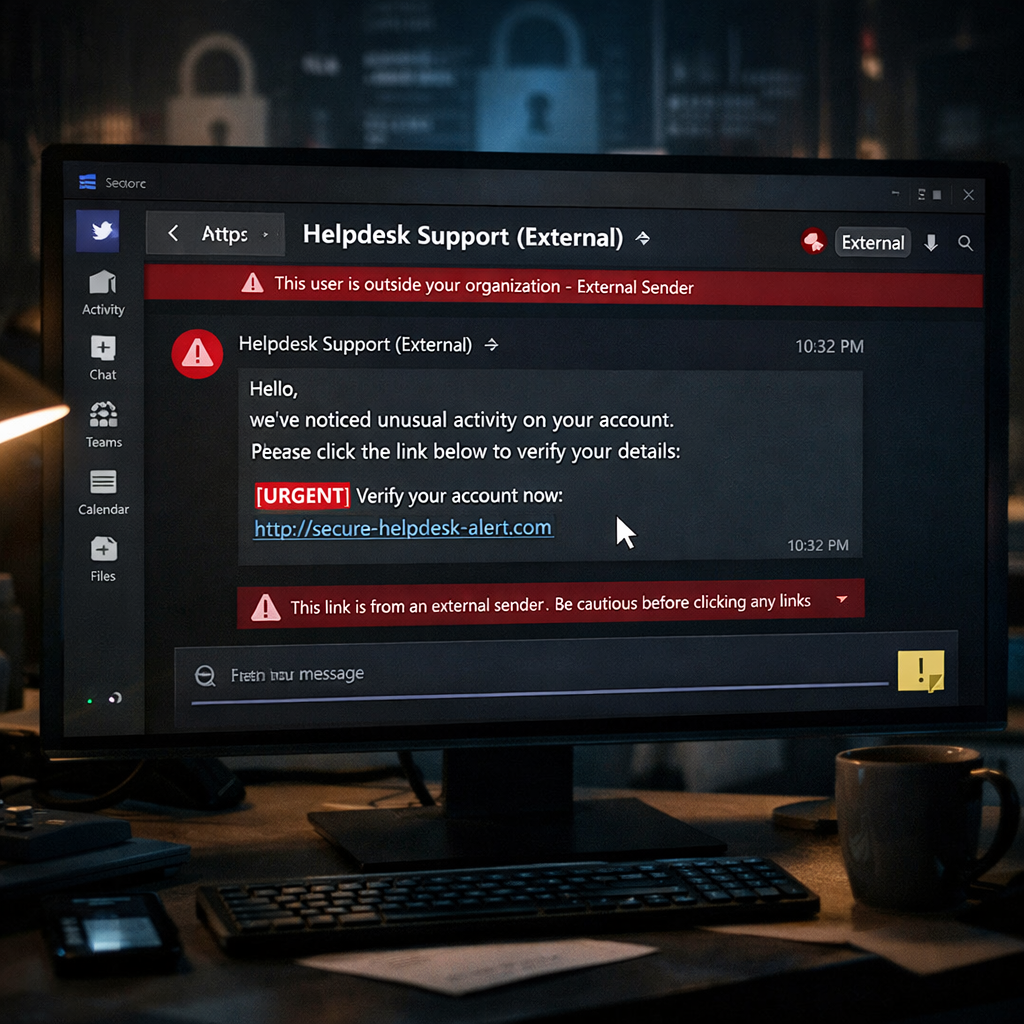
- Fake IT support messages: attackers impersonate helpdesk or support staff to gain remote access or control.
- Voice phishing with AI voice cloning: callers mimic trusted voices to extract sensitive information.
- Business Email Compromise (BEC): real email accounts or familiar sender patterns are manipulated to request fraudulent payments or sensitive files.
- Recruitment scams: fake job offers or project tasks used to steal credentials or deliver malware.
- App permission / consent abuse: rogue OAuth apps, browser extensions, or permissions used to hijack long-term access to data.
For organizations, this month is a chance to do more than push mandatory training. Better practices include running simulated phishing exercises, reviewing who has MFA, pruning inactive accounts, patching exposed systems, and ensuring backups are reliable. Empowering employees to report mistakes without fear helps detect attacks before they escalate.
This Cybersecurity Awareness Month reminds us that robust digital security doesn’t depend on massive defenses—it relies on consistent, smart habits. In a landscape of evolving tools and deceptive tactics, everyday vigilance becomes the strongest shield.
Analysis: Cybersecurity Awareness Month 2026 arrives at a pivotal moment. With attackers leveraging AI, real-looking interfaces, and human trust, the weakest link remains ourselves. What will really change is how well individuals and companies bake these behaviors into daily routines—and embed awareness beyond training modules and into culture. Watch for tools or platforms that make honest reporting and identity verification easier, and for awareness efforts that measure how people respond in real risk moments—not just what they know.