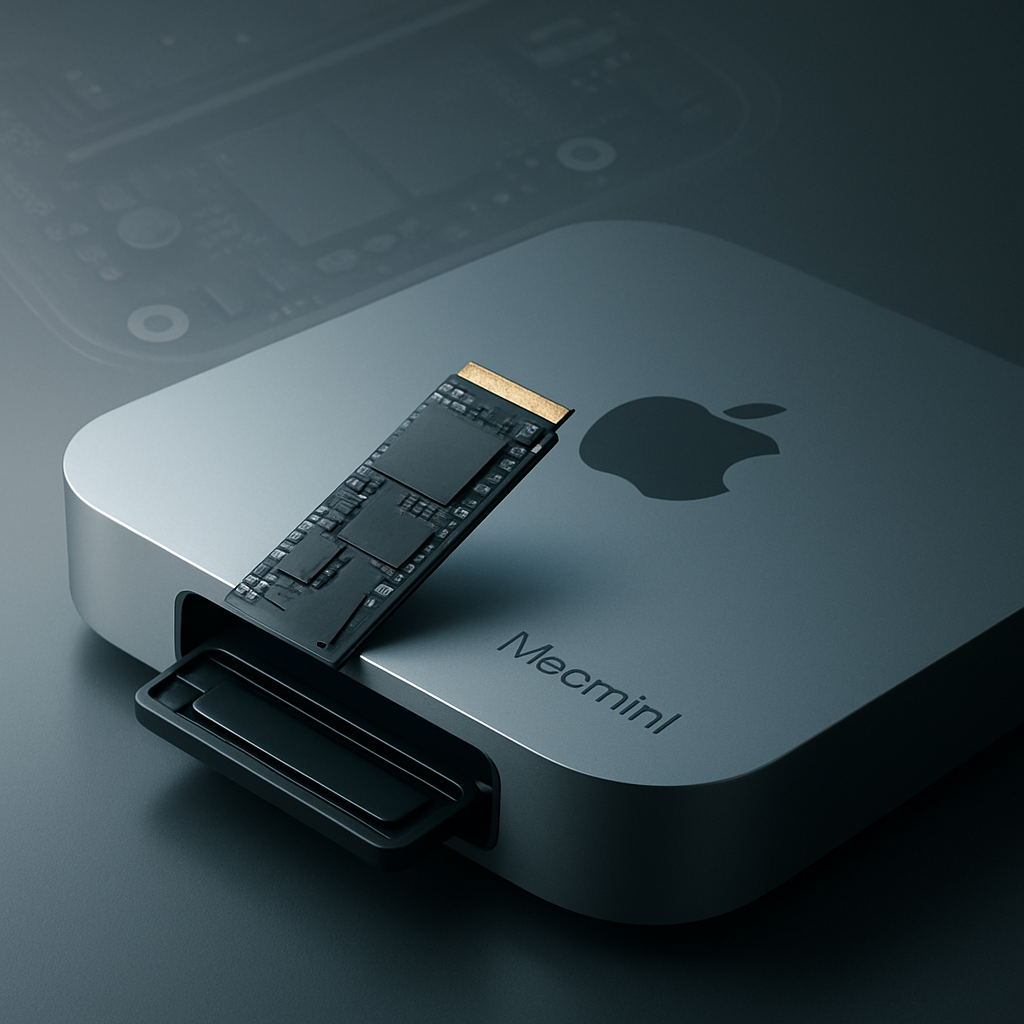
Apple’s latest Mac mini upgrades—namely the M6 and M5 Pro models—have done away with one of the desktop’s most praised features: the ability for users to upgrade the SSD themselves. What once made the Mac mini an outstanding value has quietly been removed.
When the M4 Mac mini launched, it stood out for its price, specs, and flexibility. It shipped with the M4 system-on-chip, 16GB unified RAM, multiple Thunderbolt 4 ports, front-facing USB 3 ports, HDMI, Ethernet, and—most notably—a NAND SSD that users could swap out. Owners could open the rear panel, remove the back cover, unscrew a few fasteners, and replace the SSD module with a third-party drive up to 2TB.
How much could users save?
The aftermarket SSD option allowed buyers to avoid Apple’s steep $800 upgrade fee for a 2TB internal drive. By installing a third-party SSD post-purchase—often priced around $320—users could nearly halve what Apple charged. For example, an M4 Mac mini with a 2TB upgrade done externally would cost about $920, compared to Apple’s bundled price of $1,400.
A flip to harder upgrades
With the move to the M6 Mac mini, Apple has soldered the SSD to the logic board. That change removes any possibility of third-party drive upgrades. The base model price also climbs significantly—from $600 with M4 to $900 for the M6. Meanwhile, upgrading to 2TB from Apple now pushes the total price to $1,900.
The company cites rising component costs driven by AI demands and other factors to explain why parts and memory have become more expensive. But those reasons don’t directly explain why the SSD section is now permanently fixed. The result is clear: the user’s ability to customize storage has been sacrificed, and consumers will now have to pay Apple’s premium pricing for internal capacity.
That means more expensive base machines, and even higher mark-ups for built-in upgrades, especially when compared to what was possible with the M4 chassis and third-party components.
One upside: all Mac minis—old and new—retain Thunderbolt connectivity, meaning external storage remains a viable path via Thunderbolt or USB SSDs. Devices like the Samsung T9 are highlighted as affordable ways to add additional storage without relying on Apple’s built-in options.
The discontinued ability to replace the SSD speaks to a larger debate over device repairability, upgradeability, and Apple’s push to integrate components more tightly. While performance and security can benefit from such integration, consumers who valued modularity are left with diminishing options.
Why it matters: This change effectively shifts Mac mini from a flexible desktop option to a more locked-down system, with greater cost implications down the line. For power users who relied on aftermarket upgrades, the M4 represents a strong used‐market value. For anyone considering buying a Mac mini today, it’s worth weighing how much storage you’ll need upfront—and whether paying Apple’s uphill pricing is worth it in the long run.
Prices quoted reflect Apple’s announced pricing and third-party SSD costs at the time of the M6’s launch.
Going forward, this move should spark discussions about how much control customers should have over their hardware post-purchase, especially as devices trend toward sealed designs. Watch closely for whether Apple rolls back this decision—or whether third-party alternatives for external modularity emerge to pick up the slack.