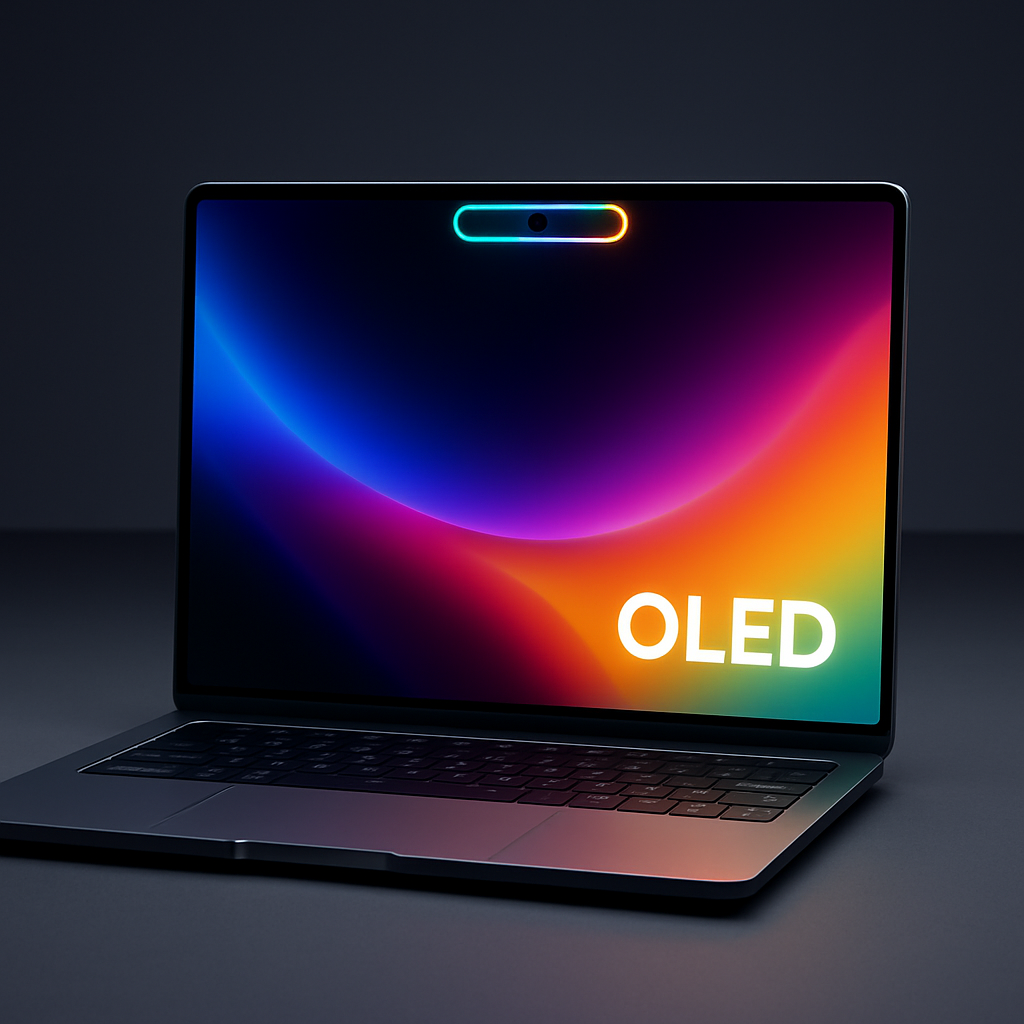
Apple is preparing a sweeping refresh of the MacBook Pro with some of its boldest design and feature changes yet. Expected to land sometime in October or November, the new models aim to make Apple’s pro-grade laptop lighter, thinner, and more touch-friendly than any MacBook Pro before it.
All-New Display, Touch, and Camera Setup
The next MacBook Pro generation is set to move from mini-LED to an OLED display—Apple’s first OLED panel in a Mac. The shift means deeper blacks, richer contrast, and potentially more vivid color. Along with the OLED screen comes another first: a touchscreen interface. macOS will be optimized for touch, with UI elements that dynamically adjust—menu items growing larger when you touch them, gestures like pinch-zoom and swipe playing bigger roles.
Apple will also change how the webcam is handled. The usual notch will be replaced with a hole-punch cutout, like what you see in recent iPhones, and Dynamic Island will make its debut in MacBook Pros. It’ll hide the camera cutout more naturally and deliver notifications and live activity updates.
Design, Chips, and Branding Tweaks
To help make the laptop more portable, Apple is reengineering the interior components—miniaturizing parts, reorganizing internals—to produce a significantly lighter and thinner MacBook Pro. Whether that means dropping ports remains unclear.
Despite earlier expectations of an upgrade to M6 Pro and M6 Max chips, the new models reportedly retain the current M5 Pro and M5 Max processors. The M6 generation will instead be used for base models (without Pro, Max, or Ultra variants), while more robust chip upgrades—like the M7 Pro and Max—are in development, with a strong focus on boosting AI performance.
There’s also chatter that Apple might rebrand this MacBook Pro line as “MacBook Ultra” to more clearly signal its premium status—especially given the dramatic feature upgrades in store.
Release Window and What’s Ahead
The launch is expected in October or November 2026, which marks a second refresh this year—an unusual but not unprecedented move for Apple. While timelines may shift, the upcoming models promise a marked leap from earlier editions.
These changes show Apple isn’t just tweaking specs; it’s rethinking what a high-end MacBook should be. OLED and touch on MacBooks were long rumors—but integration into macOS UI, thinner form-factors, new branding, lighter builds—all suggest Apple is making a definitive pivot.
What this means: For professionals who carry their MacBook Pro everywhere, lighter weight and improved power efficiency will matter. For designers, photographers, and creatives, OLED plus touch and Dynamic Island could streamline workflows. But retaining M5 chips means you won’t see raw performance jumps—and Apple seems reserving its next-gen AI chip prowess for 2027. Watch Apple’s October/November event closely: this could be a turning point in how we think of the MacBook Pro identity.