At just 19 years old, Zain Javaid has shifted his ambitions from finance to founding Ghost, a company now emerging from stealth with a mission: building a dedicated computer for personal AI. Ghost announced it secured an $11 million seed round led by Andreessen Horowitz, with participation from Abstract, Audacious Ventures, SV Angel, and Nova. Javaid is joined by co-founders Nicholas Chua (also 19), Yifei Chen (24), and Gautam Sharda (23).
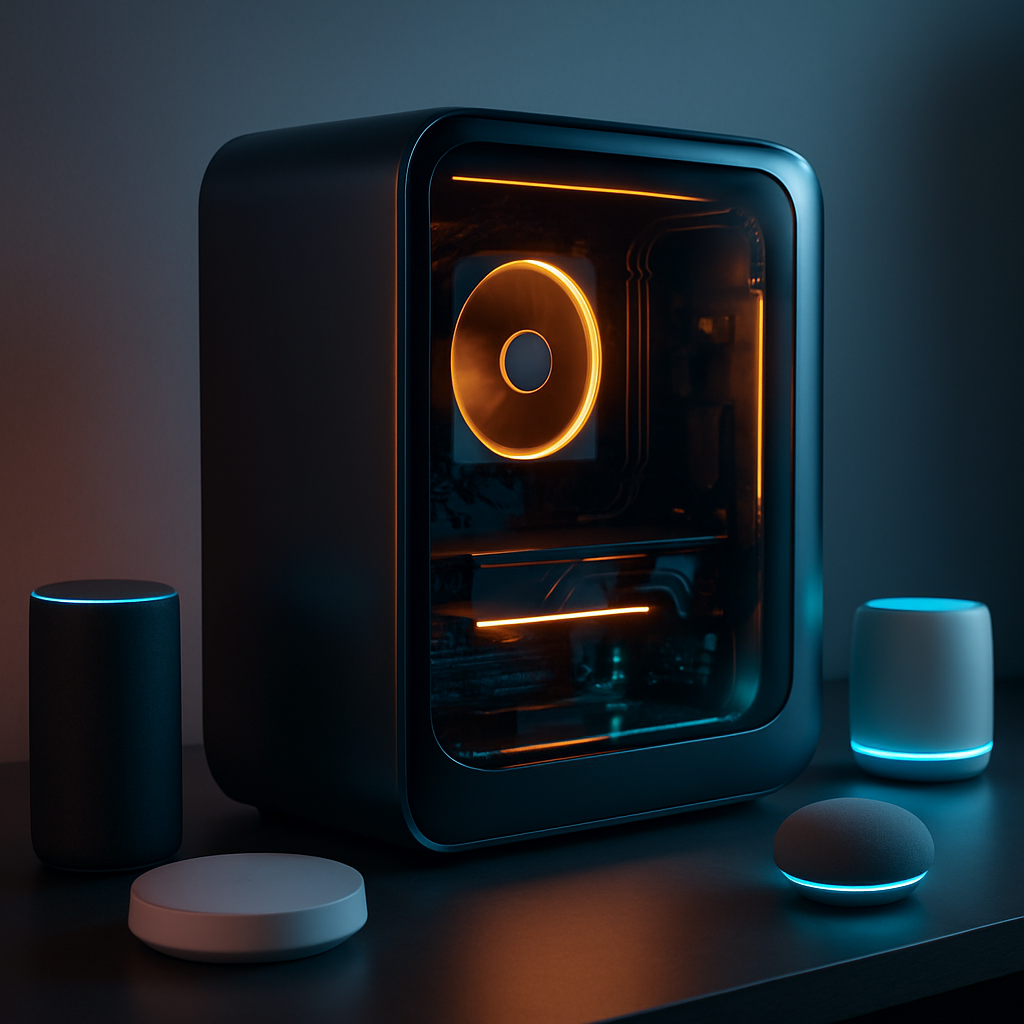
Ghost’s debut product is called Core, a machine built specifically for running AI agents that act on behalf of users. Rather than treating Core like a general-purpose PC, the idea is to aggregate a person’s data—local files, apps, smart home devices—and have the machine continuously operate AI agents that assist with daily tasks.
Hardware, software, and how Core works
At $3,499, Core comes with a powerful Nvidia RTX Pro 4000 SFF Blackwell GPU, included so users don’t need to invest in their own hardware. It also features a custom software stack—complete with its own browser, filing system, and notification and task automation features—designed to run models without constant user prompting. Pre-orders start now, and shipping is slated for the final week of October.
Javaid describes Core as a “brain in a box” without a built-in screen: users interact via phone or app, and voice control works through the app. The computer ships with three preinstalled AI models—Qwen-3.8-Next, Qwen-3.8-27B, and Gemma-4-31B. For flexibility, users can install other models from public model hubs like Hugging Face, or bring their own.
Privacy, autonomy, and safety
Ghost emphasizes that all user data, models, and “personal memory” are stored and run locally on the device, fully encrypted, and not accessible to Ghost or third parties. Users retain control over how autonomous their AI agents can be, and Ghost has built in a firewall to supervise outgoing network requests. If an agent attempts to perform an action outside of its permissions or leaking sensitive data, the system flags it for user review.
Core is built in Ghost’s San Francisco facility, with the goal of delivering a ready-to-used computer that avoids complex configuration. Updates—for model improvements or newer versions—are pushed over-the-air, and users can opt in for auto-updates or switch between model generations.
Positioning vs incumbents
Javaid acknowledges that general-purpose machines like the Mac Mini can be adapted to run AI tools, but maintains Ghost’s approach is different: everything from the hardware to the software layer is designed for continuous agent operation, not as a retrofit.
Mental models behind Core include proactive assistance: for example, Core might notice elevated resting heart rate, past sleep patterns, and the flu season to warn the user of falling ill. It’s not just about reacting—it’s about predicting and assisting.
Ghost is not banking on perpetual perfection; Javaid states that product quality—not competition—is the key. If users don’t love Core, it doesn’t matter how entrenched incumbents are.
What this means:Ghost’s Core reflects a broader trend toward localized AI: machines built for privacy, autonomy, and constant on-device functionality. If successful, Core could shift how we think of personal computing—moving from general use-case force to AI-native platforms. Challenges abound: ensuring reliability, managing security risks, and accelerating model improvement to keep up with cloud counterparts. What to watch next: user adoption, model performance, and how Ghost balances openness (for third party models) with control and safety—if they pull that off, we might be looking at the next shift in personal computing._