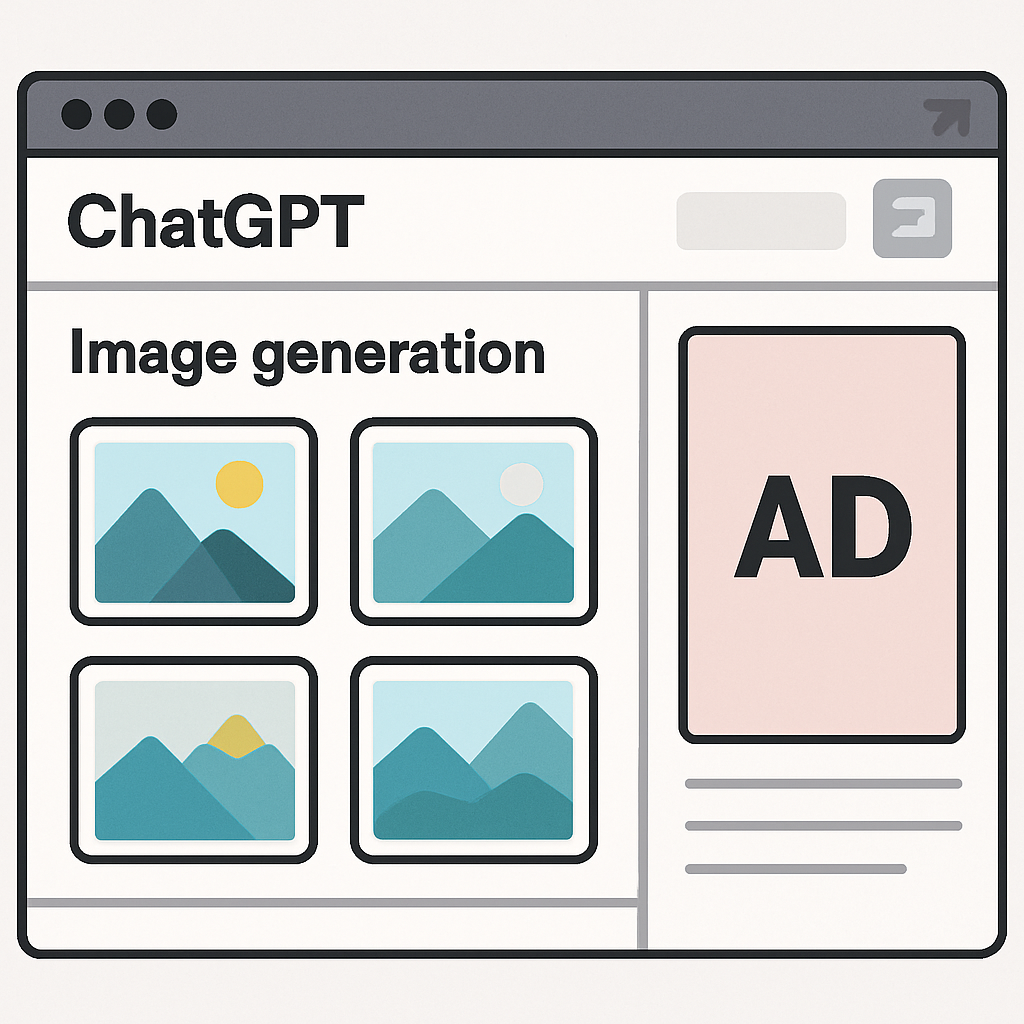
OpenAI is introducing display ads alongside image-generation results in ChatGPT as a part of its expanding advertising strategy. The new visual ads—featuring products and services—will roll out later this month in the U.S. first. They’re clearly labeled, and importantly, they won’t alter the actual text-based responses ChatGPT delivers. The initial launch involves a limited set of advertisers.
Ad Expansion & Support Tools
Earlier this year, OpenAI started placing ads to support its free and lower-cost subscription tiers, extending into markets like India by August. Now the company is not just placing more visually oriented material, but building tools to improve advertiser trust and performance metrics. The ad system will gain advanced measurement features including click attribution through partners like AppsFlyer, Triple Whale, Adjust and others. Full-funnel measurement providers—such as Measured and INCRMNTAL—are also being tapped to round out the analytics suite.
Brand Safety and Targeting Experiments
Addressing concerns around suitability, OpenAI is collaborating with brand-safety firms like DoubleVerify and Integral Ad Science to pilot evaluations that help advertisers ensure their brands appear in a favorable environment. The company is also testing geo-based ad experiments in partnership with groups like Haus, Measured, and WorkMagic. The idea is to give advertisers more precision and control over where and how their ads are shown.
The move brings into focus how OpenAI plans to make its ad-supported free and inexpensive tiers sustainable—and possibly nudges casual users toward upgrading to avoid ads. With 1.2 billion users generating images weekly, the visual ad rollout has the potential to reach vast audiences once global expansion begins.
Analytically, this step reflects a wider trend in AI platforms monetizing more aggressively while balancing user experience. For OpenAI, visual ads alongside image outputs may feel intrusive—but their effectiveness will depend on how well targeted and relevant they are. Brands will be watching closely for metrics, safety assurances and ROI. For users, this could mark a turning point: paying to avoid ads may become as expected as paying for more storage or extra tools.