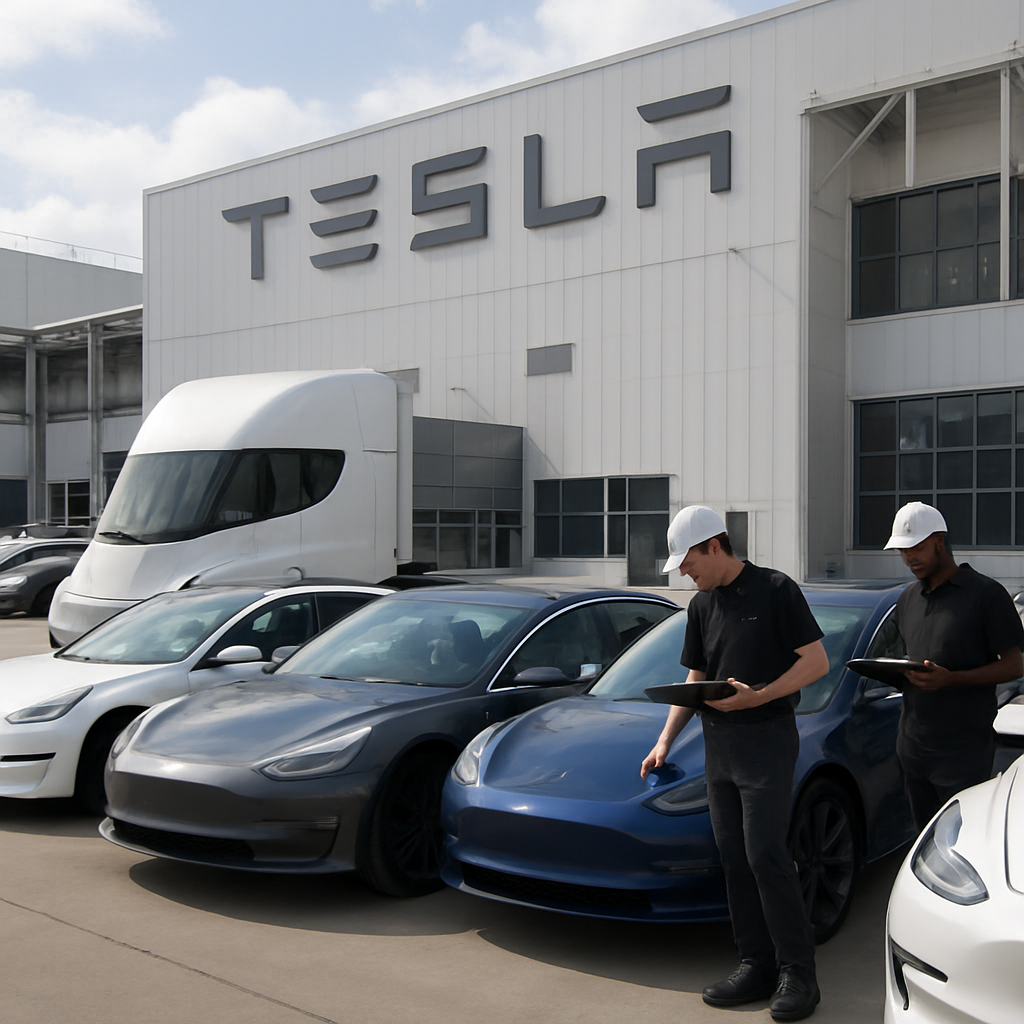
Tesla pushed through another quarter of solid electric vehicle (EV) sales in Q3 2026, delivering over 480,000 units globally despite facing considerable headwinds from its largest market, the United States. The automaker built 464,391 vehicles and delivered 486,532, narrowly surpassing second-quarter performance. While this figure exceeds Wall Street expectations, it remains down from the same period last year when deliveries hit nearly 497,000—a seasonally boosted peak driven by U.S. buyers rushing to meet an expiring federal EV tax credit.
The slide in U.S. sales—about 20% year-over-year—can be attributed to several converging factors. First, Tesla’s lineup has remained mostly static; only the Cybertruck has been introduced recently, and it has missed sales expectations. Second, scrutiny of Elon Musk’s political alignment—especially his public backing of Donald Trump and his role overseeing a federal office that has reduced international aid and laid off workers—appears to be denting consumer sentiment.
Finding Growth Outside the U.S.
With U.S. headwinds mounting, Tesla is leaning heavily on markets abroad to sustain momentum. In Europe, where emission rules are stricter and EV adoption stronger, the company is expanding its German factory to increase capacity. Sales in Europe have rebounded, bolstering Tesla’s overall global performance. Meanwhile, its China production remains robust despite intense competition, and demand is rising in newer markets like Japan, Australia, and Lithuania.
Tesla isn’t just selling cars—it’s pushing into new product categories. The company recently activated the “Cybercab,” a fully autonomous, two-seat ride-hailing vehicle without a driver, steering wheel, or pedals, in Austin, Texas. Production has also begun on the long-awaited Semi truck, with Tesla aiming for an annual output of about 50,000 units. Other marquee projects, including the second-generation Roadster and the Optimus humanoid robot, are still in development, though firm launch timelines remain unclear.
To fuel these expansion and innovation efforts, Tesla secured up to $30 billion in new credit lines. The company appears determined to invest aggressively in projects beyond its flagship EV lineup.
Tesla’s Q3 results show resilience in its global strategy. Although U.S. demand is softening, strong sales in Europe, China, and emerging markets are cushioning the blow. The push into autonomous vehicles (Cybercab), heavy-duty EVs (Semi), and robotics (Optimus) indicates a broader ambition to redefine its identity beyond passenger cars. Investors and consumers alike should be watching whether the quieter, more experimental ventures will translate into real growth, and how rapidly Tesla can innovate to offset U.S. complacency. What happens in the next few quarters could reshape not just Tesla’s product roadmap, but the future of electric mobility itself.