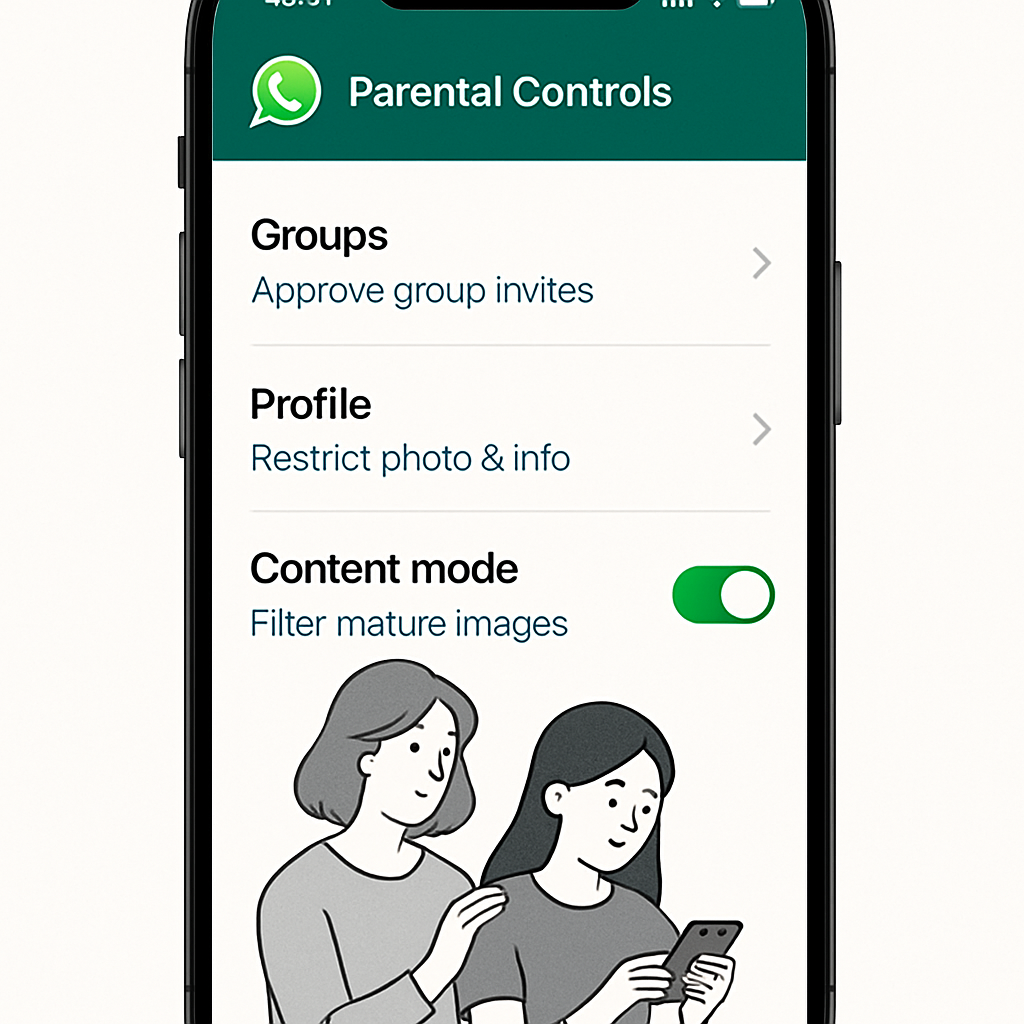
WhatsApp is rolling out a suite of new parental control tools for teen accounts, aimed at giving guardians more say over who their teens interact with and what content they are exposed to. These features allow parents to monitor interactions, set permissions on visibility, and enforce usage guidelines—with controls safeguarded by a parent-set PIN. Teens can’t adjust these settings unless their guardian approves. Guardians also have the outright option to disable the controls entirely.
What Parents Can Control
Under the new system, parents can manage who their teen can see Status updates from, and who is allowed to see the teen’s own updates and profile picture. Permissions can also be set around group interactions: who can add the teen to a group, when they join one, leave one, or when a group’s size hits key thresholds like 30, 100, or 250 members. These notifications help parents stay informed when group dynamics change.
Stricter Content Restrictions for Meta AI
The update also expands parental control into Meta AI features. Guardians can now select a default content setting for their teen’s Meta AI experience: either the standard “13+” setting or a more restrictive “Limited Content” mode. The latter disables private processing-based features such as incognito chat and automatic message summaries, reducing exposure to content that might be inappropriate.
Despite these changes, the privacy of messages and calls remains intact—WhatsApp confirms that all communication remains end-to-end encrypted and inaccessible to anyone outside the conversation.
The introduction of these tools follows increasing scrutiny on Meta from lawmakers and regulatory bodies, especially regarding how its social platforms affect minors. Earlier this year, Meta agreed to settle a lawsuit from 29 U.S. states, resulting in an $18 billion payment tied to the alleged harm caused by its platforms. The company has since introduced several safety features across its app portfolio, including content rating-inspired settings, pre-teen account options on WhatsApp, and monitoring functions for children using Meta AI and Instagram.
These new parental controls for teen WhatsApp accounts represent a material change in how guardians can govern digital life. It shifts more authority to parents over their kids’ privacy settings and social interactions without dismantling the foundation of encrypted communication.