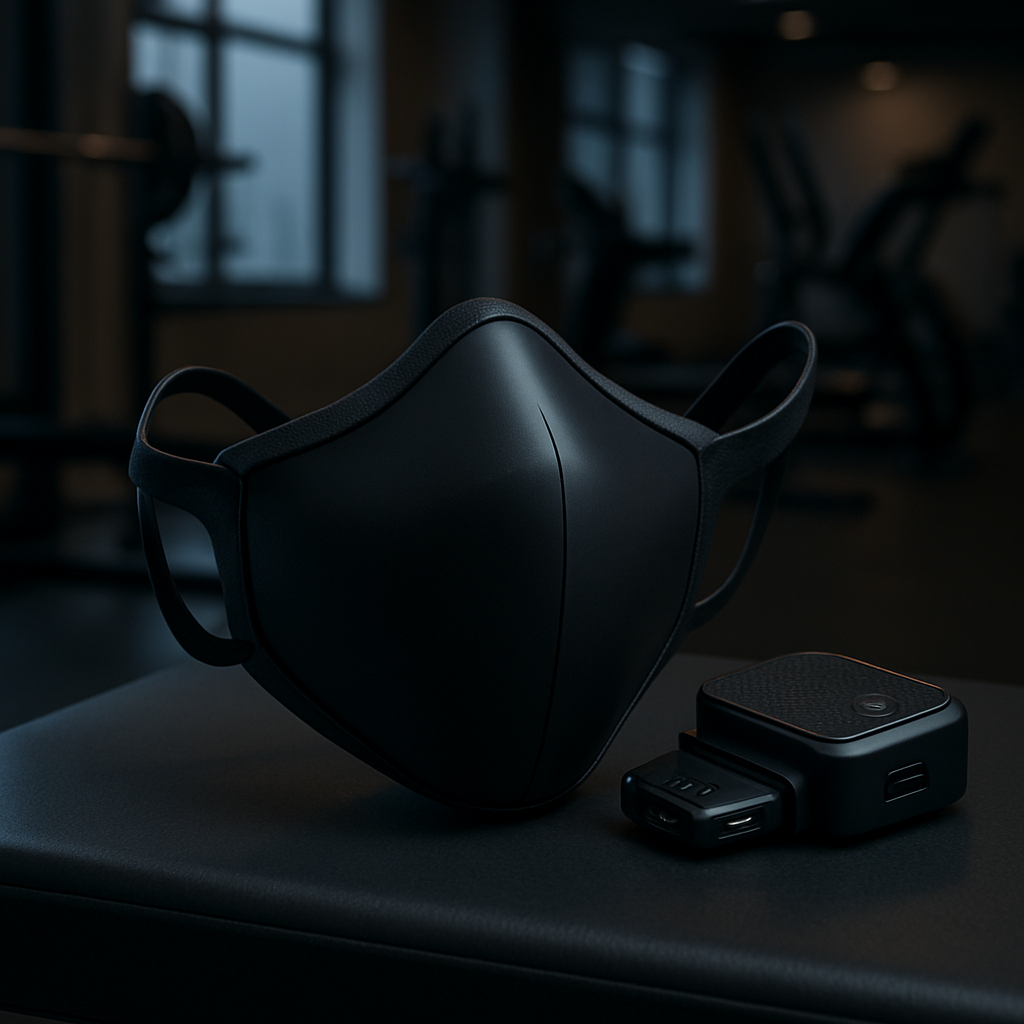
PNOĒ is unveiling a next-generation metabolic mask, launching October 1, designed so users can perform lab-grade breath analysis themselves. The new PNOĒ 2.0 removes the need for a trained operator—just strap on the mask, push a button, and breathe for eight minutes. The goal: make metabolic testing accessible outside clinical settings like gyms, pharmacies, or wellness centers.
What It Measures & Why It Matters
For over a century, metabolic testing has played a central role in understanding cardiorespiratory fitness—particularly VO₂ max, a key indicator of how much oxygen the body can process during exercise. Traditionally, these tests have required bulky and expensive lab gear, limiting their use to elite athletes or research institutions. PNOĒ’s founder sees the 2.0 device as delivering the same accuracy—but in a compact, user‐friendly form.
The mask tracks 23 biomarkers. Beyond calculating VO₂ max, it measures resting metabolic rate (how many calories you burn at rest) and metabolic flexibility—how efficiently your body toggles between burning fat versus carbohydrates. These insights aim to inform decisions like how much to eat or how to train more intelligently than via standard smartwatch estimates.
Design Tweaks & Business Model
The 2.0 model is smaller with fewer components compared to its predecessor—a necessity for reliable self-service. To address hygiene concerns, especially post-pandemic, the electronics detach from the silicone mask and straps. Users can employ individual mask components while sharing the reusable sensor hardware.
PNOĒ remains in wellness territory—not medical. It has no FDA clearance and does not offer medical recommendations. The startup positions itself as a wellness tool comparable to body composition scales rather than diagnostic devices. But as its data set expands, the company is exploring whether breath compounds might eventually help flag illness, though any such diagnostic capacity is likely several years away—and won’t happen without regulatory oversight.
Founded by Apostolos Atsalakis—based in Malden, Massachusetts, with operations in Greece—and his childhood friend Panos Papadiamantis, PNOĒ roots its technology in Atsalakis’s PhD work at Cambridge in sensing tech. It graduated from Y Combinator in 2019 and has since raised around $22 million, including an $11 million round.
PNOĒ sells its devices to businesses—which then offer the tests to customers. Clients include luxury hotels, fitness studios, the NBA, a health system, and wellness spas. The U.S. makes up roughly 85% of its revenue. Expansion into Europe, Latin America, and Asia is underway. Pricing for customers of PNOĒ’s clients comes via business subscriptions—covering hardware, software, training and marketing—and ranges from about $400 to over $1,000 per month.
The company reports over 100% annual growth and says it recently turned profitable. Plans are also in motion for a Series B funding round in the next six to twelve months to help scale distribution of the PNOĒ 2.0.
PNOĒ’s self-serve mask aligns with growing interest in personalized longevity and fitness tracking. As consumer wearables try to estimate VO₂ max via heart-rate data—and breath-based devices already aim to track fuel use—this device occupies a middle ground: more precise than wearables, more accessible than clinical setups.
What this means: If PNOĒ hits its mark, metabolic testing could enter mainstream wellness routines—offered at gyms, spas, or retailers—without clinical mediation. Accuracy, privacy, cost, and regulatory clarity will be the key criteria. Watch for how PNOĒ proves itself post-launch, and whether it pushes wellness tech closer toward true health diagnostics in the coming years.