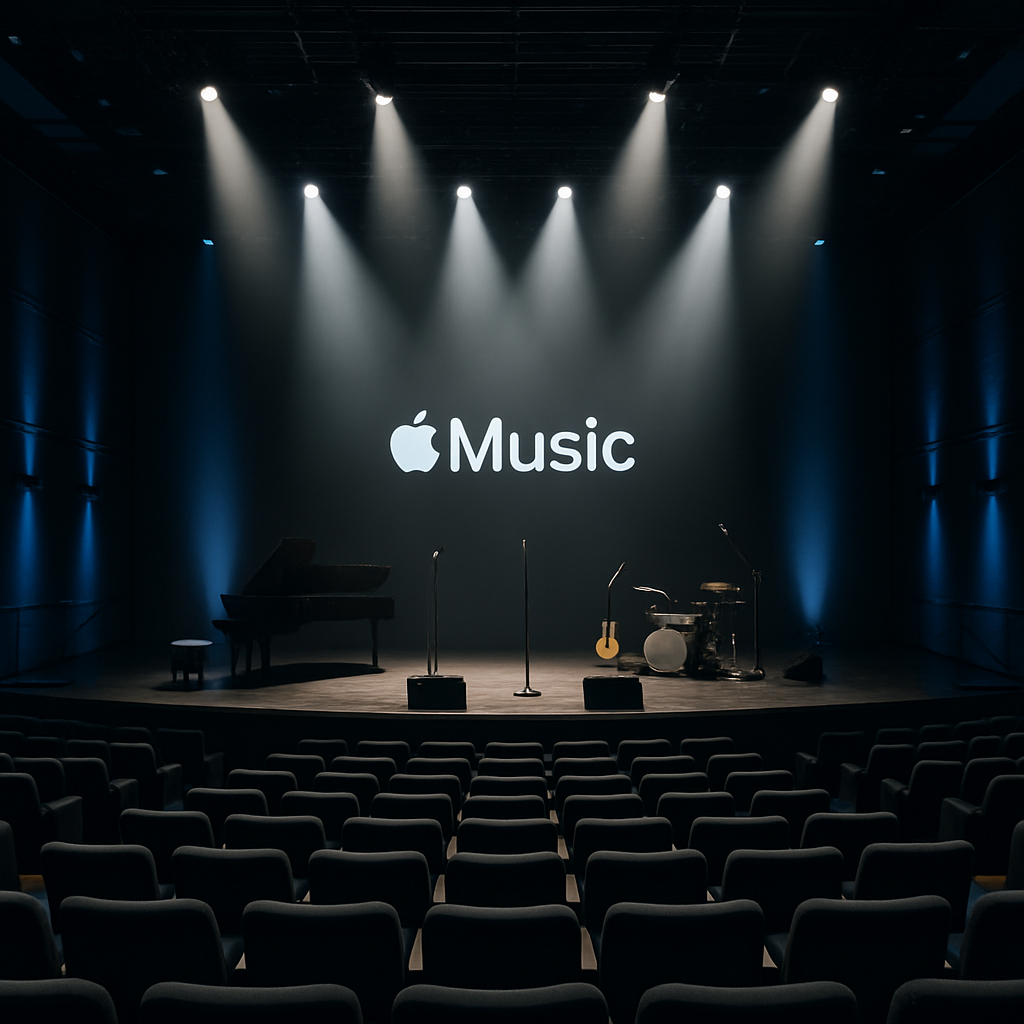
Apple Music Hall, Apple Music’s new live concert venue in London at Battersea Power Station, is set to welcome Elton John as its first performer. The venue’s debut show will take place on September 28, 2026. Following that headline-opening concert, eight artists in total will perform through early December. Tickets are set to go on sale the morning of each show, starting with Elton John’s.
Lineup, Tickets & Venue Details
The initial slate of artists confirmed for Apple Music Hall includes Baby Keem on October 2, Skye Newman on October 7, Troye Sivan on October 13, Arlo Parks on October 22, Burna Boy on October 29, Chase & Status on November 26, and Charli XCX closing out on December 2. All shows are single-tier priced tickets at £40 each, roughly $53 USD, and doors open at 6:00 p.m. local time for the first three concerts.
With seating for only 600 people, Apple Music Hall is explicitly tailored for intimate performances. Despite its smaller size, the venue supports advanced production capabilities—Apple has indicated the hall is equipped for high-quality audio, spatial audio, video, and live streaming, which suggests concerts may eventually be made available via broadcast or streaming platforms, likely Apple Music itself.
Apple Music Hall was unveiled in London mere days ago, and its public-facing programming page offers a sleek, dynamic browsing experience. That said, the ticket purchase interface has been criticized as somewhat cumbersome. Tickets for the opening concerts go live on the morning of September 28, and the ones for the subsequent shows launch on the dates of the first few performances. Given the limited size and the rush for opening night, demand is expected to be intense.
Why Elton John Was Picked First
Elton John launching the venue holds symbolic weight. He was among the first DJs on Beats 1 at Apple Music’s inception in 2015—a nod to Apple’s long ties to the legendary performer. Choosing him to inaugurate Apple Music Hall ties together the company’s past in streaming radio and its present in live music.
Though Apple hasn’t confirmed whether the concerts will be filmed or streamed live, the venue’s production infrastructure makes that a strong possibility. Fans and critics alike will be watching whether Apple leverages the hall to expand its offerings beyond streaming into live events that can be shared globally.
The opening program spans a diverse selection of artists—across genres and backgrounds—underscoring Apple Music Hall’s ambition to cater to varied musical tastes while also positioning itself as a hub for high-quality, broadcast-capable live music venues.
What this signals: Apple is deepening its immersive experiences, not just streaming or selling music. Apple Music Hall could redefine how the company delivers live music—intimate shows, high-end production, and possibly streaming for global audiences. The real test will come in execution: can Apple make ticketing smooth, ensure equitable access for fans, and seamlessly integrate live performances with its digital platforms? If it does, it may set a new standard for music venues in the streaming era.