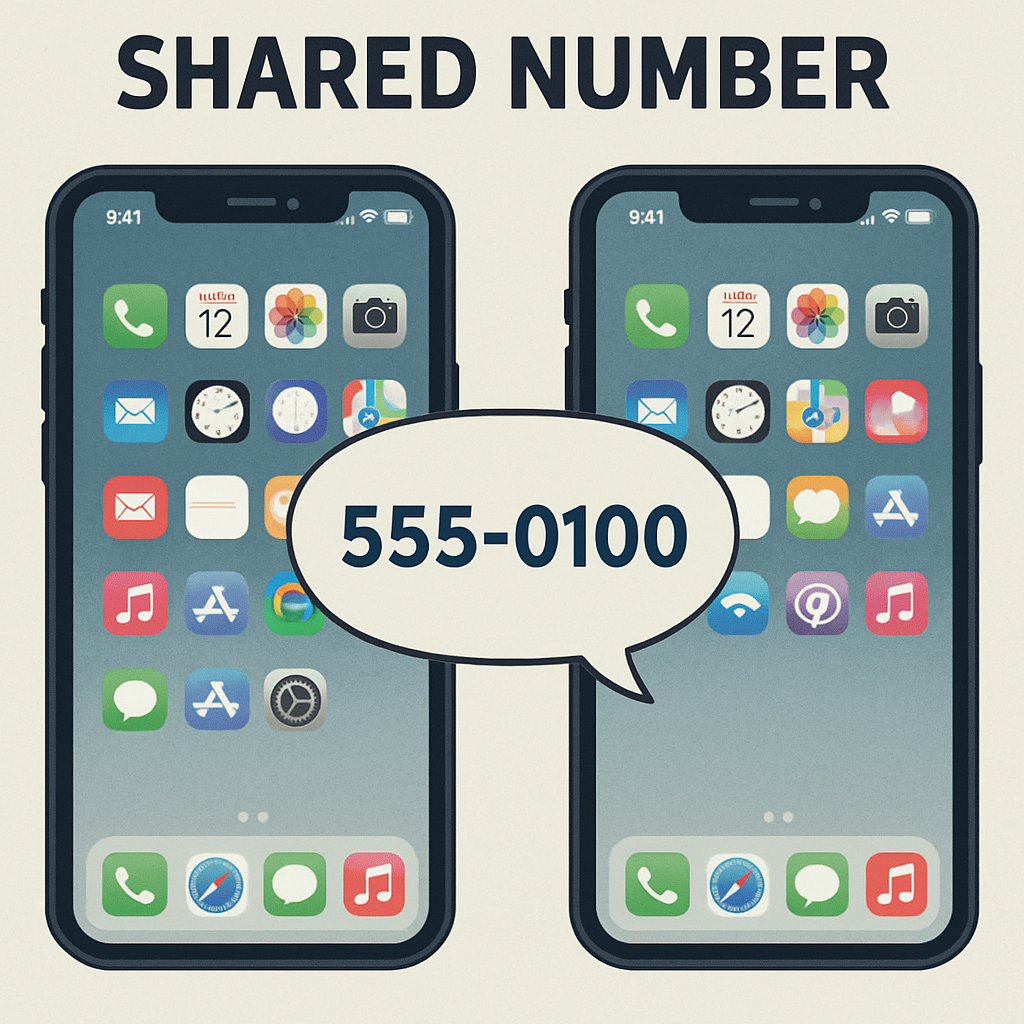
Apple’s upcoming iPhone Handoff feature — which lets users share a single phone number between two iPhones and answer calls with whichever device is unlocked — will not be supported by AT&T, despite its long partnership with Apple. While carriers like T-Mobile and Deutsche Telekom have already committed to the feature, AT&T is sitting this one out.
What Is iPhone Handoff?
Announced with iOS 17, iPhone Handoff allows two devices to share the same phone number. Once set up, any two compatible iPhones can ring on the same number, and the one you unlock will take the incoming call. It simplifies switching devices without needing to transfer SIMs or manually activate services. Initial support is rolling out among a few carriers in the U.S., Europe, and the UK.
AT&T’s Refusal to Take Part
Despite being Apple’s exclusive U.S. carrier when the first iPhone launched (following its acquisition of Cingular in 2007), AT&T has declined to support iPhone Handoff. A company spokesperson acknowledged potential interest in features like this but stated that they are focused instead on refining existing services like eSIM activation and device transfer tools. AT&T declined to say whether it will reconsider later.
Carriers That Are On Board
T-Mobile in the U.S. and Deutsche Telekom in Germany are already supporting iPhone Handoff. In the UK, EE is set to begin support later in 2026. Verizon has confirmed that it will also add support in the U.S. Once activated, some carriers plan to charge a monthly fee: T-Mobile will levy a $5/month charge, while Deutsche Telekom bundles Handoff into a multi-SIM add-on that runs around $8/month.
For users who frequently swap between devices — say for photography, work, or personal uses — iPhone Handoff promises a smoother experience. You’ll still need to do some initial setup, but once that’s done, the unlocked phone becomes your active device for calls without any extra action.
AT&T’s refusal marks an interesting contrast to its history. The same carrier (through its predecessor, Cingular) was the only one to agree to partner with Apple when the first iPhone arrived. Two decades later, with Apple innovating new ways to leverage hardware ecosystems, AT&T’s choice highlights tension between carrier control and user convenience.
What This Means & What to Watch For: AT&T customers won’t be able to use iPhone Handoff anytime soon, potentially pushing some heavy users toward carriers that support the feature. Watch for announcements from AT&T on whether price, technical hurdles, or competitive pressure leads to a change of stance. Also worth keeping an eye on how features like iPhone Handoff will affect device usage trends and whether they boost dual-device purchases or multi-SIM plans.