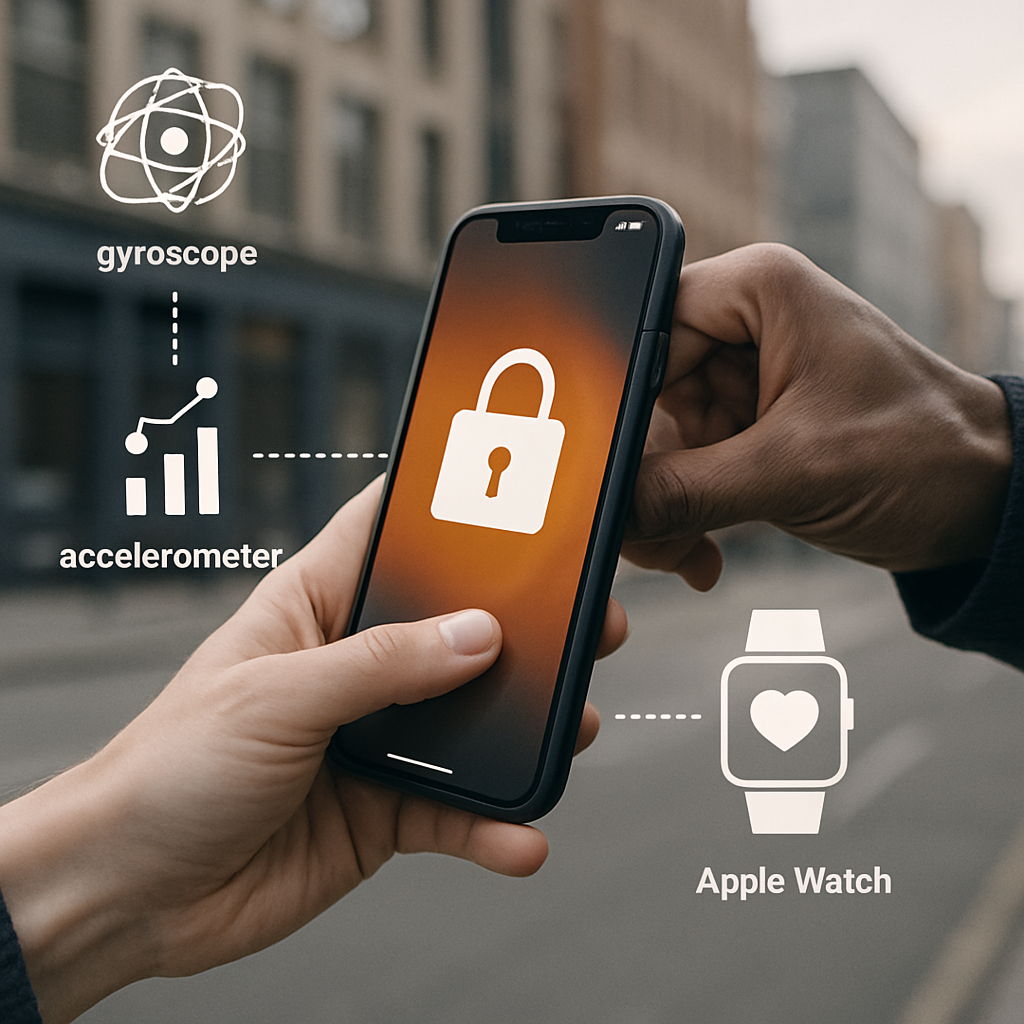
Apple is working on a new anti-snatch feature for the iPhone that activates when someone grabs the device without permission. Hidden in the iOS 27.2 beta, this system—internally called “AutoLock”—relies on sensors like the gyroscope and accelerometer, as well as a paired Apple Watch, to detect sudden movements or separation from the user’s wrist. Once triggered, the iPhone locks itself and deploys added protections to safeguard personal data.
How AutoLock Aims to Work
The latest code in the iOS 27.2 beta reveals multiple signals that could trigger a lock. These include sharp acceleration consistent with snatching, loss of connectivity to the paired Apple Watch, prolonged unreachable status, and extended loss of network access. The system even considers whether the iPhone has remained unlocked too long.
Because this kind of theft detection must balance responsiveness with reliability, Apple is building in safeguards against false alarms. The system may reject a lock request if biometric authentication succeeds, or if certain apps in the foreground could mimic a snatch scenario (for instance, if the user tosses the phone during exercise). In many cases, it looks like Apple is using a “voting system,” where different signals cast votes for or against locking. Familiar locations and successful unlocks can veto a triggered lock.
Stolen Device Protection: More Than Just a Lock
When the device is forcibly removed from its owner’s hand, AutoLock would not only lock the phone, but activate Apple’s Stolen Device Protection. This mode makes it harder for thieves to reach sensitive information, requiring biometric authentication to access things like stored passwords or credit cards. Changing the Apple ID password would be delayed by an hour, and other actions may face similar restrictions.
This isn’t Apple’s first attempt at theft detection. Many Android phones already offer similar “Theft Detection Lock” features that lock the device after a snatch-and-grab. With AutoLock, Apple is aiming to add its own version within iOS. Neither the feature’s launch date nor whether it will be released is confirmed yet—code changes suggest it’s still being evaluated.
Apple’s focus on security has been growing steadily in recent years, especially when it comes to device protection. Between activation locks, theft alerts, and hardware-based encryption, this new feature would add another layer for users worried about physical theft. Critics, however, may worry about accidental triggers—if jogging with your phone or moving it suddenly could cause lockout.
Why this matters: in a world where smartphones are increasingly targeted in crimes, on-device tools that prevent unauthorized access are essential. If AutoLock works as designed, it could greatly reduce data theft and protect user privacy—and maybe even discourage thieves. What we’ll watch for: how accurate the detection is, which models are supported, and when—and whether—Apple decides this feature is ready for prime time. Any missteps in timing or execution could make the difference between a useful security tool and a frustrating nuisance.