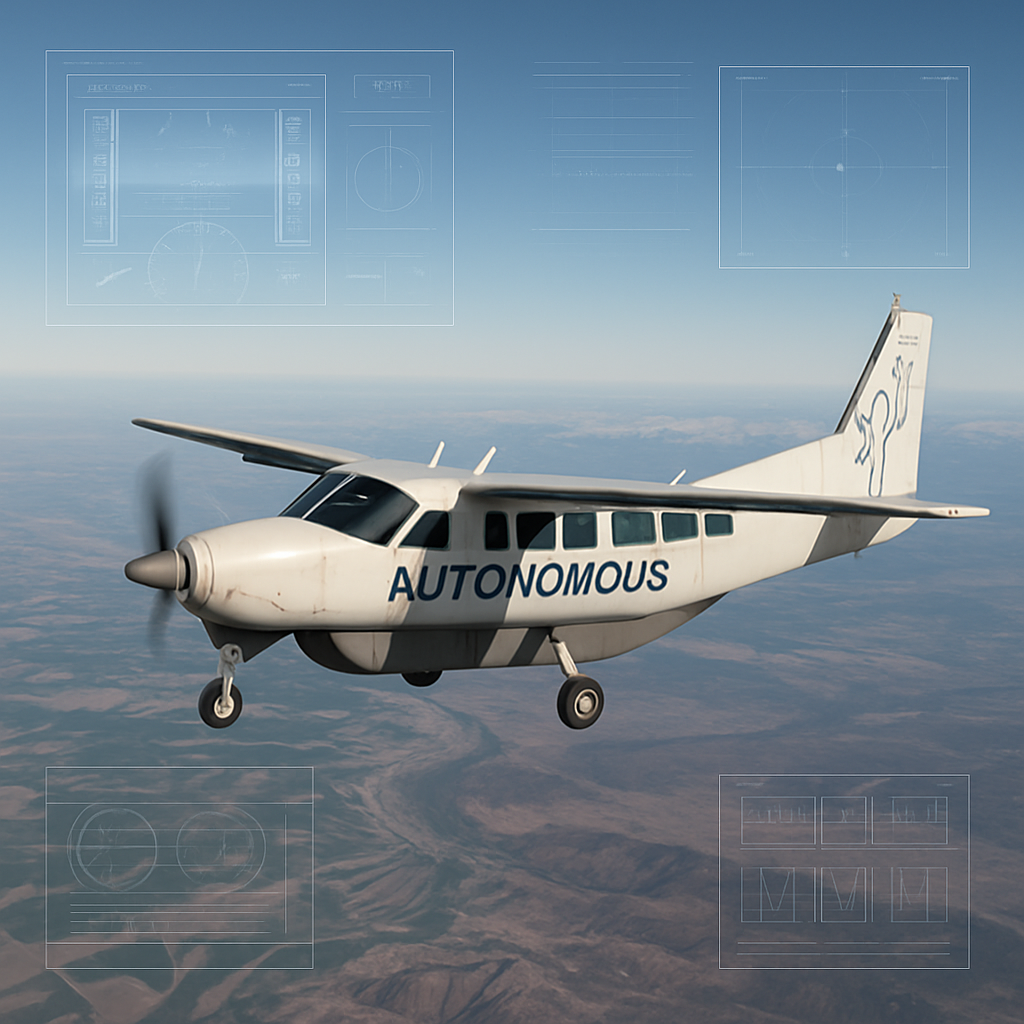
Joby Aviation has logged a milestone: an aircraft using its autonomy tech flew over 3,100 miles across the United States without human control over taxiing, takeoff, navigation or landing. Although a pilot was on board to meet regulatory requirements, Joby insists the aircraft operated entirely under autonomous control. The journey was overseen remotely from Joby’s California headquarters and Shaw Air Force Base in South Carolina. This cross-country mission is being billed by Joby as the first fully autonomous flight across the U.S.
The aircraft used in this feat was a converted Cessna Caravan. Joby says the flight tested its autonomy stack’s adaptability across diverse environments and mission types, including medical transport, disaster response, and defense logistics. The company plans to return the plane to the West Coast with stops in cities such as Louisville, Kentucky and Salt Lake City over the next two weeks.
Beyond Urban Air Taxis: Diversifying Into Defense & Regional Freight
Best known for its work on electric vertical take-off and landing (eVTOL) aircraft aimed at urban air taxi services, Joby is now positioning its autonomy technology as a standalone offering. This tech is designed to be retrofitted onto conventional aircraft, expanding use cases far beyond short hops over city skylines.
Part of that strategy involves defense. Joby has held a long-standing partnership with the U.S. Department of Defense and is developing regional airframes equipped with its autonomy systems that could serve both military and commercial freight transport missions. A $17 million Air Force contract via AFWERX is backing these efforts.
In August, Joby acquired Resonant Sciences, a company based in Ohio focused on radio frequency and sensor systems. The purchase, worth $500 million in cash and stock, has bolstered Joby’s emerging defense business. Projects underway under that division include work on turbine-electric and hydrogen-electric aircraft in addition to enhancing its autonomy stack.
Another recent move: Joby is collaborating with L3Harris Technologies on exploring a new kind of hybrid VTOL aircraft—gas-turbine hybrid vertical take-off and landing—that can fly autonomously for defense applications.
What It Means
This autonomous flight marks a turning point for Joby. It signals the company’s shift from purely focusing on its eVTOL air taxi ambitions toward broader use in defense, regional freight, and crisis/emergency operations. Pulling off a 3,100-mile flight with no human control of core flight phases under real-world conditions puts Joby ahead among peers in autonomous aviation.
What to watch: how regulators respond, especially with respect to allowing autonomous systems in shared airspace. Also of interest is how Joby adapts its autonomy stack to different aircraft and powertrains, and whether its defense contracts yield reliable commercial spin-offs. If Joby can execute on both fronts—civil air mobility and defense / freight—this could reshape where autonomous aviation has impact next.