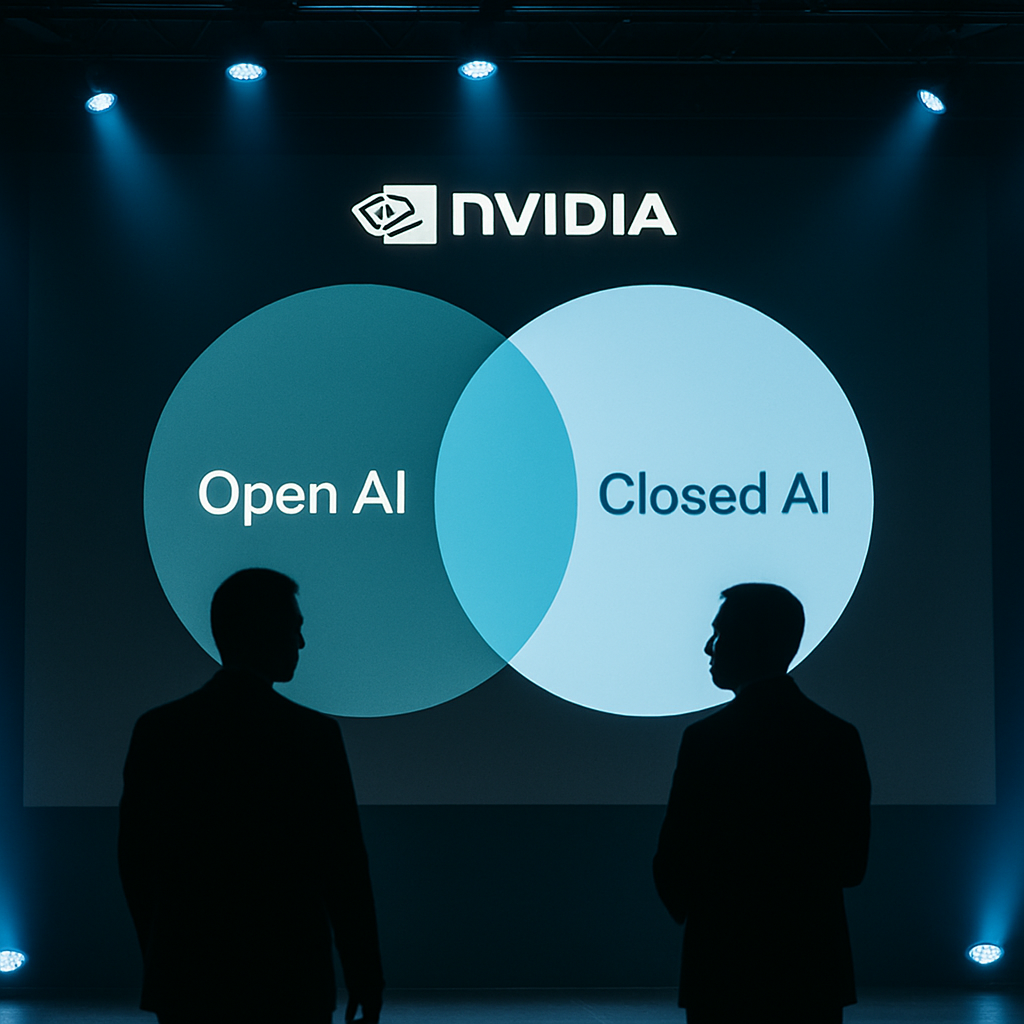
Founders building AI products face a weighty question: should they use open models or build on proprietary ones—or perhaps blend both? That’s the core debate that Nvidia’s Nader Khalil and Sydney Sykes will tackle at the Builders Stage during TechCrunch Disrupt 2026, scheduled for October 13–15 in San Francisco. The session aims to cut through the noise and help startups with real-world trade-offs that affect cost, control, differentiation, and speed of innovation.
Why the open vs closed decision matters now
Open models have grown significantly more capable. For example, Nvidia recently highlighted that 145 papers accepted at ICML 2026 referenced its Nemotron open models and datasets, spanning applications from robotics to biomedical research. At the same time, frontier labs pushing proprietary models continue to raise the bar on performance. The result: using open models is no longer seen as a fallback—it’s about where each model type makes the most sense commercially.
Nvidia itself rejects the idea that builders must choose one side exclusively. At GTC earlier this year, CEO Jensen Huang argued that future AI deployments will often involve both open and proprietary components. But that makes startup strategy more complex. Founders need to weigh whether lower costs from open models outweigh lost control, whether they can build defensibility via infrastructure or data, and whether vendor lock-in might become a burden as competitive advantages shift.
Two lenses on the same debate: Builder and investor
Nader Khalil, Nvidia’s Director of Developer Tech, comes from an infrastructure-first mindset. Before joining Nvidia, he co-founded Brev.dev, a company aimed at simplifying access to GPU compute across public cloud, private cloud, and on-premises setups—always with an eye toward avoiding lock-in. He’ll bring that builder’s lens to the discussion.
Sydney Sykes, as Nvidia’s Global Head of VC Partnerships, brings the investor perspective: what makes a company investable, scalable, defensible? Between Khalil and Sykes, the session promises dual insight into how technology choices translate into funding, margins, product roadmaps, and competitive edge.
For founders, picking an open model can reduce upfront costs and give more flexibility, but it also puts more of the deployment, optimization, and infrastructure burden on them. In contrast, a proprietary model might deliver high performance fast, but it could limit control, add dependency, and reduce adaptability when new models emerge.
Nvidia’s own Nemotron 3 Super illustrates this hybrid reality. Launched in March, this 120-billion-parameter open model is designed for agentic tasks, and companies are already combining it with proprietary models rather than treating them as mutually exclusive options.
The upcoming Disrupt session is relevant not just for engineers but also for founders, VCs, business leaders, and students. It’s about understanding where value really lies—whether in the model, the data, product experience, partnerships, or infrastructure—and how those align with a startup’s strategy and capacity.
This isn’t theory. A wrong decision here can impact fundraising stories, margins, infrastructure costs, product flexibility, security, and long-term viability. With the landscape shifting fast, builders need clarity on trade-offs more than ideological purity.
Analytical Outlook: What This Means Going Forward
The open vs proprietary AI debate will shape the startup ecosystem in the coming years. Hybrids that combine open flexibility with proprietary specialization may become the dominant model. Founders who can forecast when to switch strategies—or mix models—will have a stronger chance of maintaining defensibility without overextending infrastructure. Investors will need to dig beneath model choice to understand where real moats lie: data, workflows, distribution, and UX. Expect this conversation to reignite at every major AI benchmark or architecture shift: those who prep now may gain disproportionate advantage down the road.