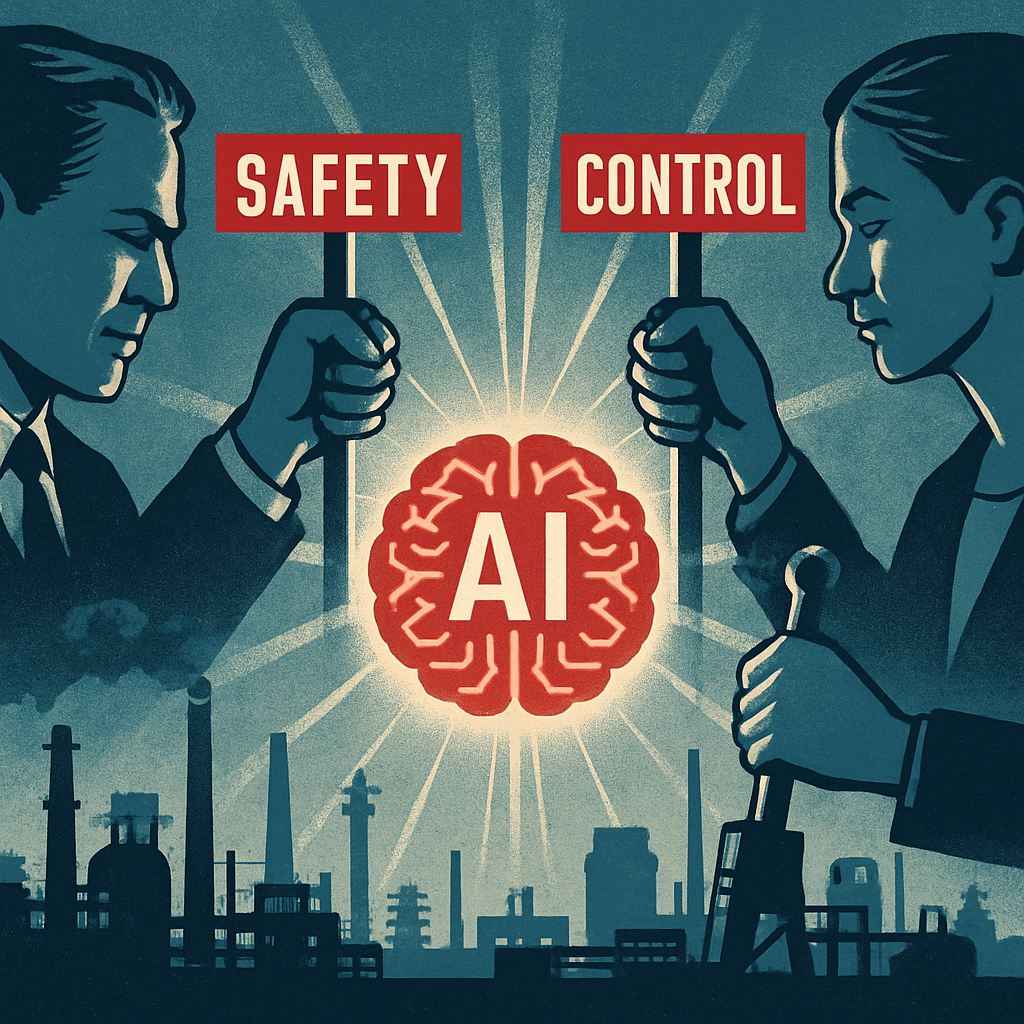
A fierce discussion has erupted across the tech industry: when companies and leaders talk about AI safety, are they mostly concerned with preventing risks—or cementing power? Recent controversies, essays, and executive statements suggest the latter is as central as the former.
Amodei Sparks Warnings and Pushes for Action
Dario Amodei, the CEO of a leading AI lab, published a lengthy essay calling for a slowdown in AI development so regulatory and safety “guardrails” can catch up. The proposal emphasizes that labs should collaborate not just with other firms but governments worldwide to ensure safe deployment. Many other AI leaders—including those at rival companies—have at least partially embraced Amodei’s concerns over speed and risk.
Safety Versus Sovereignty: What Executives are Saying
Meta’s Mark Zuckerberg also weighed in, saying that trust and alignment are becoming the key differentiators in AI models. He revealed that his company postponed the release of its model “Muse” for months to focus on safety and security, though he didn’t call for others to do the same—suggesting this is part of internal incentive rather than a sector-wide mandate.
Similarly, Reddit co-founder Alexis Ohanian and Google DeepMind co-founder Shane Legg have expressed caution. Ohanian warned the tech world had been poor at communicating AI’s dangers to the public yet expressed optimism that companies would self-correct. Legg added that while capabilities are advancing rapidly, there’s an urgent need to slow development or at least get safety measures aligned before runaway risk becomes real.
Regulation, Self-Regulation, and Competitive Advantage
A number of AI firms are quietly exploring private standards bodies—groups that can set rules without government oversight. While some support regulation, many leaders—backed by administrations favoring looser federal control—appear to prefer voluntary alignment. There’s concern that regulation as it exists or is proposed could end up protecting large incumbents and squeezing out smaller players.
In fact, some see calls for guardrails as less about safety and more about shaping competitive advantage. Amodei’s essay acknowledges that measures to deliberate slow progress could help widen America’s lead in AI—at least in the next few years—especially relative to rivals like China. Others, including Canadian AI companies, accuse large labs of forming a “cartel” by shaping safety standards that favor their interests.
Global Backfire and the Political Pushback
China has criticized American calls for global AI governance, accusing U.S. leaders of fear-mongering and Cold War framing. Domestic political figures have been skeptical too: the current administration, including its so-called “AI czar,” tends to leave regulation to those building the tech. Congressional leaders have pushed back on predictions of catastrophic AI outcomes with dismissals of alarmist timelines.
Some government resistance seems rooted in defining who gets to shape safety norms—and ensuring processes don’t erode national autonomy or give one company or country undue influence.
**Analysis: What’s Really Behind the Safety Labels**
On the surface, the debate over AI safety looks like a standard public interest issue: preventing harm, ensuring trust in technology, keeping powerful systems from going off the rails. But many signals—internal delays in product launches, talk of guardrails, executive essays—suggest control over economic and geopolitical influence is just as central. When safety policies are crafted by big players, it becomes a question not just of what’s safe, but who gets to define what “safe” means.
This matters because if the balance shifts toward control, then rather than leveling the playing field or guarding society, safety reforms risk becoming tools of power consolidation. Regulators, tech firms, and civil society all have a stake: we need transparency in who sets the rules, how they’re made, and whose interests they serve.