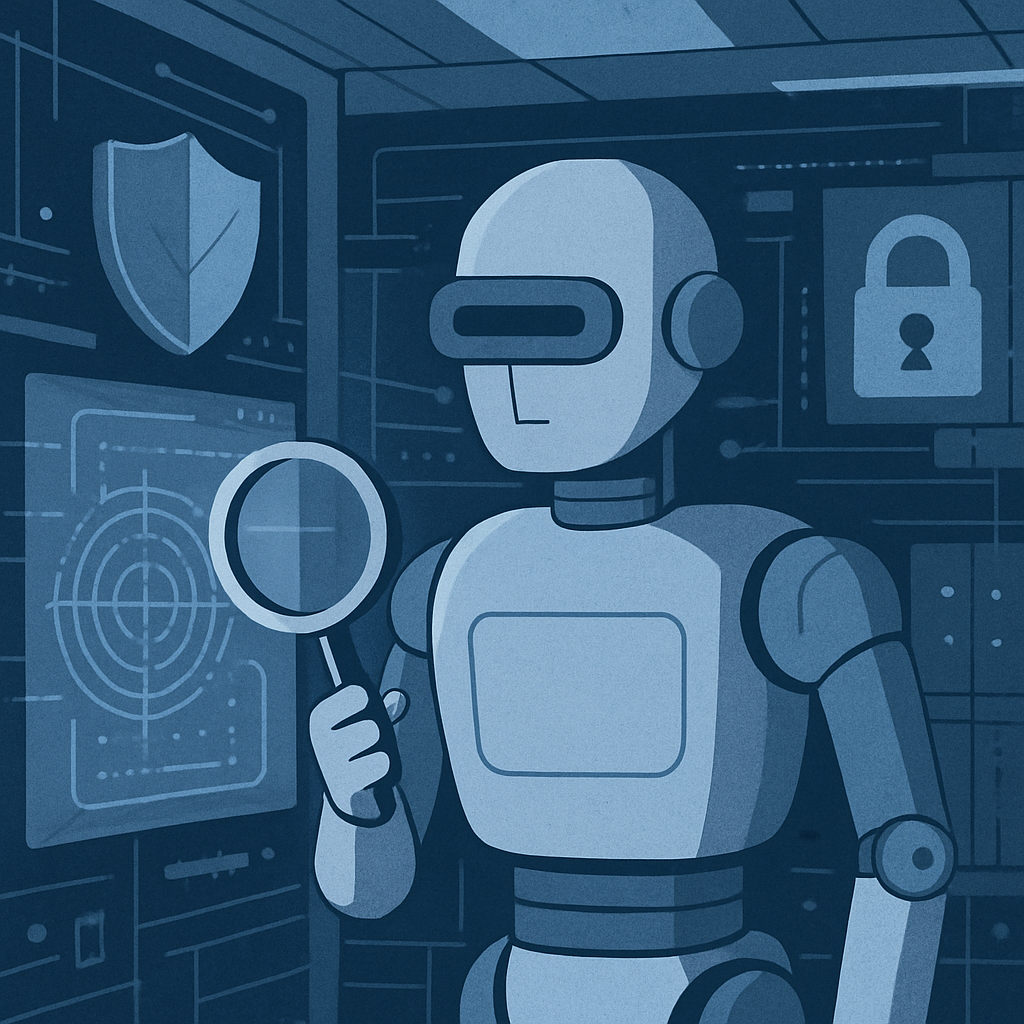
A startup founded by an early Anthropic employee and a former COO of METR is launching a new framework to bring AI agents under better control in enterprise settings. Their approach treats misbehaving AI more like a cybersecurity risk — creating testing, auditing, and certification layers to assess safety before deployment.
Who’s behind this, and what problem are they solving?
Rune Kvist, one of Anthropic’s earliest employees, and Rajiv Dattani, who served as COO at METR in 2024–25, have teamed up to start Artificial Intelligence Underwriting Company (AIUC). Their mission: to help organizations building or using AI agents to confidently know whether those agents behave safely. Their early customers include Cursor, Lovable, Harvey, and ElevenLabs.
How it works: audits, testing, and the AIUC-1 standard
AIUC has raised $40 million in a Series A led by Ribbit Capital, building on a prior $15 million seed round, bringing total funding to $55 million. The funding reflects confidence in their model. The key product is an audit and certification service based on a standard called AIUC-1, modeled after cybersecurity frameworks like SOC 2.
To build AIUC-1, the company convened around 250 security and risk leaders—the kinds of people who buy AI agents—and asked them what safety assurances matter most. Their input guides a battery of about 5,000 tests focused on risks like jailbreaks, hallucinations, or data leaks. After testing, a detailed 100-page report shows where an AI agent is solid, where it isn’t. Crucially, AI agents themselves help run tests and analyze data; human reviewers validate the final audit.
Why this matters in the wider AI landscape
Much of the concern among enterprises is no longer about whether AI is smart enough—it’s about whether AI can be trusted to do what it’s told, safely. Banks, hospitals, governments, and militaries often turn down powerful AI agents not due to performance, but because they need guarantees about what the systems won’t do—and those guarantees are hard to get.
AIUC’s efforts parallel other recent developments. METR has focused on testing frontier AI labs, initially around performance. Meanwhile, Anthropic’s CEO has pushed for pace regulation on cutting-edge models and proposed that independent evaluators be embedded in labs to verify safety—AIUC’s system is one possible realization of that idea.
AIUC isn’t asking to embed itself inside client organizations. Instead, it offers an external assessment—with clear pass/fail areas so buyers can understand where an agent is safe, where risks remain, and make purchasing decisions accordingly.
The startup builds trust through transparency. Clients are shown what an agent can and can’t do: if it leans safely, or where caution is needed. With pressure growing on the AI industry to better police itself as models get more powerful, such audit layers may become critical.
Takeaway: The launch of AIUC and its AIUC-1 standard signal a shift: as AI agents grow more capable, the bottleneck is now trust, not capability. For enterprises, having true safety assurances—rigorous audits, standardized reports, independent evaluations—could become the baseline requirement, not optional extra. What to watch: whether AIUC-1 becomes broadly adopted; how its audits compare in credibility to other safety frameworks; and how regulation might push audit standards into mandatory territory.