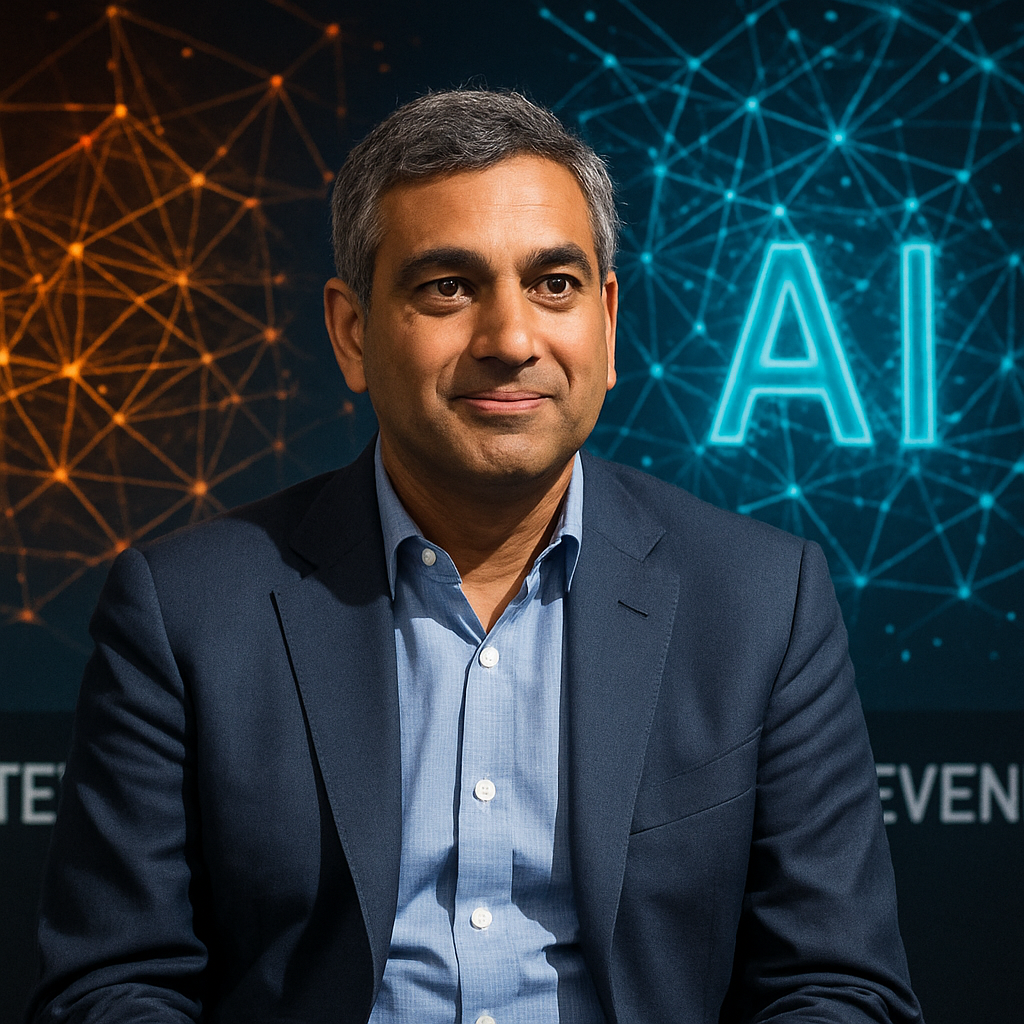
Insight Partners is charting its own path in the AI gold rush. While many venture firms are placing all their chips on OpenAI or Anthropic, Insight — under long-time co-leader Devin Parekh — is sticking to a diversified strategy and investing across stages, industries and geographies. At a recent event in New York, Parekh laid out why he believes this approach is smarter, safer and better for long-term returns.
Backing winners without betting the farm
Insight Partners currently manages about $90 billion in assets. Despite owning stakes in both OpenAI and Anthropic, Parekh says the firm has avoided putting too much weight into either company, favoring a spread-out portfolio instead. He acknowledges the energy and competition around frontier AI labs have skewed many investors toward concentrating capital in just a few headline-making players. But from Insight’s perspective, history and data favor diversity over doubling down on one or two names. The firm strives to think in terms of many funds, not just one. Even though a high concentration in OpenAI or Anthropic might produce enormous gains under perfect circumstances, it comes with outsized risk and an uncertain upside-to-downside ratio. Insight believes its risk is better controlled by spreading bets across sectors and stages rather than overexposing itself to winners who might underperform in certain downturns.
That said, Parekh isn’t completely shying away from late-stage AI plays—Insight has written large checks into both OpenAI (with a consumer bent) and Anthropic (seen more on the enterprise side), even as those lines now blur. But those investments are part of a larger mix that includes early-stage bets and geographic diversification. The firm also remains on the watchlist for emerging applications of physical AI, though it treats robotics and related infrastructure as farther-out, speculative opportunities rather than core areas just yet.
Earth real-world concerns — valuations, exits, and competition
Valuations in AI are climbing at the same fevered pace seen in 2021. Parekh raises concerns that many growth rounds today move so quickly they offer little additional verification or clarity — meaning investors are paying up without reducing risk. His prescription is to shift capital toward earlier-stage deals, where opportunity is less expensive and upside remains larger. Insight has routinely taken this path: making smaller initial investments, then scaling up in those that show strong momentum.
On exit side, Insight has become more proactive with liquidity. It has returned over $20 billion to limited partners in recent years through IPOs and strategic sales, with more in the pipeline. Parekh stresses LPs don’t get paid by holding positions indefinitely, even if the potential is huge—so selling or taking some gains off the table is not only smart, it’s part of their fiduciary responsibility.
Insight also acknowledges competitive dynamics in dealmaking. The firm recently lost the legal-tech startup Legora to another investor, General Catalyst, despite flying in a partner personally to pitch the opportunity. It’s a reminder that even large firms with strong track records don’t always win every deal — and that founders matter just as much as capital.
The road ahead: IPOs, regulation, and physical AI
Parekh expects a wave of AI-related IPOs in the next 12 to 18 months. He forecasts public debuts from companies including OpenAI, Anthropic, and SpaceX — each potentially reaching trillion-dollar valuations. The key test will be how smoothly these public market transitions go, and what valuation benchmarks they set for the companies coming behind.
On regulation, risk and ethics: Parekh argues that while there are valid dangers in AI — from biosecurity threats to misuse — there’s also tremendous potential, especially in healthcare. Insights gleaned from vast datasets could help with disease prediction and medical innovation. Oversight will grow more necessary as AI becomes more deeply embedded in public systems, but the upside remains substantial.
Physical AI — robotics, AI in hardware — still lags for Insight. It’s viewed more as a frontier: historically promising science, but less proven commercially. Insight is paying attention, especially as infrastructure improves and use cases emerge, but isn’t yet treating it as a core focus.
What it means moving forward: Insight Partners is doubling down on what it sees as timeless VC principles — early-stage opportunity, geographic diversity, responsible exits, and risk management. This strategy stands in contrast to the hype-driven bets many are making today.