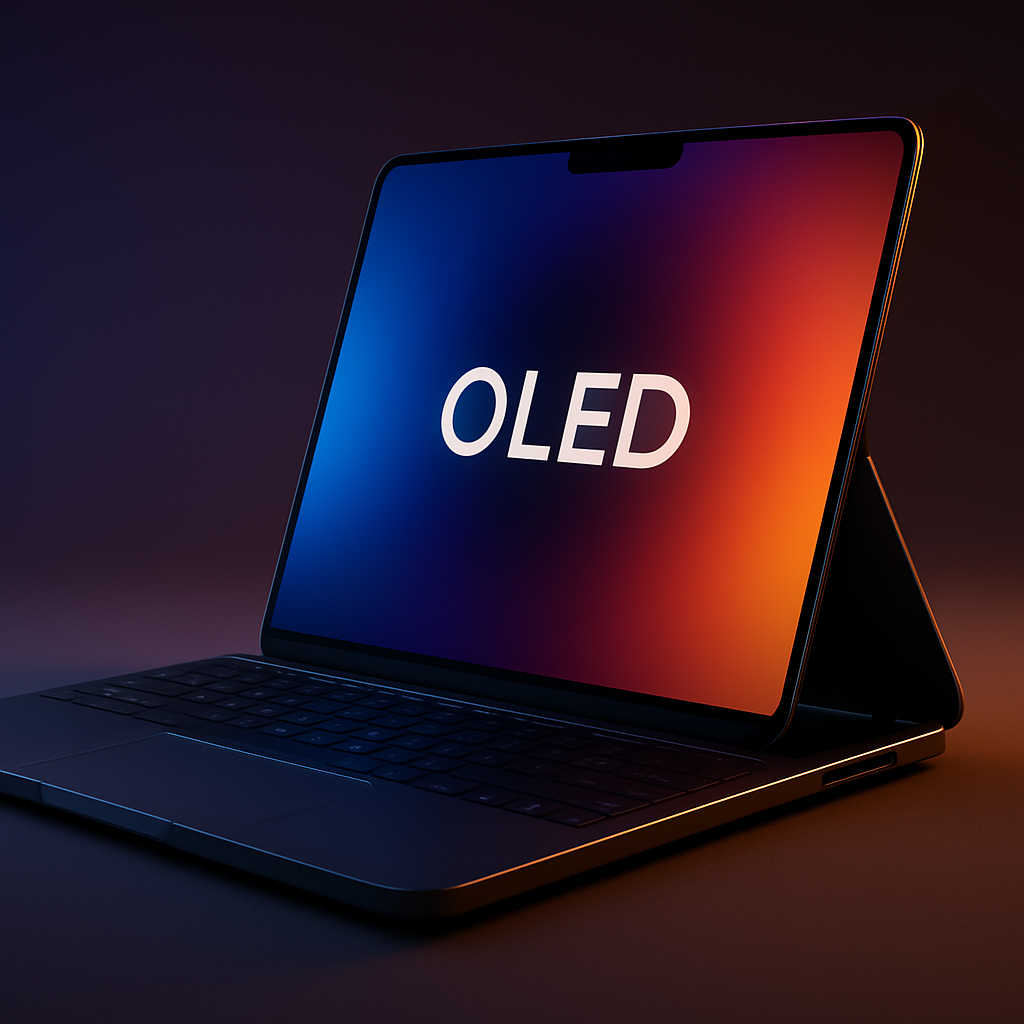
Apple is poised to introduce a new flagship laptop, tentatively called the “MacBook Ultra,” expected to sit above the M5 Pro and M5 Max MacBook Pro models without replacing them. This Ultra model will bring several major upgrades, building toward an ultra-premium tier while the current Pro line remains available. Replacing rumors suggest it may launch between October and December 2026, unless delayed by supply chain issues.
What’s New in the MacBook Ultra
1. OLED Display: The MacBook Ultra is expected to switch from mini-LED to OLED panels. These will offer deeper color, true blacks, better HDR output, and more power efficiency. Samsung Display is reportedly the exclusive supplier for the panels, having invested in an 8.6-generation OLED line in South Korea, which reached a crucial stage for mass production in May.
2. Full Touchscreen Support: Apple is said to be breaking free from its long-held resistance toward touch input on Mac laptops. The Ultra model may be the first Mac to allow touches directly on the screen, enabling interaction via fingers in addition to trackpad or mouse. This change builds on hints in macOS Golden Gate—features like pull-to-refresh and interactive Sidecar suggest the OS is being prepped for touch.
3. Reinforced Hinge: To address concerns about screen wobble when using touch input, Apple is developing a tougher hinge and sturdier screen hardware. The idea is to prevent display flex or bounce that plague existing touch-PC designs.
4. Thinner, Lighter Design: With the shift to OLED and reinforcement to the hinge, Apple aims to make the MacBook Ultra significantly thinner and lighter. The company is reportedly pushing for a clean redesign—a true overhaul compared to current models, which got thicker and heavier in recent years, even as they reintroduced legacy ports. How Apple manages to balance thinness with port variety will be a key question.
5. Dynamic Island Style Display Cut-out: The Ultra may drop the current notch and replace it with a cut-out similar to the iPhone’s Dynamic Island. Like on iPhones, this cut-out would expand or change based on app context, giving users space for notifications, status, or interactive elements—while also addressing long-standing complaints about the notch interfering with the macOS menu bar.
6. Higher Price Point: As expected, this premium line will carry a steeper price tag. Apple raised prices across its MacBook Pro models just in June 2026—boosting each by about $300—so the Ultra models are likely to start well above those new baselines. For example, the higher-end 14-inch MacBook Pro with M5 Pro now begins at $2,499, and the 16-inch starts at $2,999. The Ultra will reportedly exceed those starting points.
What Apple Is (and Isn’t) Doing with Chips
The initial Ultra is expected to use the existing M5 Pro and M5 Max chips. Meanwhile, Apple is skipping ahead of what some assumed would be “M6 Pro/Max” chips, aiming instead for M7 versions to underpin future models—especially the second-generation Ultra, expected in 2027. An M6 chip is still expected in entry-level MacBook Pro models launching later this year.
No official date has been confirmed, but Apple watchers believe the Ultra could arrive before the end of 2026, barring constraints like the global memory chip shortage.
Apple’s shift here marks one of the biggest possible changes to its laptop line in years—not just in specs, but in how users will interact with macOS. The Ultra takes on design, input, and price in ways that signal a clear push into a truly flagship laptop segment.
What This Means & What to Watch: If delivered as expected, the MacBook Ultra could redefine Apple’s high-end laptop lineup. OLED touchscreens and interactive cutouts would bring Macs closer to the fluid app experiences on iPads and iPhones. But success depends on execution—quality of the OLED panels, durability of the hinge, battery life under richer displays, and whether Apple can retain ports while making the body thinner. Price will be another watchpoint: customers will need a compelling case to pay significantly more than current Pro models. If this Ultra line sets the new standard, the rest of the MacBook family may soon evolve around it.