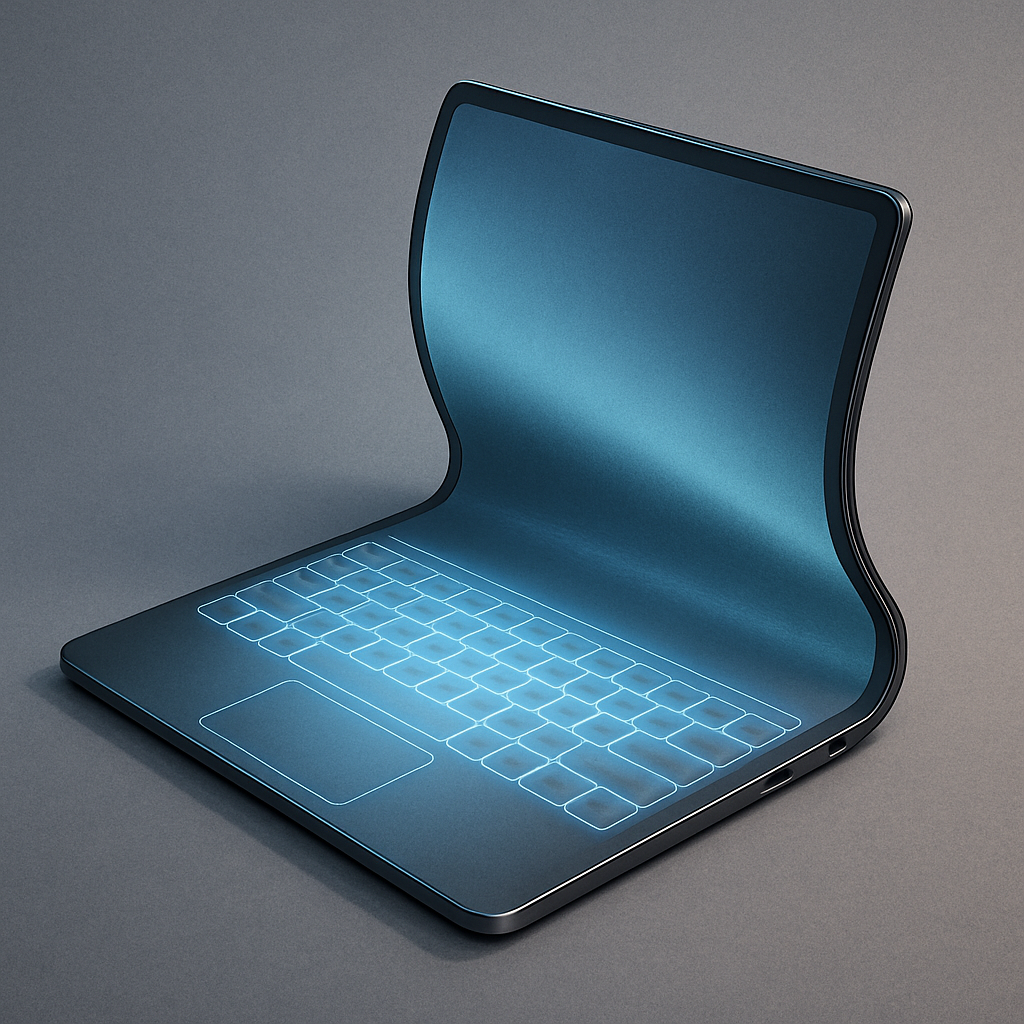
Apple continues to explore making a foldable Mac—likely a clamshell-style laptop or hybrid of Mac and iPad—but it’s not ready for prime time. Reports that the foldable project was cancelled are overblown; instead, it has been delayed while the tech needed to pull it off catches up.
From Rumors to Delay
Rumors have long suggested Apple is working on a foldable Macbook, sometimes described as a hybrid, sometimes more like a large foldable screen with keyboard components. Part of the appeal is convergence—Macs running apps built for iPhone and iPad already, as well as tools like iPhone mirroring. The vision for a foldable device reflects that blending of hardware and software, but according to insiders, Apple isn’t giving up—it’s just holding back until the engineering obstacles are resolved.
Why a Mainstream Foldable Mac Still Feels Remote
One major hurdle is the keyboard. Apple seems to believe that in order to make a foldable Mac viable, the keyboard must evolve. Dynamic hardware keyboards—where key labels or functions shift depending on the app—are seen as an interim design. But most mainstream users haven’t embraced them yet.
Beyond that, fully soft keyboards—flat surfaces that act like mechanical keys—must address three core issues: comfort, tactile feedback, and physical feel. Apple has been pursuing patents that play with flexible displays, haptic motors, texture-shifting surfaces via electrostatic charges, and even innovations like electroosmotic pumps that let sections of touchscreens pop up when needed. These mechanisms are in the research phase, not yet ready to replace standard keys.
What’s Likely Coming First
Before a foldable Mac arrives, dynamic input devices and adaptable keyboards are expected to lead the way. Imagine a Magic Keyboard or MacBook base that changes its key functions depending on the app, or physical overlays that remap shortcuts for video editing or design work. While these feel limited today, they set the groundwork for entirely soft inputs that unfold into full-sized screens for creative work, media consumption, or sketching with a stylus.
When Will It Happen?
It’s less a question of if and more of when. Key technologies like flexible displays, reliable haptics, and advanced touch feedback must mature further. Apple likely paused its foldable Mac plans to avoid launching something underwhelming. But the patent filings and early prototypes suggest the company still considers this a future direction. A first generation foldable Mac seems further off than the current cycle—likely beyond several years.
This isn’t just about folding screens—it’s about rethinking how we interact with a notebook. Once soft keyboards match the comfort, responsiveness, and feel of mechanical ones, Apple could unleash a device that unfolds into a single giant display or folds down for portability. That day isn’t here yet, but every piece is being tinkered with.
Analysis: This matters because Apple leading foldable laptops could reshape both device design and user workflows. Flip, fold, reshape: that kind of flexibility challenges traditional forms. For app developers, designers, and hardware competitors, this signals what might be coming. Keep an eye on patent filings, display-technology breakthroughs, and Apple’s hardware division announcements. When those pieces align, the foldable Mac shifts from science project to product.