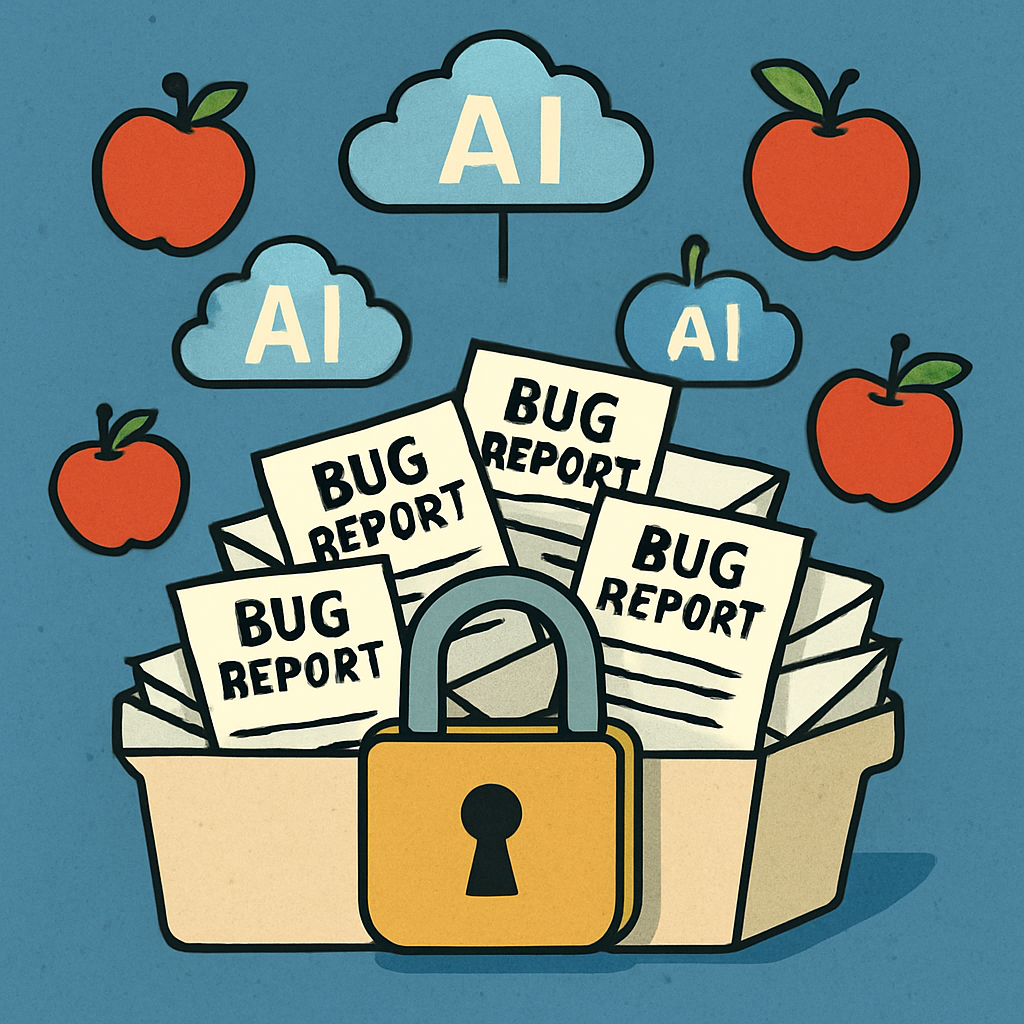
Apple recently implemented a policy that limits how many vulnerability reports researchers can submit through its portal, enforcing a 30-day cooldown when the cap is hit unless additional quota is requested. This change aims to address a flood of AI-generated reports that have strained its security review process. However, many argue this is a damaging move given today’s rapidly evolving threat landscape.
What Apple’s New Submission Caps Look Like
Since June, researchers bringing security flaws to Apple now face a limit on submissions. Once they hit the cap, they’re locked out of further reports for 30 days unless they apply for a higher quota. The surge in AI-produced vulnerabilities—tools capable of quickly identifying flaws beyond human reach—has been credited with most of the volume that overwhelmed Apple’s triage systems.
One highlighted case involves Bynario, a small startup. Despite reporting five bugs this year (and eight in 2025), its submissions were blocked. One report it submitted in 2025 eventually led to Apple patching a privilege-escalation vulnerability that could allow full system control of a Mac. But the delay caused by the cap meant critical issues sat waiting.
The Stakes: Why This Matters More Than Ever
Recently, a severe exploit in Coldcard hardware wallets resulted in over $116 million in stolen Bitcoin. Attackers exploited a firmware flaw rooted in code from 2021, which had lingered undetected until newly discovered—likely with AI’s help. This example underscores the growing importance of bug detection, especially when AI helps uncover bugs human researchers might never have found.
When defenders slow down the reporting process—while attackers face no such limits—it creates a vulnerability mismatch. Bad actors don’t need to ask permission to find exploit paths; they don’t have waiting periods or caps. If the system defending us throttles its own ability to detect issues, AI-powered attackers gain the upper hand.
AI-generated “slop” bug reports are part of the problem. These are low-value or duplicate reports that make reviewer duty harder. But experts suggest that thinning out legitimate reporting isn’t the answer. Rather, what’s needed is smarter triage and better filtering—tools and processes to separate signal from noise—so worthy reports are prioritized and handled swiftly.
For major tech firms especially, scaling triage is now a security imperative. That means more staff, better automation, and clearer meta-policy—how researchers are guided, how reports are categorized, how the system flags urgency. When legitimate reports are blocked or delayed, consequential flaws—in firmware, permissions—even in long-forgotten code, sit exposed.
Having caps in place may seem like a way to preserve focus under volume—but in practice, it risks discouraging researchers and slowing down fixes. The Coldcard case shows that defects can lurk for years, so any policy that delays vulnerability discovery, especially by AI-enabled hunters, is a gamble with substantial downside.
Analytically, Apple’s new cap policy reflects a growing tension in security: balancing the flood of AI-assisted reports with actionable, meaningful response. But curbing submission volume may tip the scales in favor of attackers—missing opportunities to fix flaws early. Going forward, the more effective path lies in investing in triage systems, clear communication with researchers, and incentives for quality over quantity. It’s not just a matter of handling reports—it’s about maintaining trust and preparedness in a time when AI lowers the barrier for both discovery and exploitation.