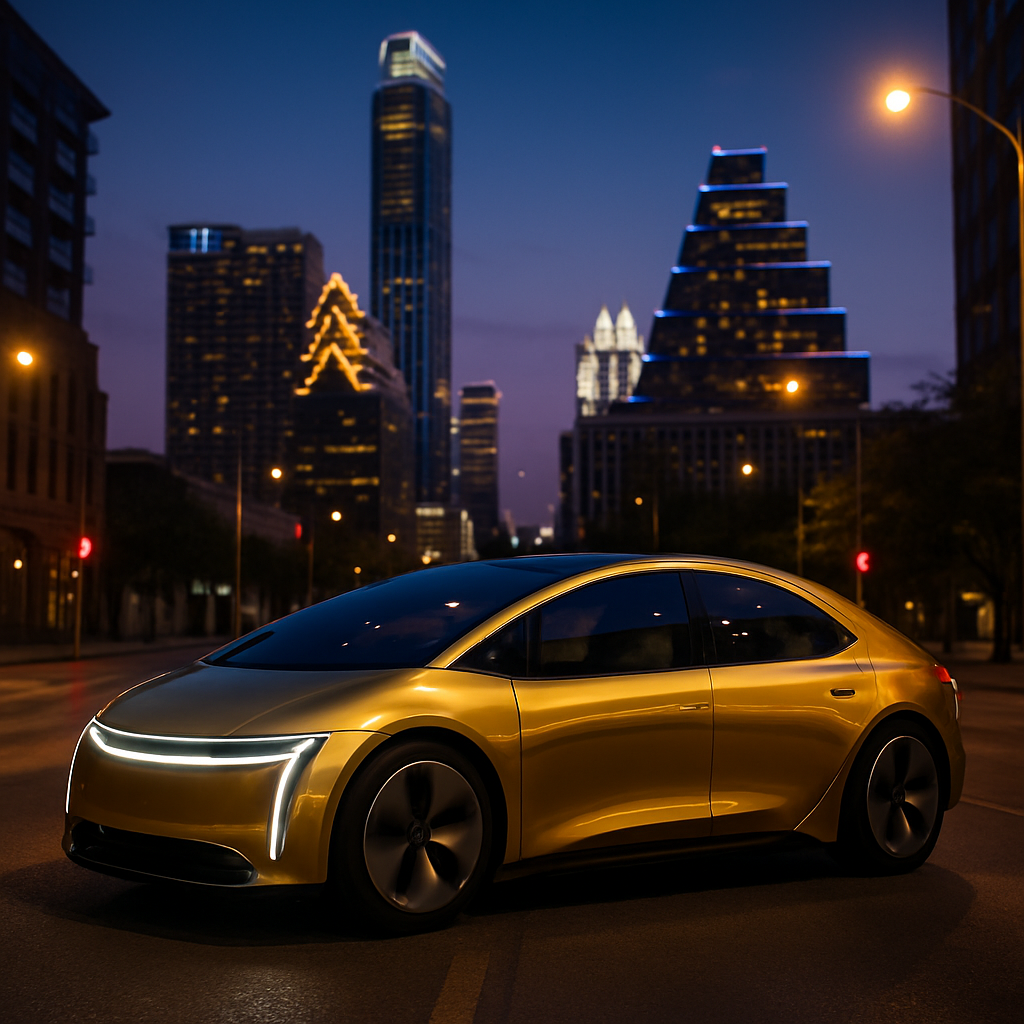
Tesla is poised to cross a pivotal boundary with the imminent rollout of its long-awaited Cybercab. Slated to launch today in Austin, Texas, the Cybercab is a futuristic, two-seat autonomous sedan without steering wheel or pedals that relies entirely on cameras and AI for navigation. The company has offered few details, but it could involve a small, contained deployment downtown or a much broader launch. Numerous Cybercabs have already appeared around Austin and other cities, and state records show 420 autonomous vehicles registered in Texas as of this morning.
In the days leading up to the launch, Tesla ramped up its public messaging. Ashok Elluswamy, head of Tesla AI, hinted that the Cybercab will reshape urban streets. CEO Elon Musk echoed that, saying Tesla will flood Austin with the vehicles, emphasizing the company’s determination to go big or go home. These proclamations represent a sharp turn from Tesla’s earlier, more cautious tone around robotaxi development and autonomous driving safety.
The robotaxi vision takes center stage
Tesla has long pursued a robotaxi dream: fully autonomous vehicles replacing the traditional car ownership model. Over the past decade, CEO Elon Musk has made repeated claims—starting in 2016—that Tesla’s hardware could achieve full autonomy with updated software. But those promises have been pushed back, and Tesla recently acknowledged that many existing vehicles will need retrofitted hardware to reach autonomous capability.
Until now, Tesla’s most advanced consumer-level offering has been its Full Self-Driving (Supervised) software—driver-assist tech that still places legal and practical responsibility on the human driver. With the Cybercab, Tesla aims to shift gears: the vehicle is being built from the ground up to be driverless, bypassing steering wheels and pedals entirely.
Designed for scale—but obstacles loom
One of Tesla’s central design goals with the Cybercab is cost reduction. The car is smaller, lighter, and uses a lower-capacity battery pack compared to its EV lineup. That trims resource demands and manufacturing expense, positioning Tesla to deploy more units more quickly. Fans compare Tesla’s projected unit cost and fleet size to those of rivals like Waymo, arguing that Tesla could outpace them in the robotaxi race thanks to its scale.
However, scaling a robotaxi network involves far more than low unit cost. Tesla has so far operated its robotaxi pilots within geofenced zones—areas where the car can operate under controlled conditions. Experiences in its Austin pilot, using modified Model Y SUVs, have exposed the limits of that approach: Tesla reported dozens of incidents, mostly minor collisions with objects, some human operators intervening remotely at low speed.
Additionally, while Tesla’s earlier tests using Model Ys stayed under the radar, the gold-colored, purpose-built Cybercabs will be hard to ignore. Visibility will make failures more noticeable, increasing regulatory and public scrutiny. And unlike companies such as Waymo—which already have thousands of robotaxis operating in many conditions—Tesla is still catching up in terms of software robustness and handling edge cases.
Ultimately, Tesla faces a fork in the road: the Cybercab could be the moment it truly evolves into an AI-first robotics company with a robotaxi fleet setting the standard. Or it could be where expectations expose gaps in Tesla’s current approach, keeping it defined by traditional automaking. Whatever happens, the next phase of the Cybercab rollout is likely to determine which path Tesla follows.
Analyst’s Take:
The stakes here couldn’t be higher. If Tesla successfully launches and scales the Cybercab, it redefines urban mobility and reinforces its position at the forefront of autonomous system development. But oversights—whether in safety, hardware compatibility, or managing public expectations—could erode trust. Keep an eye on deployment scale, incident reports, and how regulators respond: those will reveal if Tesla is taking its AI future with vision or merely speaking it to survive.