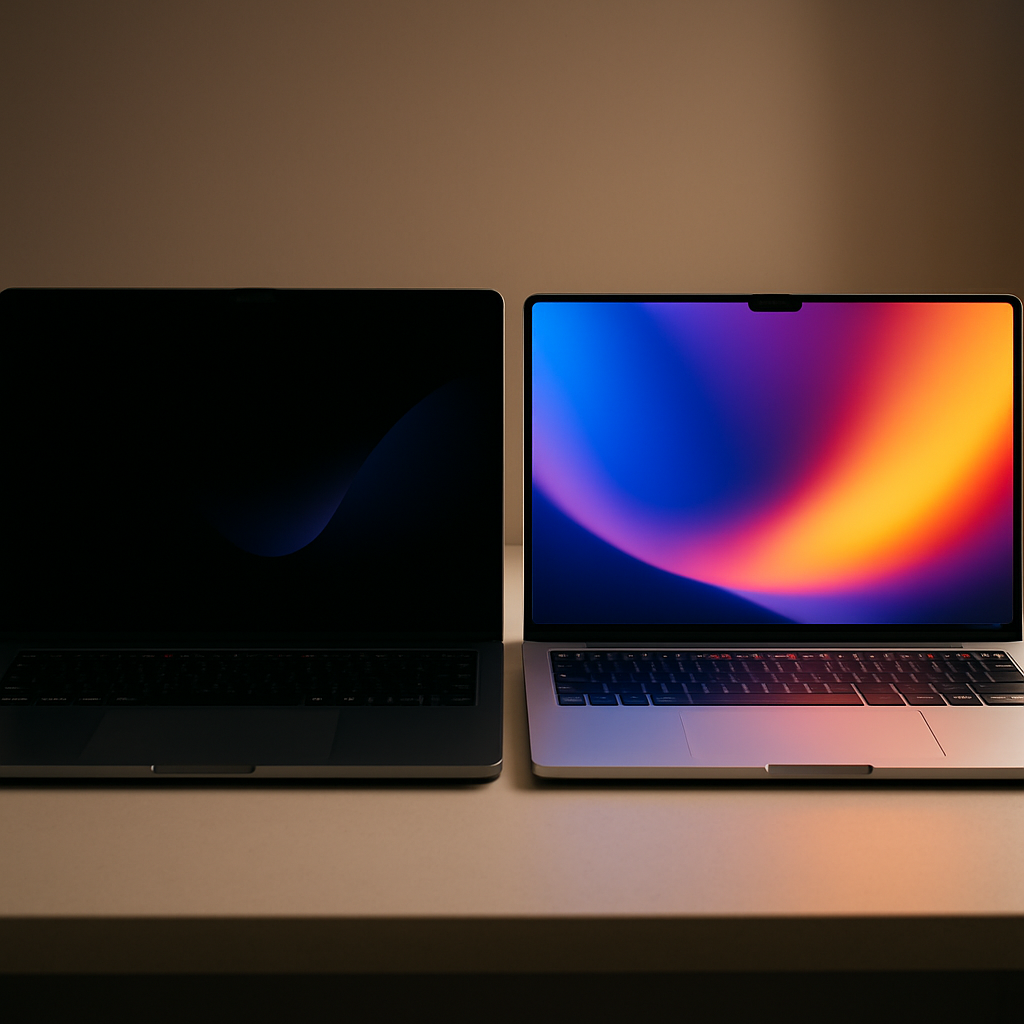
Apple’s switch to OLED panels for its MacBook Pro lineup is moving more gradually than many expected. New research from Omdia shows that the 14- and 16-inch MacBook Pro models with mini-LED backlighting will continue to be sold alongside future OLED versions through at least 2028. Cost pressures for memory and display components are behind the more extended overlap.
What the OLED Roadmap Originally Looked Like
When analysts first predicted Apple’s OLED transition, it was believed that once OLED MacBook Pros were introduced—expected in late 2026 or early 2027—the existing LCD-style mini-LED units would be phased out. That assumption was bolstered by reports suggesting Apple would use OLED to push its flagship line higher; early OLED MacBook Pros were even rumored to carry the “MacBook Ultra” label, positioning them above the standard MacBook Pro models.
Why the Delay and What’s Changing
The revised roadmap from Omdia reflects rising manufacturing costs, especially for memory and high-end display components. To avoid making top-tier MacBooks unaffordable or cutting margins too drastically, Apple appears willing to stretch the life of its current mini-LED models. Maintaining both OLED and mini-LED MacBook Pros simultaneously gives consumers more price tiers and keeps Apple competitive across different segments.
This means prospective buyers who were waiting for an OLED MacBook Pro might not need to rush. The existing mini-LED versions will still receive support and remain in Apple’s product mix well past the arrival of the new OLED models. Meanwhile, the OLED versions—expected in the 14- and 16-inch range—will still launch, but they won’t immediately render the older models obsolete.
The positioning of the rumored “MacBook Ultra” line as Apple’s OLED flagship still holds, and it appears the main difference between its OLED models and mini-LED ones won’t be display tech alone, but also premium materials, features, and likely pricing. The standard MacBook Pro models will continue with mini-LED to offer lower cost options until OLED supply chains mature further.
On the timeline: earlier expectations placed full OLED rollout in early 2027. Now, Omdia’s schedule extends the overlap—mini-LED and OLED will coexist into 2028. That gives Apple a cushion to smooth transition pains in pricing, production, and supply. It also allows for incremental improvements to mini-LED technology while OLED yields scale.
This shift doesn’t suggest cancelation of OLED for Macs—it underscores a more cautious adoption strategy. Whether OLED panels become standard for all MacBooks will depend in part on whether the cost trends reverse, and how Apple’s supply chain adapts. Support, serviceability, and consumer demand will likely inform how quickly the older models fade away.
What this means:For students, professionals, or anyone eyeing a new MacBook Pro, this timeline offers more flexibility. Mini-LED models will offer strong performance and better value for longer than expected. But if your priorities include OLED’s benefits—deeper blacks, higher contrast, potential power savings—then waiting for the new premium MacBook Ultra line might still make sense.