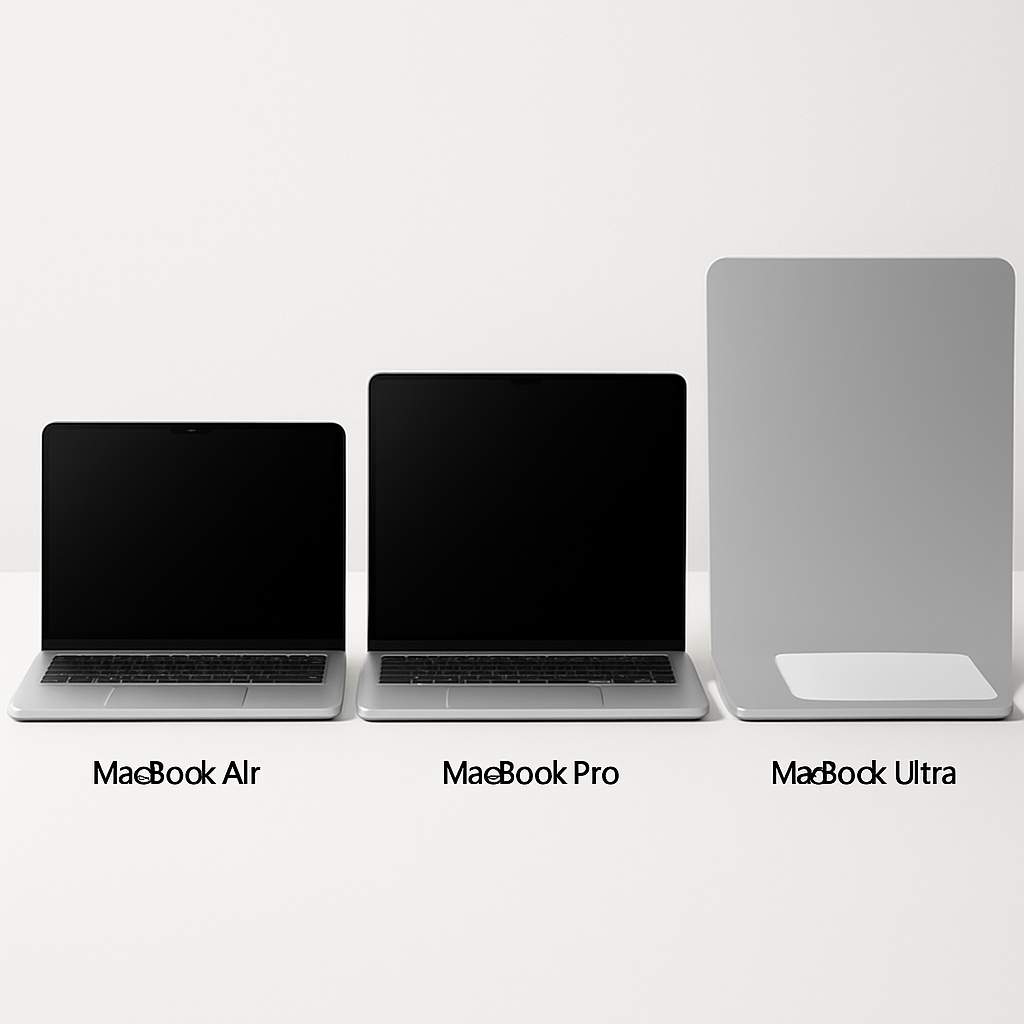
Apple has quietly cancelled development of two highly anticipated MacBook models: a large foldable laptop and a mid-sized OLED version standing between the regular MacBook Pro lines. These changes are part of a broader reshuffle in Apple’s display roadmap for MacBooks and iPads, based on a recent analysis by industry researcher Omdia.
What Was Scrapped
The cancelled foldable MacBook was projected to have a screen that unfolds to somewhere between 16.1 and 18 inches. It had been expected to enter production in 2026, though delays pushed it off its initial timeline. It had previously been described by some sources as being akin to a large foldable iPad rather than a traditional clamshell laptop. The scrapped OLED MacBook was meant to occupy the 14.4- to 16.1-inch size range, creating a tier between standard MacBook Pros and the expected foldable device.
What’s Staying, and What’s Changing
The plan to impose OLED displays across the MacBook and iPad lineup remains intact, though Apple has adjusted which product types will receive which display technologies. In lieu of the cancelled mid-range OLED MacBook, Apple is now pushing forward with a 13.8-inch model positioned between the MacBook Air (LCD) and its higher-end OLED MacBook Pros. This model will feature newer OLED tech including an LTPO+ backplane, an under-panel camera, and color-filter-on-encapsulation display components.
Meanwhile, high-end OLED MacBook Pro models in 14.3-inch and 16.3-inch sizes—sometimes under the “MacBook Ultra” label—are still expected. These will likely debut in the second half of 2026 or early 2027. Mini-LED versions of those same sizes won’t be phased out immediately; Apple is expected to offer both display types in parallel, with mini-LED MacBook Pros remaining available until at least 2028.
Lineup Implications and Timing
With both the foldable variant and the mid-range OLED model off the table, Apple’s MacBook sizing falls into two primary categories: the smaller Air line (LCD, up to ~13-inch), and the higher-end Pro/Ultra class equipped with OLED and mini-LED tech in the 14- to 16-inch range. This realignment simplifies the hierarchy and avoids overlap, especially in the sweet spot between roughly 14 and 16 inches where confusion over tiers had been growing.
As for rollout, the 13.8-inch model could appear before or alongside the new Pro/Ultra machines. Sources expect the OLED Pro/Ultra models in 14.3- and 16.3-inch sizes to be revealed during the second half of 2026 or in early 2027. Mini-LED variants of those same sizes are likely to continue in the catalog for some time, bridging transitions and preserving choice.
Why It Matters
These moves illustrate how Apple is carefully calibrating its product strategy in response to evolving display technologies, manufacturing realities, and market positioning. Folding displays still present challenges in design, cost, durability, and user experience. Meanwhile, OLED technology offers benefits for color, contrast, and energy efficiency, but also requires trade-offs around cost and yield.
Skipping the mid-range OLED MacBook and the foldable model suggests Apple is prioritizing products that are more likely to succeed commercially rather than exploring fringe designs that may not scale. It also makes its tiered portfolio cleaner and more understandable for consumers. Display transitions like this often take several years, and by maintaining mini-LED options alongside OLED, Apple shows it’s mindful of protecting existing investments and segment demands.
Looking ahead, the coming months will be crucial. We’ll want to watch for signs of the 13.8-inch model’s launch, how consumers react to the OLED Pro/Ultra devices, and whether folding laptops or tablets re-enter Apple’s roadmap in some form. These decisions will shape not just design, but how Apple defines premium and innovation in its MacBook lineup.