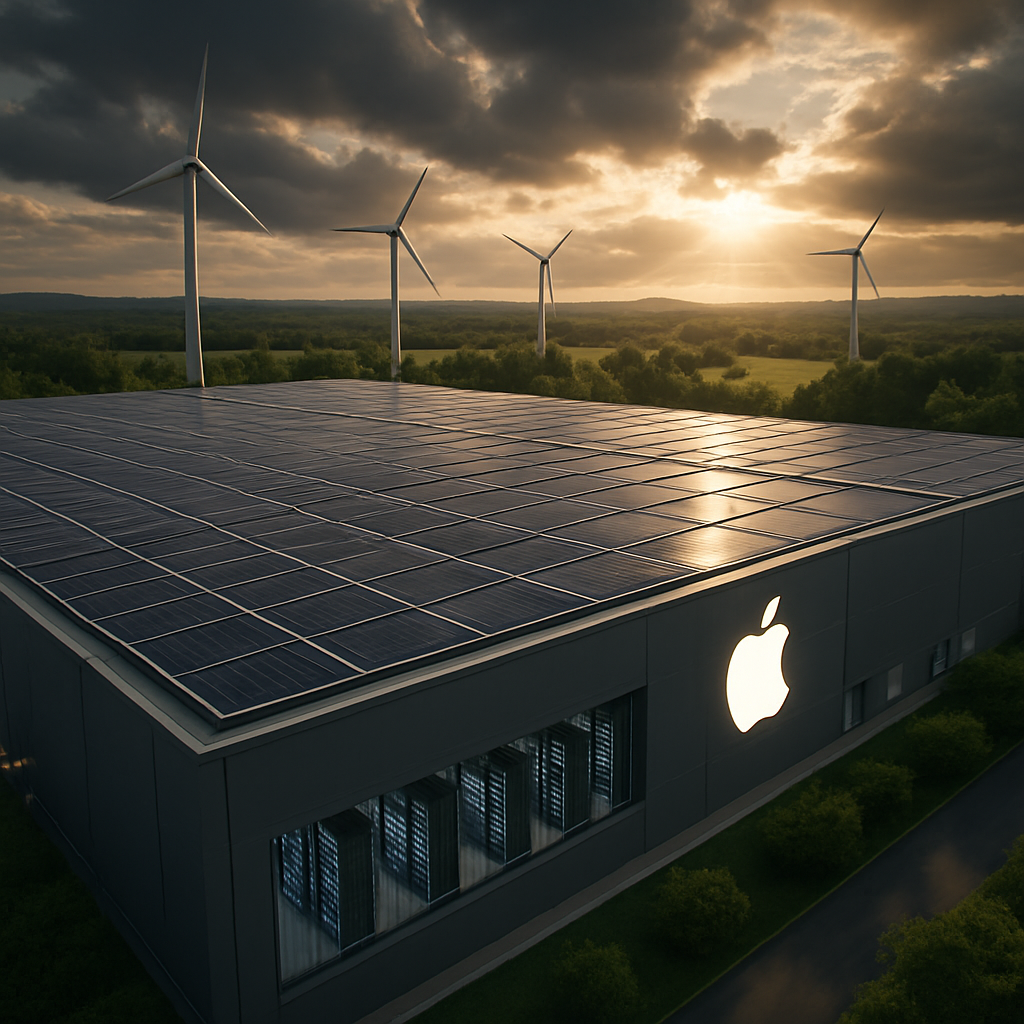
Greenpeace has flagged AI as the next critical benchmark for evaluating Apple’s environmental integrity. While Apple has earned praise over the past decade for its aggressive use of renewables and carbon-reduction pledges, AI—especially the infrastructure behind Siri AI and “Apple Intelligence” features—could severely strain the gains already made. The organization argues that how Apple handles the rising energy, water, and carbon demands of AI will show whether its environmental commitments are more than environmental marketing.
Apple’s Renewable Energy Record
For years, Apple has built a strong green reputation. It operates eight data centers worldwide, all running on 100% renewable electricity sourced through solar, wind, hydropower, and other clean energy means—even as overall demand and operational scale have risen. Greenpeace has repeatedly praised Apple for its major pushes: using renewables in both its owned and co-located facilities, pushing utilities toward clean power, and expanding its supply chain’s renewable footprint. In East Asia, Apple recently received a B+ for boosting renewable energy use among its suppliers.
These efforts reflect long-term infrastructure choices: Apple has invested in its own clean power projects, entered power purchase agreements, and built renewable-backed grids to service its facilities. It also aims to power its data center expansions wholesale with renewables.
The AI Challenge Ahead
But Greenpeace warns Apple’s coming AI rollout challenges those hard-won accomplishments. Siri AI is expected to launch imminently. While Apple has promised most workloads will run on-device, complex tasks will form a dependency on large data centers—a dependency that must be managed carefully, given the substantially higher electricity and water demands of operating large servers.
The group stresses that environmental leadership must now be demonstrated through absolute emissions reductions (not just net-zero goals), increased investment in new renewable sources, greater energy efficiency, and product longevity. They say only by doing so can Apple safeguard its environmental legacy.
Apple’s response has been to point people to its latest environmental progress reports, which detail its renewable energy usage, data center design, and sustainability efforts. Those reports assert that despite growing power demands, all of its global data centers have maintained 100% renewable electricity, and that the company continues to avoid emissions through both design and clean energy sourcing.
Perhaps most telling, one recent report reveals that Apple’s data center electricity usage exceeded 2.5 billion kilowatt-hours in 2025, yet all of it came from renewable sources—underscoring its ongoing commitment even as scale rises. Yet Greenpeace notes that AI’s growth threatens to undo that progress if efficiencies do not keep pace.
AI will be Apple’s defining test: whether Siri and similar services mean exponential data center loads, or whether they push the company to deepen its existing climate action. If Apple fails here, years of environmental leadership could be undermined. On the other hand, succeeding could reset the bar for tech industry sustainability. Observers should watch closely how Apple reports its AI-related emissions, whether it invests in new grid-scale renewables, and whether its next hardware and software designs prioritize efficiency and durability over raw performance.