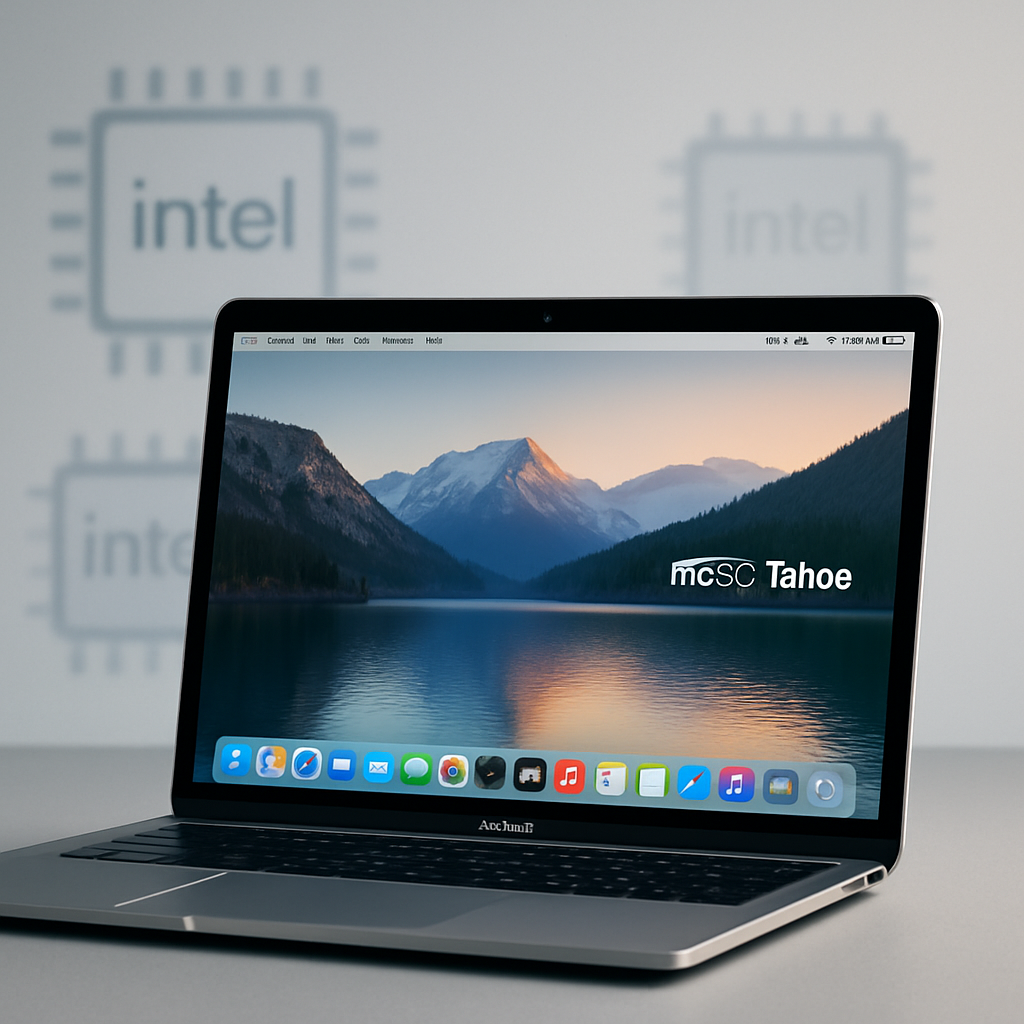
Apple has formally declared that developers no longer need to maintain app compatibility for Intel-based Macs, signaling the final phase of its shift to Apple Silicon. In new guidance to developers, Apple confirmed that macOS 27, internally called Tahoe, will be the last macOS release to run Intel-exclusive applications. From macOS 28 onward, those Intel-only apps will no longer run. This marks the culmination of a multi-year transition process that began in 2020.
Three-Stage Roll-Out Timeline
The phased removal of Intel support is being introduced in three stages. First, users on macOS 26.4 and later will begin to receive alerts to update Intel-only apps. Next, during macOS 27, Intel-only apps will still be allowed to run—this acts as a grace period. Finally, in macOS 28, Apple will enforce full discontinuation; Intel-only apps will no longer launch at all.
Developers were officially notified both via email and in an updated support document that the transition to Apple Silicon is now considered complete. The message encourages developers who haven’t updated their apps to begin migrating immediately to avoid future disruptions.
What’s Changing for App Submissions
Until now, macOS apps submitted to the Mac App Store were expected to be “universal,” meaning they worked on both Intel- and Apple Silicon-based Macs. Post-Tahoe, developers submitting to the Mac App Store can omit support for Intel Macs entirely. That said, apps distributed outside the Mac App Store will still function until macOS 28, when the cut-off comes into effect.
Apple’s transition from Intel to its own chip designs began in November 2020 with new models of the MacBook Air, Mac mini, and 13-inch MacBook Pro. The Mac Pro was the last Apple machine still built with Intel, but it transitioned to Apple Silicon in 2023 and has since been discontinued.
With Tahoe being the last macOS that supports Intel basement architecture, this change brings an end to backwards compatibility with Intel-only software. Developers and users relying on older, non-universal programs will feel the impact the most.
Why This Matters & What to Watch
This shift closes a long expected chapter: Apple is cementing its full control over macOS platform performance, security, and development consistency by eliminating legacy Intel code. For developers, it means simplifying toolchains and focusing exclusively on Apple Silicon optimizations. Users should plan for compatibility issues with legacy software—apps once supported by Rosetta but never updated for Apple Silicon will stop working in macOS 28.