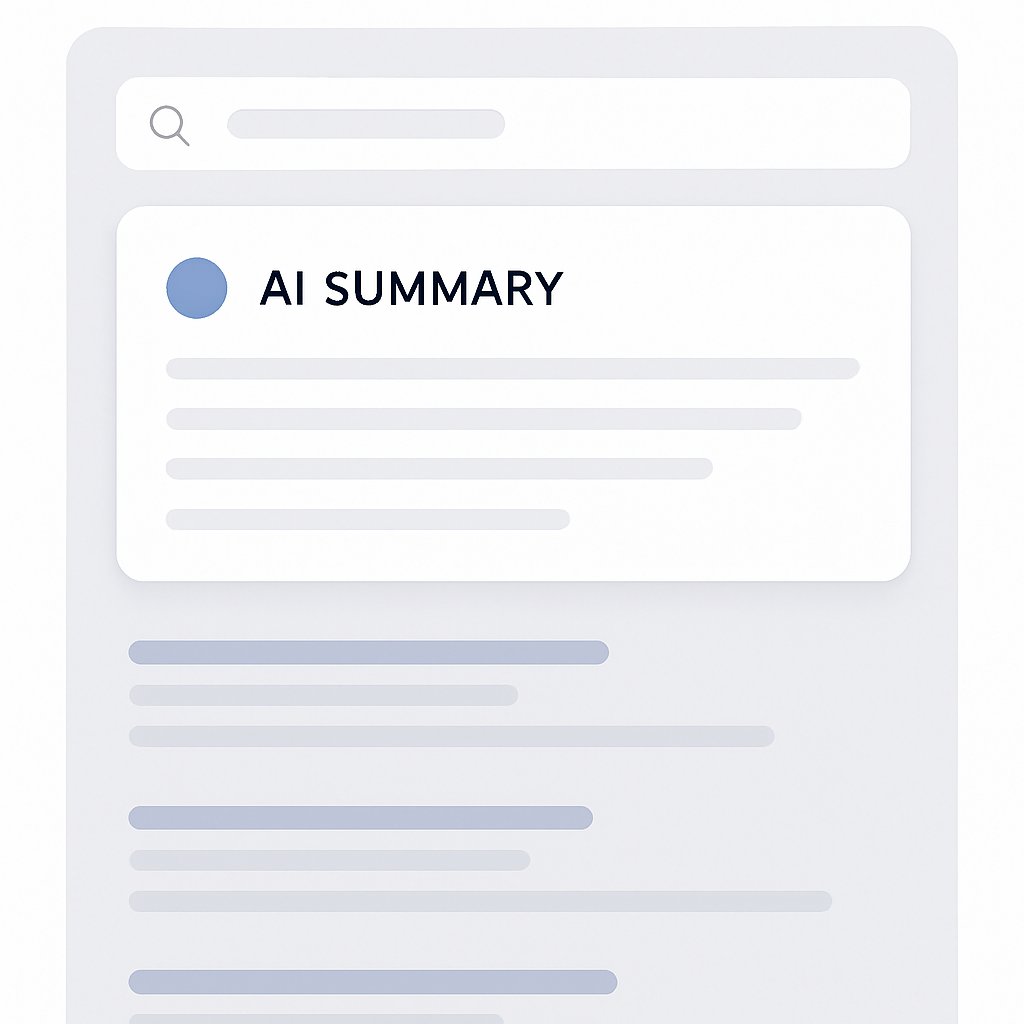
Google has updated how AI Overviews work in Search, making them larger for certain queries so that the overview can fill more of the results page—sometimes even becoming the dominant response above all other links. This change reflects Google’s push to make AI-powered summaries more helpful and visible to users.
What’s Changing with AI Overviews
Previously, AI Overviews appeared at the top of search results in a reduced size, acting as a quick snapshot of key information with links to the underlying sources.
Now, for some searches the AI Overview expands automatically and fills up more space. In those cases, the overview can transform the full search page into what feels like an AI-generated response, pushing traditional search result listings further down or sometimes off the screen entirely. Google has confirmed this behavior but says it only kicks in when its systems determine the query would benefit most from a more dynamic, in-depth AI response.
When Does Google Use the Larger Overviews?
One of the most consistent examples where the full-screen AI response appears is for definition queries—when someone wants to know what a word means or is seeking a straightforward explanation. In these instances, the AI Overview tends to take up the entire screen, replacing the multi-result layout.
This approach is part of Google’s effort to make search more useful by delivering concise summaries that satisfy many user needs without having to click through multiple links. Still, links to relevant sources are embedded within these overviews so users can dig deeper.
The firm describes this update as part of its efforts to improve usefulness and encourage more follow-up engagement when AI Overviews are expanded. Google indicates that testing has shown people are more likely to explore related topics or perform additional searches after seeing these larger summaries.
Google has been offering ways to diminish or disable AI Overviews in Search, as well. Users and site owners can opt out of AI Mode or Overviews, or use search modifiers to reduce AI content in results, though these options affect how Google understands and displays information for those users.
This isn’t the first time Google has made AI Overviews more prominent. In recent updates, a user’s preferred sources can be highlighted, and Google has introduced easier methods to opt out of AI Mode in searches.
What this means: Expanding AI Overviews changes how people interact with Google Search. It may reduce clicks to traditional web pages when users find enough information at the top. We’ll have to watch how this impacts sites that rely on search traffic, and whether Google’s measures to offer opt-outs and preferred source highlighting are enough to balance visibility and control.