A recent proof-of-concept (PoC) posted by researcher MSNightmare claims a privilege-escalation zero-day flaw in Kaspersky Endpoint Security on fully patched Windows 11 machines, though there’s no public verification or official CVE yet.
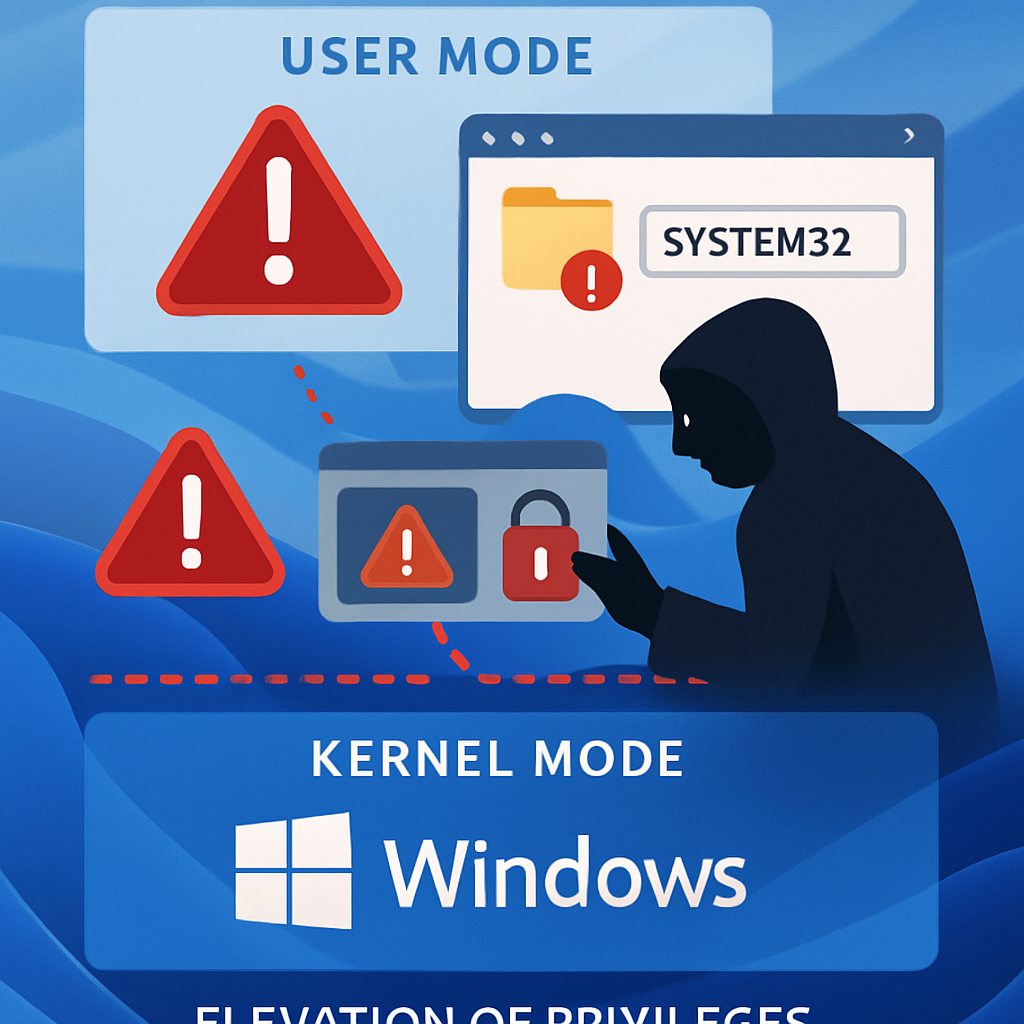
The PoC, called HardBreacher, allegedly exploits a weakness between a local user account and a component of the Kaspersky UI to grant elevated permissions. Testing was done on Windows 11 version 25H2 running Kaspersky Endpoint Security build 14.0.0.504. The exploit is said to be able to write a DLL file named “MY_SNAKE_IS_SOLID.dll” into the normally protected System32 folder and give the current user full control of it. That implies a low-privilege local user might break out of the standard Windows security model.
What’s in the HardBreacher Proof-of-Concept
The code in the repository admits to being unstable. It may fail frequently, requires multiple attempts to succeed, and in one case involves a system reboot for testing. These caveats suggest it’s not yet mature enough to reliably exploit in many real-world scenarios. The author doesn’t provide a full, polished exploit chain, meaning the broader impact across versions, configurations, or deployments remains uncertain.
If the exploit works as claimed, taking control of Kaspersky’s UI process could allow attackers to interfere with how the product allows or blocks files. In some cases it might even destabilize the security product or lead to unexpected behavior, especially if security decisions are hijacked. For enterprise environments, such an issue could be serious, since endpoint protection tools often run with high privileges and enforce policy controls across an organization’s fleet.
Current Status & Defensive Guidance
So far, the claim has not been confirmed by Kaspersky, and no public bulletin or security patch has been officially issued. Organizations using Kaspersky Endpoint Security should treat this as a warning rather than a confirmed exploit. It’s prudent to monitor vendor-advisories, look for updates, and check official support channels for mitigation information.
Meanwhile, defenders should keep an eye out for unusual behavior: anomalies in System32, unexpected DLL files appearing, failures in security services, or changes in Kaspersky processes’ behavior. Testing the PoC in production is discouraged, as it may cause instability or pose operational risks during investigation.
The HardBreacher case illustrates a wider concern: security tools themselves becoming attack vectors. When a privileged protection system has flaws, those get elevated importance. What matters now is whether the community or vendors can reproduce these findings reliably—and whether Kaspersky will address any vulnerabilities proactively. In a world where enterprise security depends heavily on endpoint protection stacks, such reports must be taken seriously, tested rigorously, and patched swiftly.