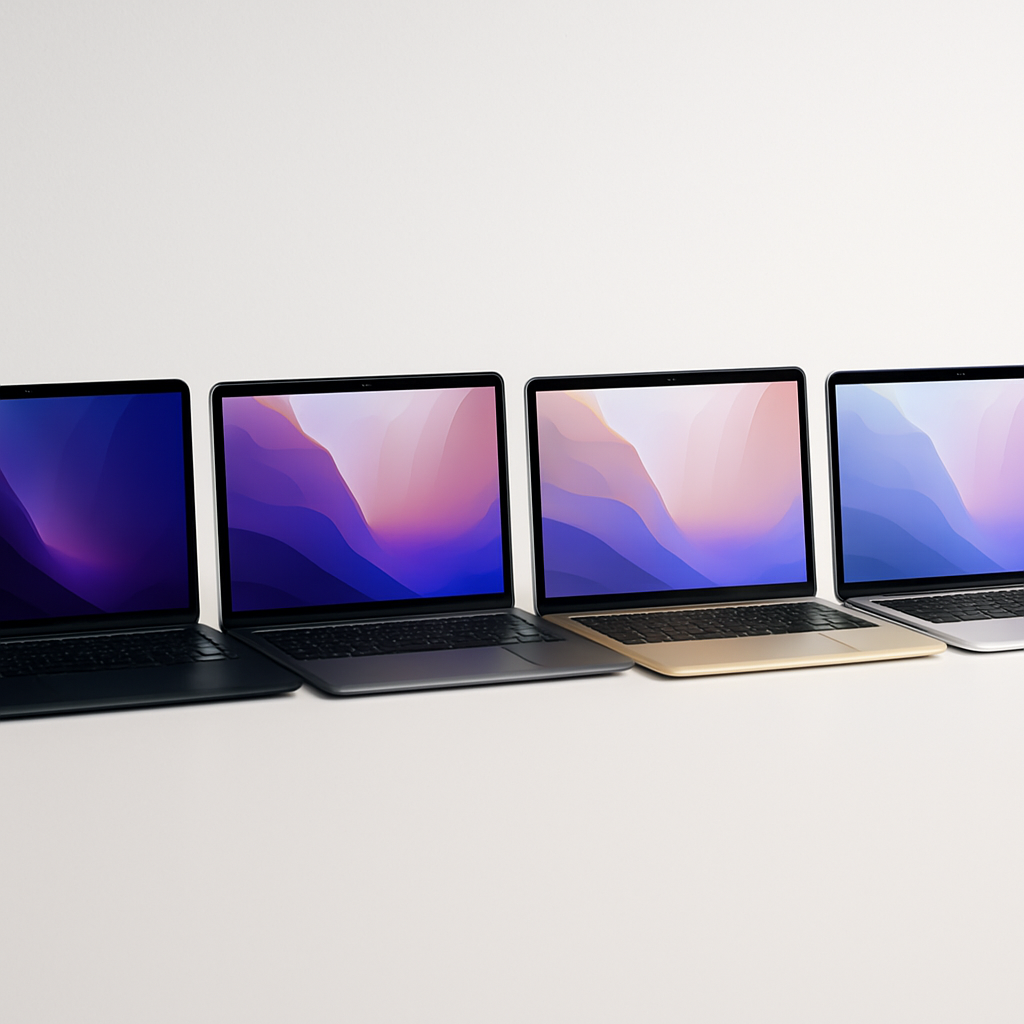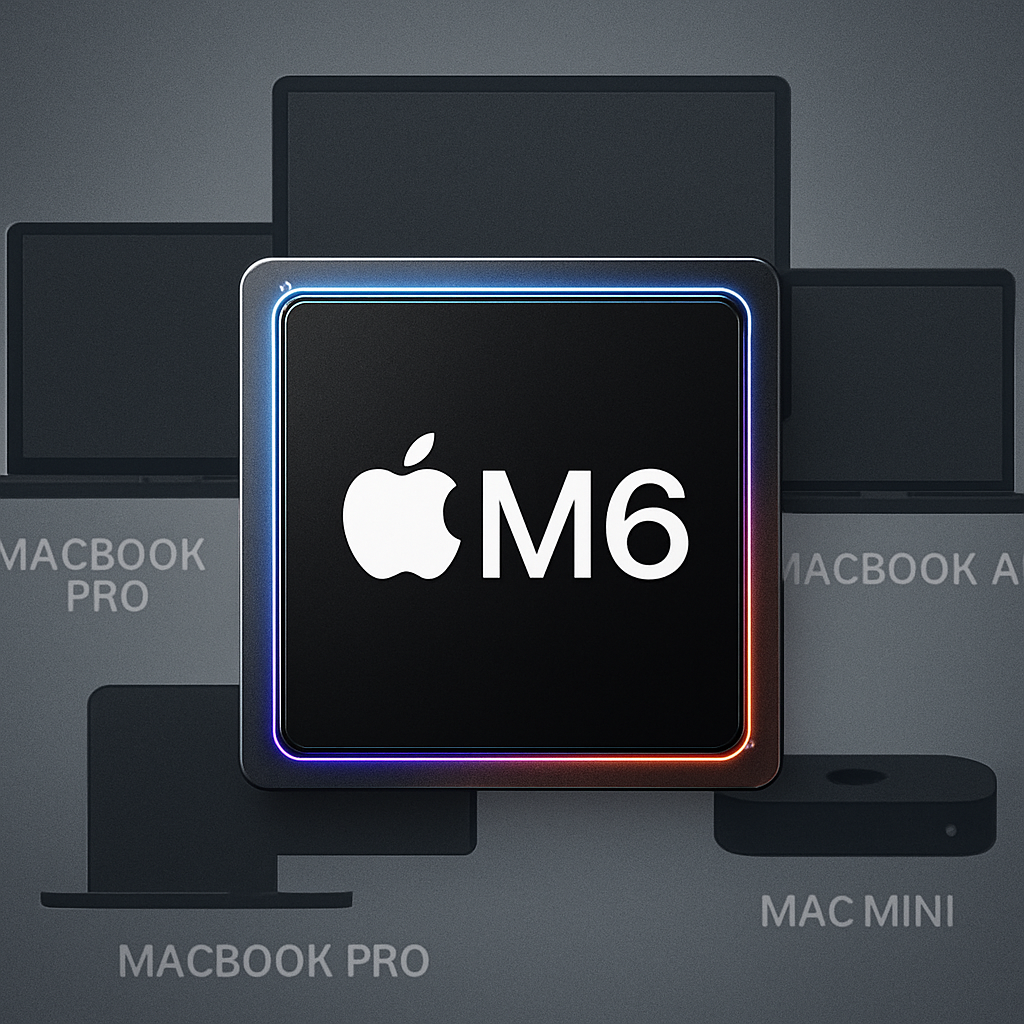
Apple has officially introduced the first Macs powered by its all-new M6 chip with the release of the latest Mac mini. But the M6 transition isn’t sweeping through the lineup—only select models will receive it, leaving others to stick with M5 variants until next year’s M7 wave. The company has also confirmed it will skip M6 Pro and M6 Max designs entirely.
Which Macs Will Earn the M6 Badge
The Mac mini has already launched with the M6 as its base processor. Additional Macs are slated to be upgraded in the coming months:
- The entry-level 14-inch MacBook Pro is expected to get the M6 during its refresh around October 2026.
- The 24-inch iMac is also projected to receive the chip in that same October timeframe.
- The MacBook Air is tipped for an M6 upgrade in early 2027.
- Future iterations of the iPad Pro and iPad Air are similarly likely to be updated, with the iPad Air usually lagging one generation behind the Pro model.
No M6 Pro or M6 Max—And What That Means
Apple has decided to forgo the usual Pro and Max variants of the M6 chip. The company is pushing instead to fast-track the M7 Pro and M7 Max designs, citing growing demand for hardware that supports on-device AI and more demanding GPU workloads.
During this interim period, high-end Macs that might have received M6 Pro or Max chips will continue using M5 Pro, M5 Max, and in some cases the M5 Ultra. For instance, the soon-to-be-released OLED MacBook Ultra—expected late 2026 or in early 2027—will arrive with these existing M5 chips rather than anything from the M6 Pro/Max line. The newly announced Mac Studio already follows this pattern, offering M5 Max and M5 Ultra configurations, while the updated Mac mini is sold with M6 and M5 Pro options.
M6 Tech and Its Short Run
The M6 is Apple’s first chip built with a 2-nm fabrication process, boosting both efficiency and performance by packing more transistors into less space. It features a 12-core CPU that Apple claims includes the world’s fastest CPU core, a 12-core GPU with Neural Accelerators embedded in each core, and a dual 16-core Neural Engine. Memory bandwidth hits up to 170 GB/s. On the graphics side, enhancements include a revised shader core architecture, hardware-accelerated ray tracing, dynamic caching, and roughly 50 percent higher geometry performance for more demanding rendering tasks.
Despite its big leap forward, the M6 is expected to have a short span: Apple plans to unveil the standard M7 chip in the first half of 2027, followed by M7 Pro and M7 Max versions by the end of that year.
Why It Matters
This transition represents a shift in Apple’s chip roadmap strategy. For model lines that usually get Pro/Max upgrades (like MacBook Pro and MacBook Ultra), customers will need to decide whether to wait for M7 variants—or settle for current M5-series chips. That may impact buying decisions for power users who depend on maximum GPU or AI performance. Equally, the M6’s tech gains—new fabrication, upgraded graphics and neural engines—offer real improvements for lighter-use models like MacBook Air, iMac, and iPad.
What to Watch: Keep an eye on timing of the MacBook Pro and iMac upgrades in October, and on how well the M7 Pro/Max perform when they arrive. Also worth following: pricing. If Apple prices M6 models close to current M5 Pros or Maxes, it could further complicate things for anyone seeking the best value in performance.