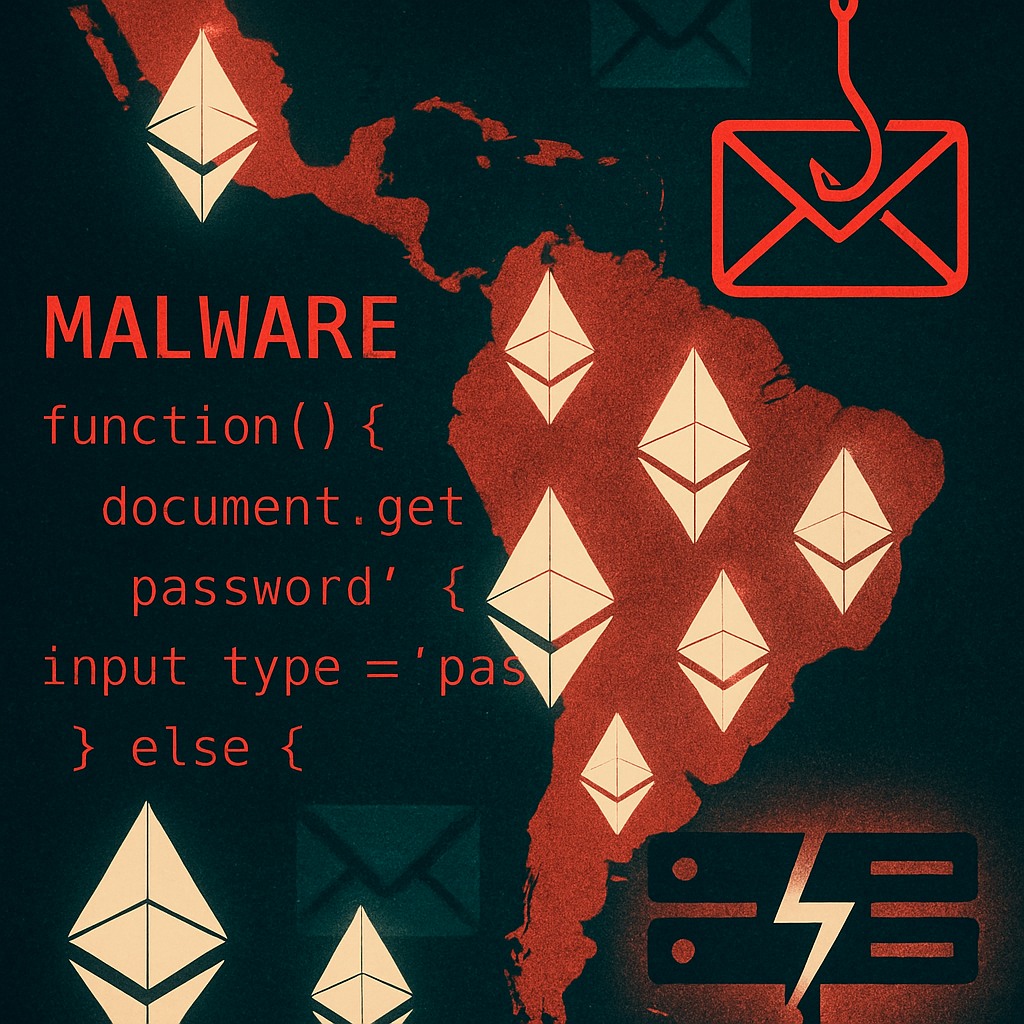
Dark Caracal, a longstanding cyberespionage group long linked to Venezuela, has introduced a fresh malware framework called GoCaracalthat builds on its tried-and-true Bandook backdoor toolkit. The new tool adds a stealthy fallback mechanism using the Ethereum blockchain to maintain control even when primary command-and-control (C2) servers are disrupted. Investigators tied this toolkit to a breach in Venezuela during June 2026, triggered by phishing campaigns in Spanish targeting financial and tax-related victims.
Phishing Chain Sets the Stage
The attack begins with emails in Spanish containing malicious SVG attachments that hide shortened URLs. These links redirect to payload-hosting sites. Once clicked, victims receive an archive that installs a small implant, opening the door for GoCaracal’s full capabilities. The initial weaponized SVGs, used to bypass filters due to their seemingly benign appearance, lead to deployment of a Delphi loader and Bandook in addition to the Go-based implants.
The researchers uncovered two distinct builds of GoCaracal: a “light-weight” version for intrusion and reconnaissance, and an extended version capable of file searches, keylogging, proxy creation, remote desktop access, and persistence across reboots. Bandook remains part of the arsenal—Dark Caracal isn’t replacing old tools so much as layering new ones on top.
Blockchain Recovery Feature for Resilience
If GoCaracal fails to reach its primary C2 server, its extended build reaches out to an Ethereum-based smart contract—named BulletproofC2—to fetch a fallback server address. The contract’s stored data acts as a backup directory rather than an active control channel, allowing attackers to update addresses through transactions. Some deployments originated on Ethereum’s Sepolia test network before moving to mainnet.
This blockchain-based mechanism means that seizing or shutting down servers may no longer be enough to sever Dark Caracal’s communications. Attackers can reconfigure smart contract values and maintain access without delivering fresh malware to each device.
Wider Geographic Exposure & Defensive Gaps
Arctic Wolf analysts mapped out infrastructure tied to GoCaracal spanning multiple South and Central American countries—Brazil, Ecuador, Chile, Colombia, El Salvador, and Uruguay—though Venezuela remains the only confirmed breach target so far.
Key indicators include unsuspected SVG attachments, atypical archives, patterns of failed C2 requests, and then calls to Ethereum RPC endpoints. Domains like “getpdfdigital[.]cloud”, “visualizarpdf[.]online”, and others serve both as delivery and control infrastructure. Several SHA-256 hashes for both lightweight and extended malware variants, plus compromised IPs involved in GoCaracal and Bandook C2 channels, are now documented.
Defense strategies must adapt. Viewing SVG files as purely static images is no longer safe. Analysts advise coordinating email, web, and endpoint logs, tracking server outages followed by blockchain activity, and monitoring common IoCs. Simply taking down a domain or C2 server won’t always stop an ongoing compromise.
This development points to a dangerous trend: threat actors layering resilience by weaving together delivery systems, C2 servers, and recoveries via decentralized platforms. Dark Caracal’s move not only complicates response but forces defenders to reconsider what it means to contain a breach. The blockchain isn’t just for finance—it’s becoming a pillar in attacker infrastructure. Blockchains may be immutable public ledgers, but that also makes them nearly indestructible backbone for fallback malware routing.