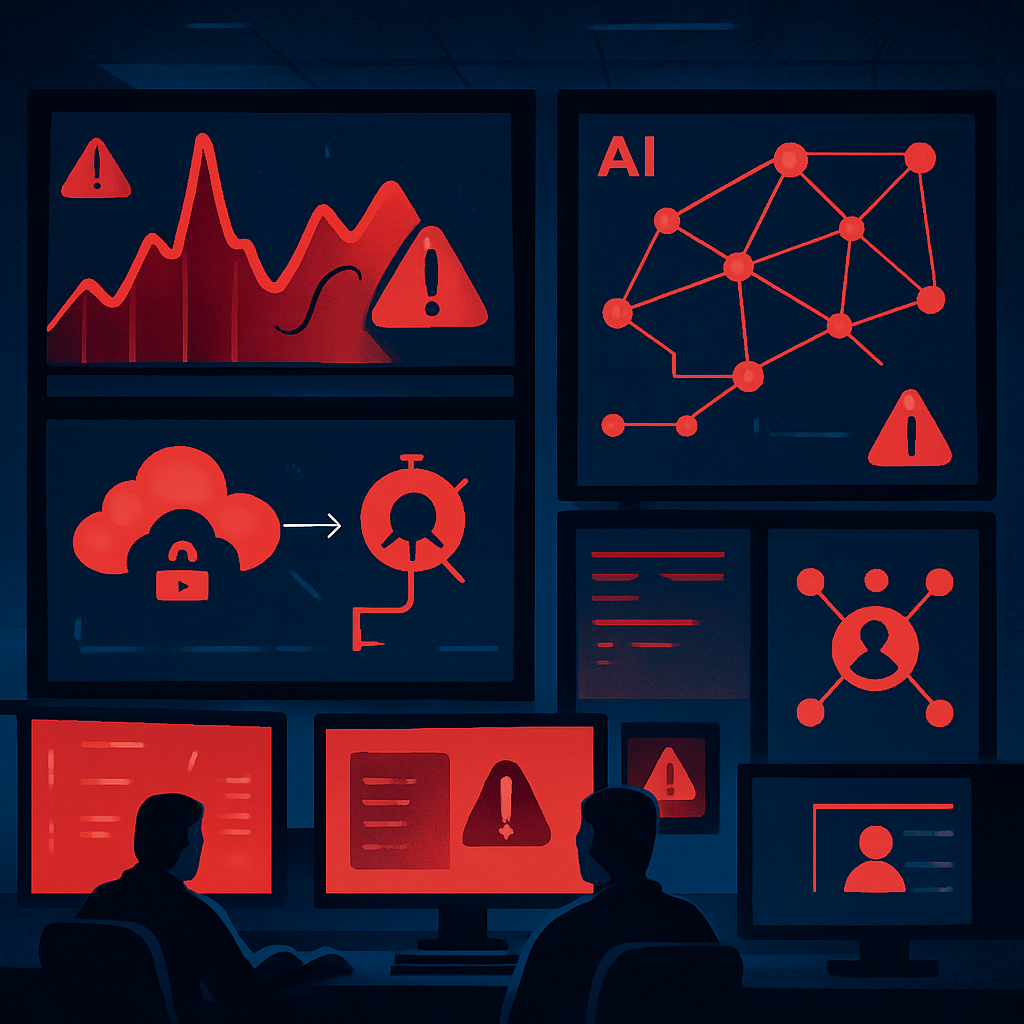
The accelerating threat of AI is reshaping how organizations must approach security operations. Traditional approaches—multiple tools creating countless alerts—are no longer sufficient. Threat actors can now use advanced AI models to detect vulnerabilities, generate exploit code, and automate attack paths that allow rapid escalation unless defenders respond much more intelligently and quickly.
What’s changing for security teams
Modern attackers equipped with AI aren’t just finding new vulnerabilities; they’re chaining them together, exploring attack surfaces, and testing exploit paths at speeds that leave legacy security workflows behind. For defenders, the core problems aren’t about lack of data—they already collect cloud alerts, telemetry, identity logs, vulnerability scans, and threat detections. The bigger issue is making sense of this fragmented data in time, understanding which vulnerabilities are reachable, which assets hold sensitive information, who owns them, and what should be prioritized.
Delays caused by organizational silos or tool-specific visibility gaps turn into openings for attackers. AI-powered tools magnify those gaps, turning even small windowed delays into amplified risk.
A framework for readiness
To address this, security operations must center around two key capabilities: broad, actionable visibility, and faster, aligned remediation workflows. Visibility involves understanding risk across cloud infrastructure, software supply chains, identity systems, AI services, and application telemetry. It means not just spotting vulnerabilities, but seeing whether they’re exploitable, reachable by adversaries, or part of a larger exploit path.
Faster action demands clarity on ownership—who’s responsible for what—and tight coordination among detection, investigation, and response functions. Security analysts should be able to trace from alert to root cause quickly, walk attack paths, and escalate fixes without rebuilding context every time. Vulnerability management needs to spotlight findings that actually matter rather than burying the signal in noise. Cloud security engineering teams need to link risk back to people and systems that can enforce change.
It’s not about automating every decision. The goal is to remove friction points—fragmented tools, unclear ownership, redundant investigations—and to consolidate context so that defenders can act decisively.
One upcoming webinar lays out this playbook in depth. Experts will guide attendees on evaluating whether their current operations are equipped to handle AI-augmented threats—can you map attack paths in your network? Can your systems clearly show when threats have reach? Can you move from detection to remediation before damage unfolds? This framework is built for real-world constraints, not ideal situations.
Preparation for AI-powered attacks does more than harden defenses—it reshapes how security teams think, organize, and act. As attack speeds rise, the capacity to triage and respond matters as much as detection. Investing in unified visibility and fast, focused remediation isn’t optional—it’s indispensable in staying ahead.