Google today introduced Gemini 3.5 Transcribe, its latest speech-to-text system, designed to produce more accurate, naturally edited transcripts. It’s already powering several internal tools, with broader rollout planned for Chrome and the enterprise sphere.
What Sets Gemini 3.5 Transcribe Apart
This model handles raw audio and delivers polished, formatted text—cleaning up filler words such as “um” and “ah,” managing self-corrections, and accommodating custom vocabulary. It supports automatic formatting and voice-driven editing, making the result easier to read and edit. The system excels in noisy or complex environments, recognizing alphanumeric content like order IDs and postal codes accurately. Word Error Rates (WERs) are impressively low: around 4 % for streaming and 2.6 % for non-streaming modes in its internal measurements.
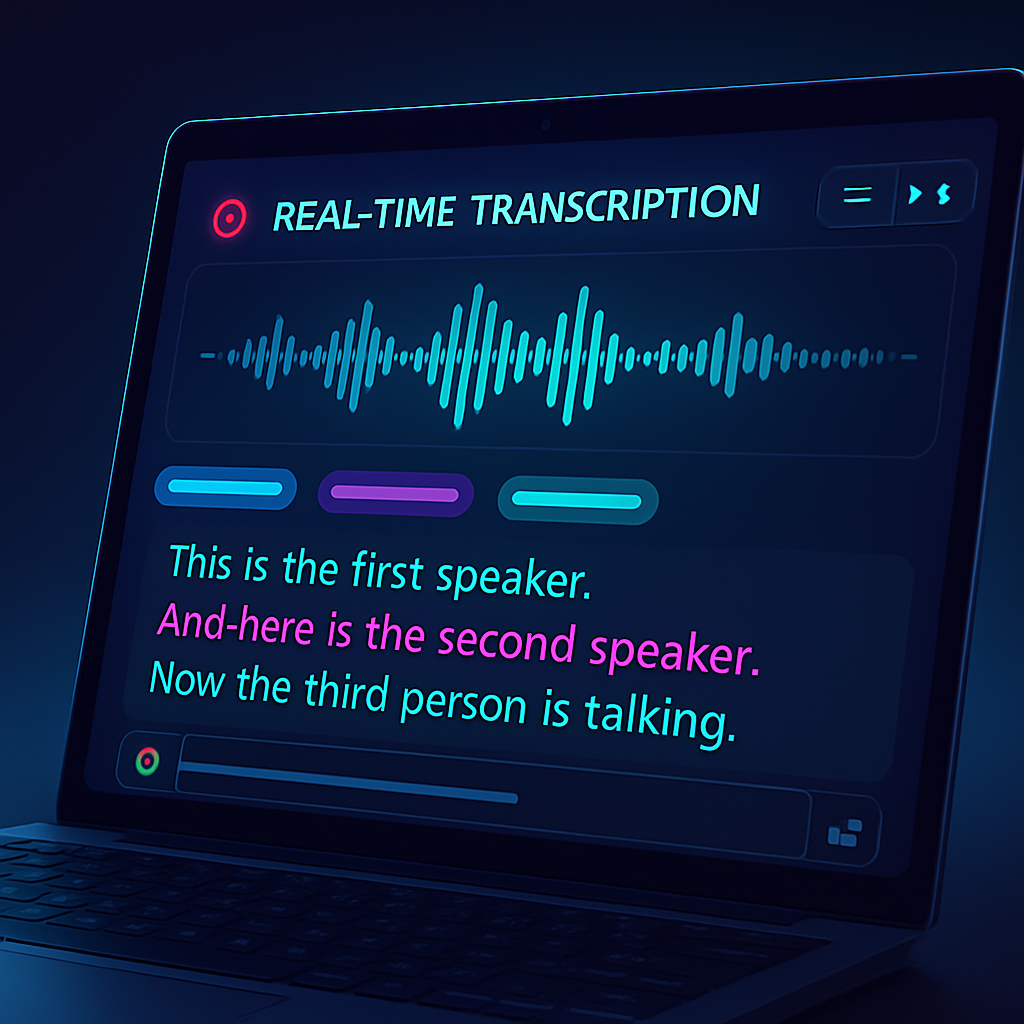
Multilingual capabilities and multi-speaker detection add to its flexibility. It recognizes over 85 languages and dialects, adjusts for regional accents, and in recordings with multiple voices it timestamps and separates up to three speakers (with support for more still experimental).
Deployment & Performance Gains
Gemini 3.5 Transcribe represents a major leap over Google’s earlier model, Chirp 3 from 2025. On benchmarks like FLEURS, it shows significantly lower WERs in both streaming and non-streaming scenarios, and delivers a roughly 70 % faster turn-around to final transcripts compared to Chirp 3.
The model is already in use in tools like Gboard Rambler on Android and the Gemini macOS app. It also fuels Antigravity, Google’s environment that uses screen context and chat history to improve transcription accuracy in things like active documents or agent conversations. Soon, users of Chrome will be able to “talk to type” in any web field—ideal for dictating replies, composing posts, or issuing prompts with their voice.
Availability & Who Gets Access
Gemini 3.5 Transcribe is currently available in public preview: for developers via the Gemini API through Google AI Studio, and in Google Antigravity. Enterprises can access it through the Gemini Enterprise Agent Platform, with plans to bring it to the Customer Experience arm of Gemini Enterprise soon.
The Chrome integration is “coming next,” according to Google, enabling natural voice control in virtually any input field in the browser.
Google describes Gemini 3.5 Transcribe as its “most precise speech-to-text model yet,” promising cleaner transcripts, better performance, and smoother workflows for voice input across both mobile and desktop platforms.
Why it matters: Speech-to-text has often struggled with background noise, disfluencies, and special vocabulary. Gemini 3.5 Transcribe’s improvements suggest a turning point—improved accuracy, lower latency, and better multilingual support may finally make voice-driven typing and transcription reliable enough for everyday users. Keep an eye on how it performs in real-world use and how quickly the Chrome rollout reaches regular users—the next few months will show whether these advances translate into truly seamless speech input experiences.