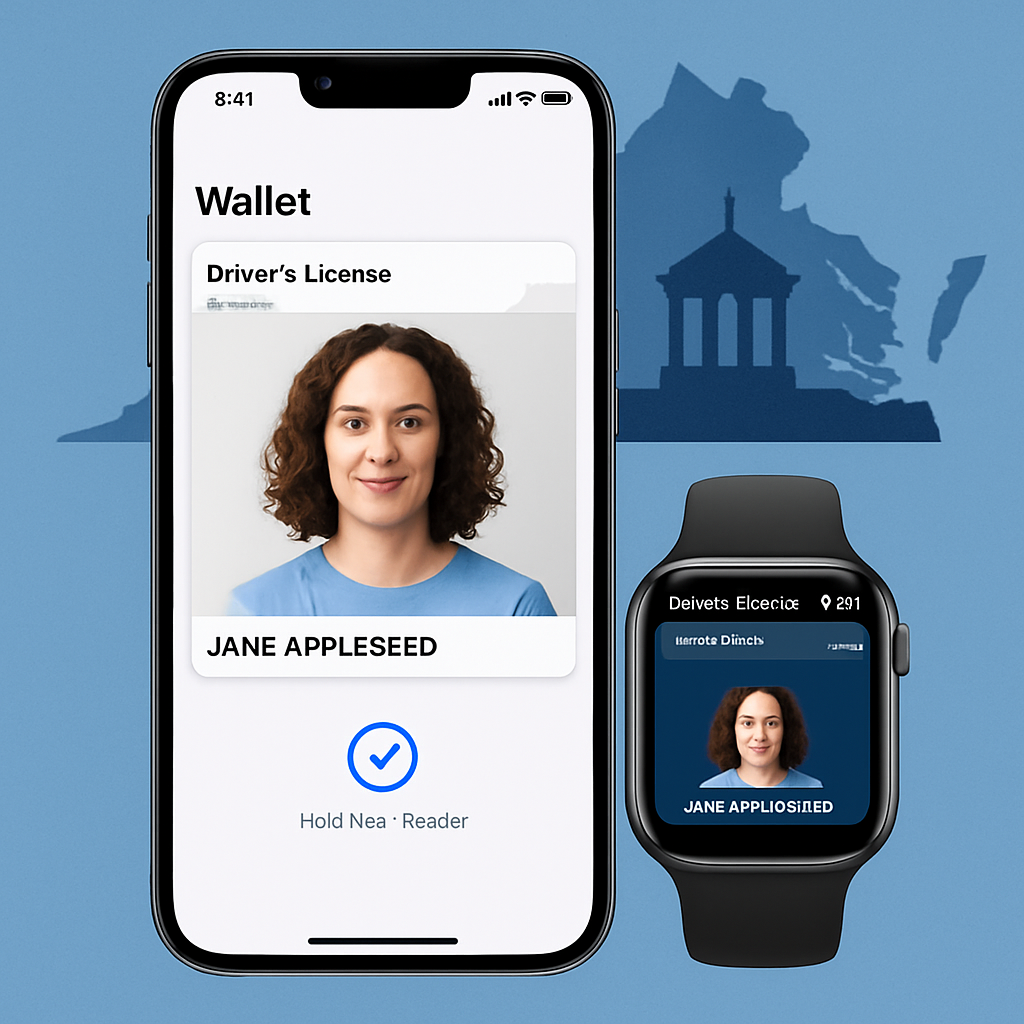
Starting today, residents of Virginia can add a digital version of their driver’s license or state ID to the Apple Wallet app on their iPhone and Apple Watch. This marks the 15th U.S. state to support the feature, enabling users to present proof of identity or age using their devices at certain locations. ﹘Acceptance remains limited to places where the digital ID is explicitly supported.
States and Rollout Plan
With Virginia’s inclusion, the list now covers Arizona, Arkansas, California, Colorado, Georgia, Hawaii, Illinois, Iowa, Maryland, Montana, New Mexico, North Dakota, Ohio, West Virginia, and Puerto Rico. Additionally, Japan’s My Number Card works with Apple Wallet IDs.
Apple is preparing further expansions—North Carolina, Oklahoma, and Utah are expected to begin offering the feature later this year. Connecticut, Kentucky, and Mississippi have also committed to supporting digital IDs at some point.
How It Works & Where It’s Accepted
To set up a Wallet ID in Virginia, users need to open the Wallet app, tap the “+” button, select “Driver’s License and ID Cards,” choose Virginia, and follow the on-screen instructions. Once configured, the ID can be presented via an identity reader—no unlocking, showing, or handing over the device required. Face ID or Touch ID authorizes the transfer of only the specific information requested.
Apple Wallet IDs are accepted at over 250 U.S. airports for domestic travel at TSA checkpoints. However, acceptance by businesses is still quite limited, and law enforcement does not currently recognize the digital form for traffic stops or other legal purposes. Physical ID cards remain legally required in those situations.
Today’s launch in Virginia is another step in Apple’s incremental roll-out of digital ID support, reflecting the complexity of integrating with state regulations and real-world acceptance.
Analysis:Expanding digital IDs to more states signals progress in Apple’s vision for our wallets going truly digital. But the limited places where it’s accepted means adoption will lag until broader legal and institutional support catches up. Key things to watch: which states join next (especially those already preparing to launch), how quickly businesses adopt compatible ID readers, and whether legal frameworks adjust to recognize digital IDs in law-enforcement or regulatory contexts. The coming year should clarify whether this becomes norm rather than novelty.