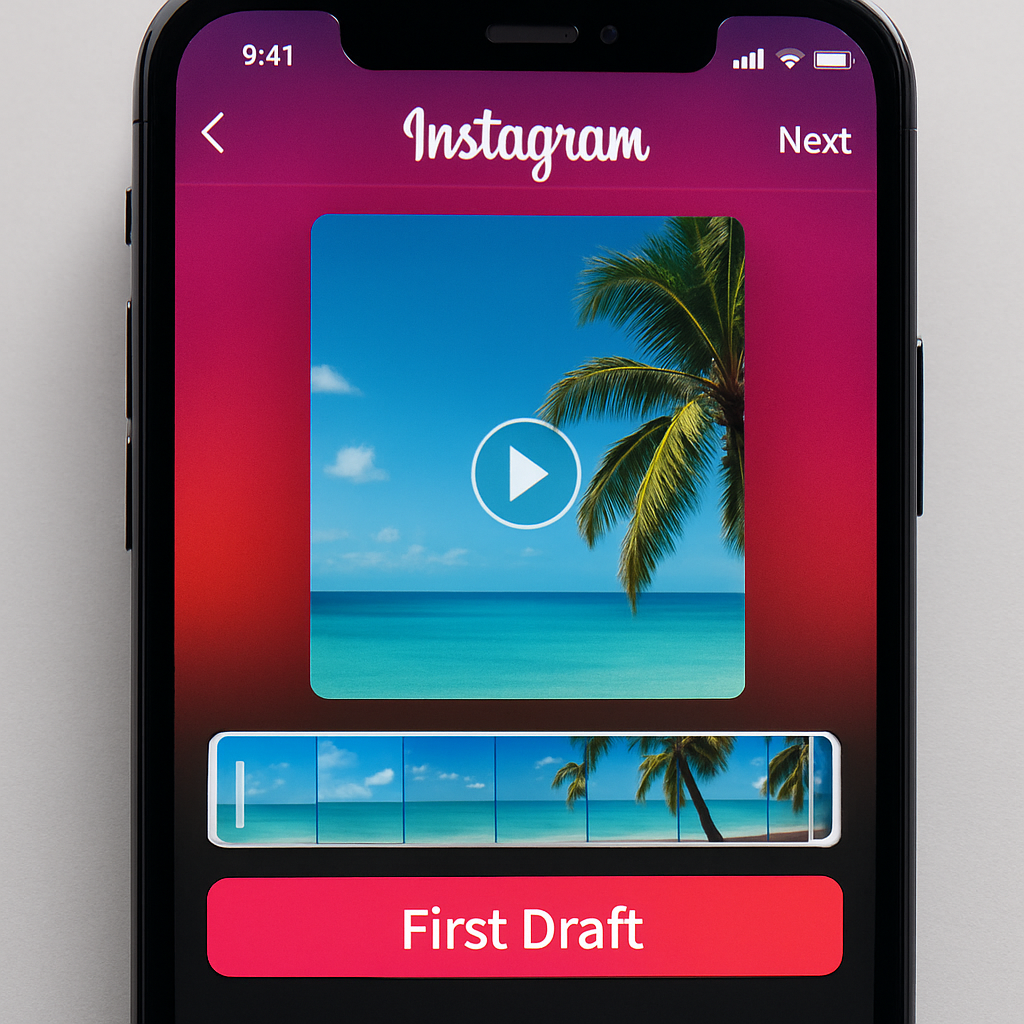
Instagram is rolling out a new feature called “First Draft” on its iPhone app that lets users generate Reels automatically. Instead of manually trimming and editing clips, users simply pick their videos and tap “First Draft”—the tool handles the early editing steps, cutting pauses and trimming clips, giving creators a basic edit that they can then fine-tune. Every auto-generated cut is reversible and adjustable, letting creators reorder or tweak anything before publishing. Researchers or tech-savvy users who worried this might replace human editing will be relieved to know the aim is assistance—not automation.
There are two ways to access First Draft. One, from the Reels gallery: select one or more clips, tap the First Draft button at the bottom, review the edit, and then you can either enhance it in the full editor or publish. Two, capture a video normally via the Instagram camera, thentap First Draft immediately after filming and proceed the same way.
Why Meta is Treading Lightly with Creators
Meta has been cautious in how it presents First Draft. Even the name suggests it’s just a starting point—not a replacement for the creative work creators put in. The messaging emphasizes that the edits are fully reversible so as not to undercut editors or vloggers whose distinctive cuts are part of their brand.
The feature is currently limited to Instagram’s iPhone app, with Android users likely to see it later. Some creators have questioned why First Draft isn’t also included in the Edits app, and Meta indicates that it could expand availability if there’s enough demand.
What It Means for Creators and Content Trends
Automatic editing tools like First Draft reflect a broader push from platforms to lower technical barriers so more users can share video. With Reels and TikTok-style content driving engagement, Instagram faces pressure to make creation faster and easier without alienating creators who build audiences on polish and originality.
For creators, this could streamline workflows: spend less time chopping and syncing footage, more time crafting narrative, music, or personality. But there’s still concern that over-reliance on automated edits could erode a creator’s unique touch—something that won’t be solved by tools alone. And while Instagram positions First Draft as optional and artist-controlled, the industry trend toward auto-generated content raises questions about how much agency creators truly retain.
Bottom Line: First Draft simplifies the early stages of producing Reels by automating basic cuts, trims, and edits—always with full control left in the creator’s hands. Meta is clearly aware that creators value their craft and identity, and the tool’s structure reflects those values.
In the bigger picture, First Draft is a signal of how platforms are balancing automation and artistry. Keeping creative control visible and reversible won’t silence concerns overnight—but Instagram’s move could set a new baseline. What to watch: how creators adapt to leaning on automation, how it impacts the aesthetics of Reels, and when—or if—Instagram expands the feature beyond iPhone and into their entire Edits suite.