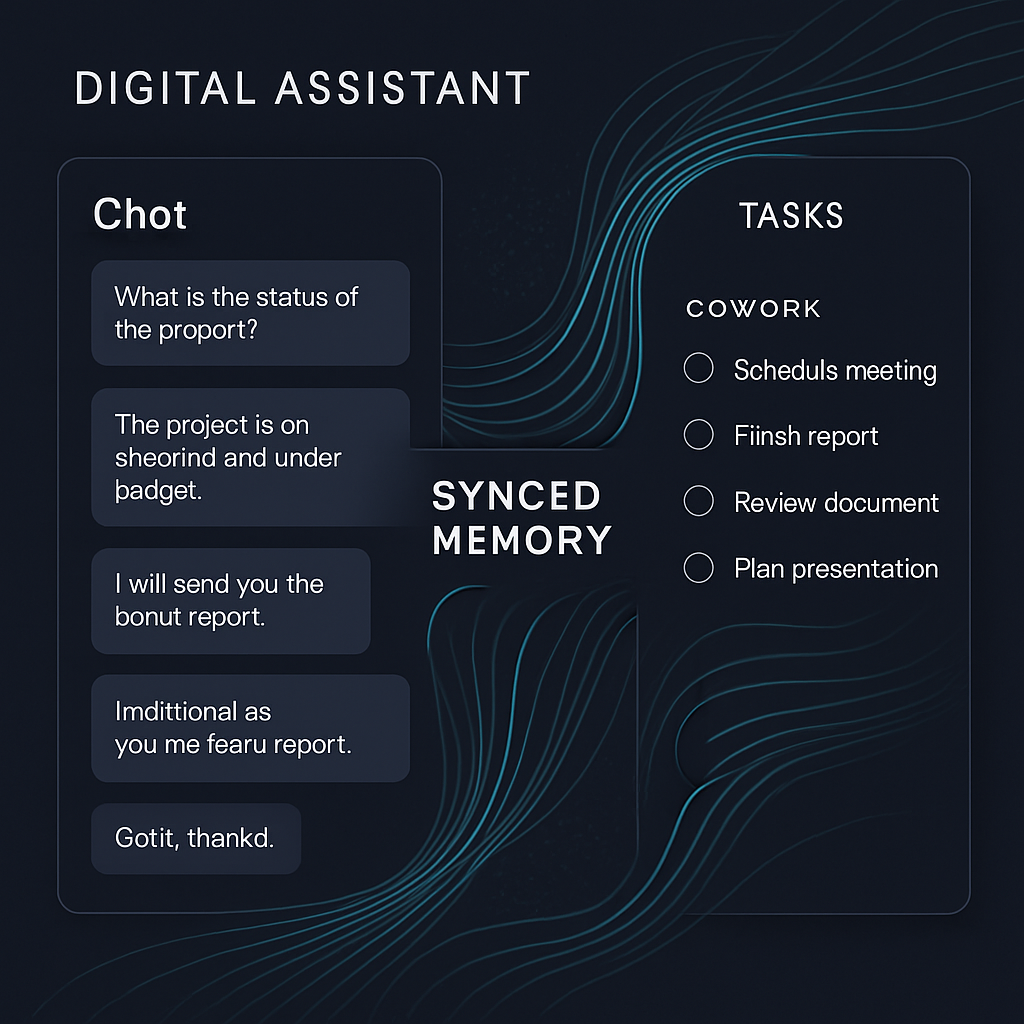
Anthropic has rolled out a major update today that merges memory across its Claude chat and Claude Cowork platforms, streamlining how the AI recalls past interactions. Users no longer need to re-explain projects or preferences when switching between chat and task-based modes—Claude will now carry over relevant memory seamlessly. Memory for sensitive topics remains off by default, with user control available in settings. This change is live for all Free, Pro, and Max users on web, desktop, Mac, iOS, and Android.
Unified Memory: What It Means for Users
Previously, Claude chat and Cowork stored memory separately—meaning that details from one environment wouldn’t automatically inform the other. With today’s update, everything remembered during regular chats—like recurring project details, manager preferences, or client info—will also help Claude Cowork when handling job-based tasks. Conversely, memories formed in Cowork carry over into chat as well. The result is smoother continuity and less repetitive setup for common workflows.
Sensitive Topics Off by Default, with Opt-In Control
To address privacy concerns, Anthropic has made saving sensitive content (such as health, beliefs, or other private subjects) disabled by default across both chat and Cowork. Users who prefer not to reintroduce such topics can enable memory for them explicitly in the app’s Memory settings. For all other types of information, memory activation is automatic across Claude chat and Cowork for all plan levels.
Availability and Platform Coverage
This unified memory capability is now globally available for users on Free, Pro, and Max tiers, and applies across devices—web browsers, desktops, Macs, and iOS/Android apps, provided you’re running the latest version. No additional fees required. To access sensitive-topic memory, users must manually toggle it on while the default setting keeps it off to safeguard privacy.
This update signals a push by Anthropic to remove friction between its AI tools. By unifying memory, the company isn’t just simplifying user experience—it’s building toward a more consistent AI assistant that adjusts to your preferences wherever you engage with it.
What this means going forward: smoother context carryover can boost productivity—but it also raises stakes for how memory is managed. Whether or not Anthropic’s defaults strike the right balance between convenience and privacy will be key. For users, keeping tabs on the Memory settings—and what types of data are retained—will soon be just as important as what they ask Claude to do.