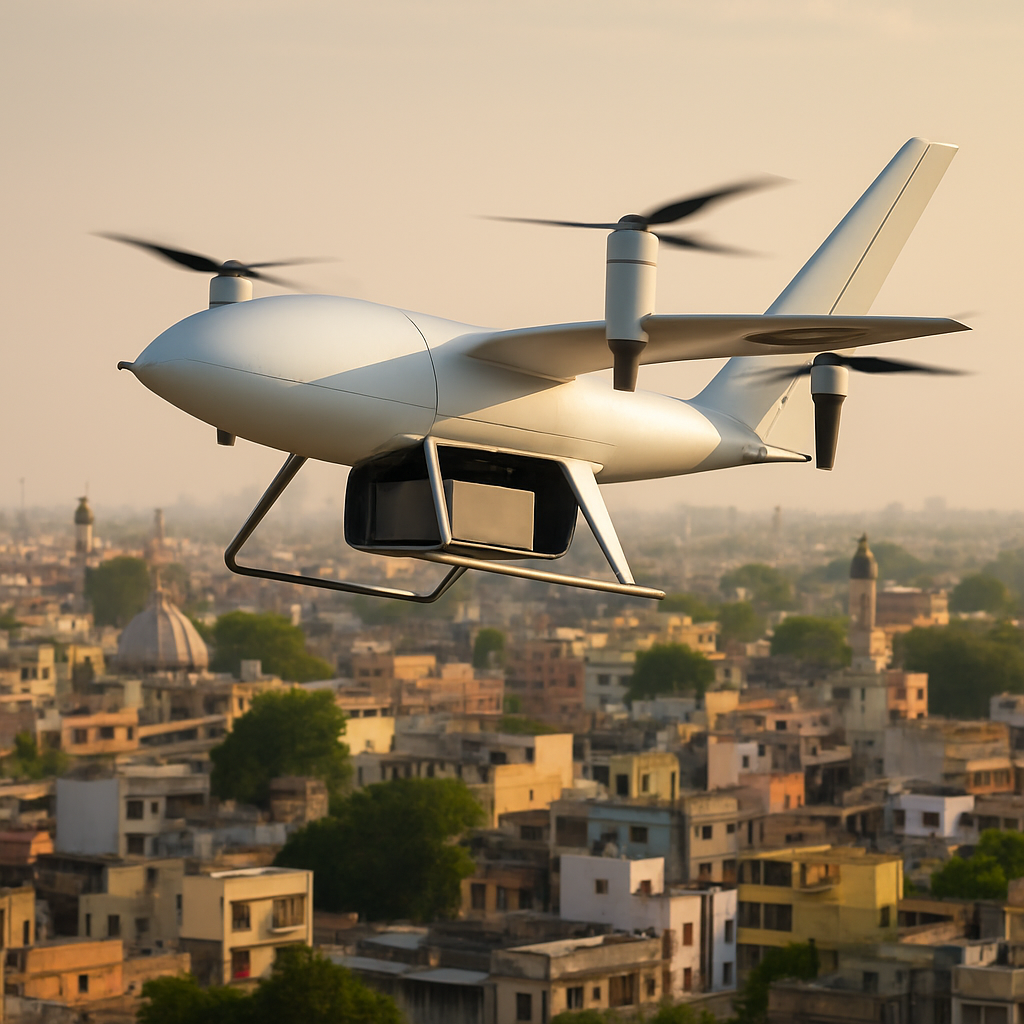
Indian autonomous aircraft startup Airbound has secured $37 million in a Series A funding round to challenge the dominance of road transport by making aerial delivery cheaper and faster. The investment was led by Greenoaks, with contributions from DoorDash, Lachy Groom, Lightspeed, and Humba Ventures, pushing Airbound’s total funding to nearly $50 million since it launched in 2023.
Engineering Lighter, Rocket-Like Drones
Airbound aims to outcompete trucks by redesigning drones to carry more and weigh less. The startup’s current model, the TRT, tips the scales at roughly 3.3 pounds and can ferry about 2.2 pounds of payload. Plans are underway for a second-generation version that will weigh in at 6.6 pounds and haul up to 11 pounds.
The company’s design isn’t conventional. Its drones take off and land vertically as a tail-sitter and then transition into horizontal flight—this combined VR/airplane hybrid approach lets them avoid needing runways.
Real-World Use and Scaling Ambitions
Though still pre-revenue, Airbound has achieved more than 13,000 autonomous flights across Bengaluru and Guntur. A key partnership with Narayana Health uses the drones to transport diagnostic samples between hospitals. One route of about 2.5 miles takes only seven minutes by drone—while ground transport, including wait and bundling time, takes three to five hours.
Airbound is also building toward a regional aerial delivery network covering three cities in Andhra Pradesh. The plan targets up to 10,000 flights a day for retail, e-commerce, and healthcare deliveries. Depending on route lengths, this would require 250 to 1,000 aircraft, though the company believes around 250 will suffice. No government subsidy is involved; the collaboration focuses on regulatory support for operations like flights beyond visual line of sight (BVLOS).
Challenges Ahead: Regulation and Go-to-Market
While manufacturing remains largely internal and scalable, regulatory approvals—especially for BVLOS operations—are seen as the biggest hurdle.
Airbound is still broadly pre-revenue and has over 150 employees. Leadership emphasizes long-term growth: the goal isn’t to turn profit immediately, but to build an aerial logistics infrastructure that rivals the scale of trucking over the next few decades.
This effort ramps up amid a crowded Indian drone space with players like Skye Air Mobility, TSAW Drones, and Garuda Aerospace also pursuing aerial logistics. Airbound, however, positions itself as making the aircraft others will use, rather than focussing purely on operating the delivery service.
Why this matters:Moving goods by road dominates global logistics in cost, scalability, and regulatory maturity. If Airbound succeeds, its lightweight, vertical-takeoff drones could reshape short-range delivery economics—especially for healthcare and e-commerce. What to watch: whether regulators in India grant wide approval for BVLOS flights, how quickly Airbound ramps up its aircraft fleet, and how its flight network holds up under real-world volume pressures.