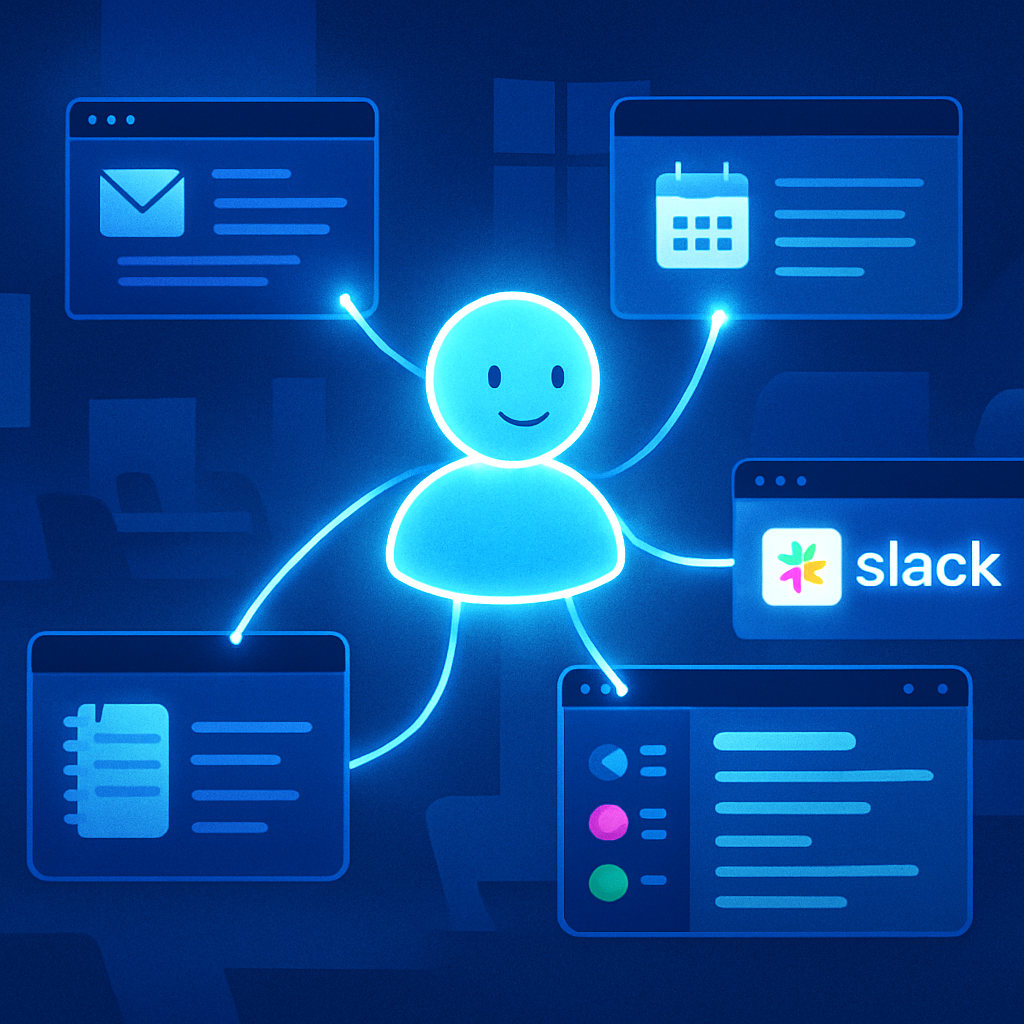
OpenAI is envisioning a future where its language models no longer just answer questions—but carry out complex, multi-step tasks by integrating deeply into users’ digital lives. Its latest release, ChatGPT Work, aims to do exactly that, offering agents that connect to apps like Slack, Notion, Figma—even your inbox and calendar—as part of an $20/month subscription.([techcrunch.com](https://techcrunch.com/2026/08/24/openai-is-building-an-ai-agent-for-everything-will-everyone-use-them/))
From Codex to Work: AI Built for White-Collar Workflows
The company’s expansion reflects a shift from tools designed for software engineers to agents meant for professionals across nearly every office role. Codex, which helped automate coding tasks, laid the groundwork—but adoption remains skewed. Inside OpenAI, nearly all employees use Codex; among individual and organizational external users, the numbers are much lower.([techcrunch.com](https://techcrunch.com/2026/08/24/openai-is-building-an-ai-agent-for-everything-will-everyone-use-them/))
To lower the barrier to get people using AI in non-technical roles, OpenAI is focusing on what engineers call the “harness”—the systems and design wrapped around the model that decide what it can access and how it behaves. These include tools, plug-ins, and GUIs aimed at making agentic workflows feel intuitive for everyday users. Some features are more obvious now, others are being phased in as usage patterns emerge.([techcrunch.com](https://techcrunch.com/2026/08/24/openai-is-building-an-ai-agent-for-everything-will-everyone-use-them/))
Challenges: Usability, Trust, Cost
A big hurdle for broader adoption is trust. Letting an AI agent handle private emails, sensitive documents, or financial dashboards sounds useful—but it can feel risky. Permissions are complex, mistakes are real. Users trying Work describe confusion over granting access, limitations in setting correct permissions, and relying on both desktop and web apps to get full functionality.([techcrunch.com](https://techcrunch.com/2026/08/24/openai-is-building-an-ai-agent-for-everything-will-everyone-use-them/))
Then there’s the financial question. Even casual use can burn through computational “tokens”—the currency behind most usage-based AI pricing—at a rate that far exceeds subscription fees. In one case, four days of light experimentation cost nearly three times the monthly plan, suggesting OpenAI is heavily subsidizing early adopters.([techcrunch.com](https://techcrunch.com/2026/08/24/openai-is-building-an-ai-agent-for-everything-will-everyone-use-them/))
Competing visions of how users should interact with agents add another layer of complexity. Some rival products emphasize interactive, decision-driven workflows, asking users to choose between options and guide subsequent actions. OpenAI originally leaned toward more autonomous agents but has since incorporated more feedback loops to match what others are offering—and what users expect.([techcrunch.com](https://techcrunch.com/2026/08/24/openai-is-building-an-ai-agent-for-everything-will-everyone-use-them/))
Internally, OpenAI is evaluating ChatGPT Work using benchmarks—drawing on hundreds of tasks and dozens of occupations—to understand where its agent excels. But real-world feedback and actual usage in non-coding roles are equally important, in shaping what the product becomes.([techcrunch.com](https://techcrunch.com/2026/08/24/openai-is-building-an-ai-agent-for-everything-will-everyone-use-them/))
The competitive landscape matters, too. Tool-makers like Anthropic and providers of open-source harnesses are proving there’s space beyond any one model. Different harness/model combinations are finding wins in benchmarks and in adoption. OpenAI acknowledges that strength of the model is still a core advantage—but so is making that model usable by people who aren’t developers.([techcrunch.com](https://techcrunch.com/2026/08/24/openai-is-building-an-ai-agent-for-everything-will-everyone-use-them/))
What this means going forward: agents will need to strike a balance between autonomy and control, power and simplicity. The success of ChatGPT Work hinges on how much risk users are willing to accept, how well OpenAI simplifies permissions and workflows, and whether pricing aligns with the value delivered. Marrying powerful models with intuitive harnesses might just be the linchpin as AI moves from coding tables to every desk.