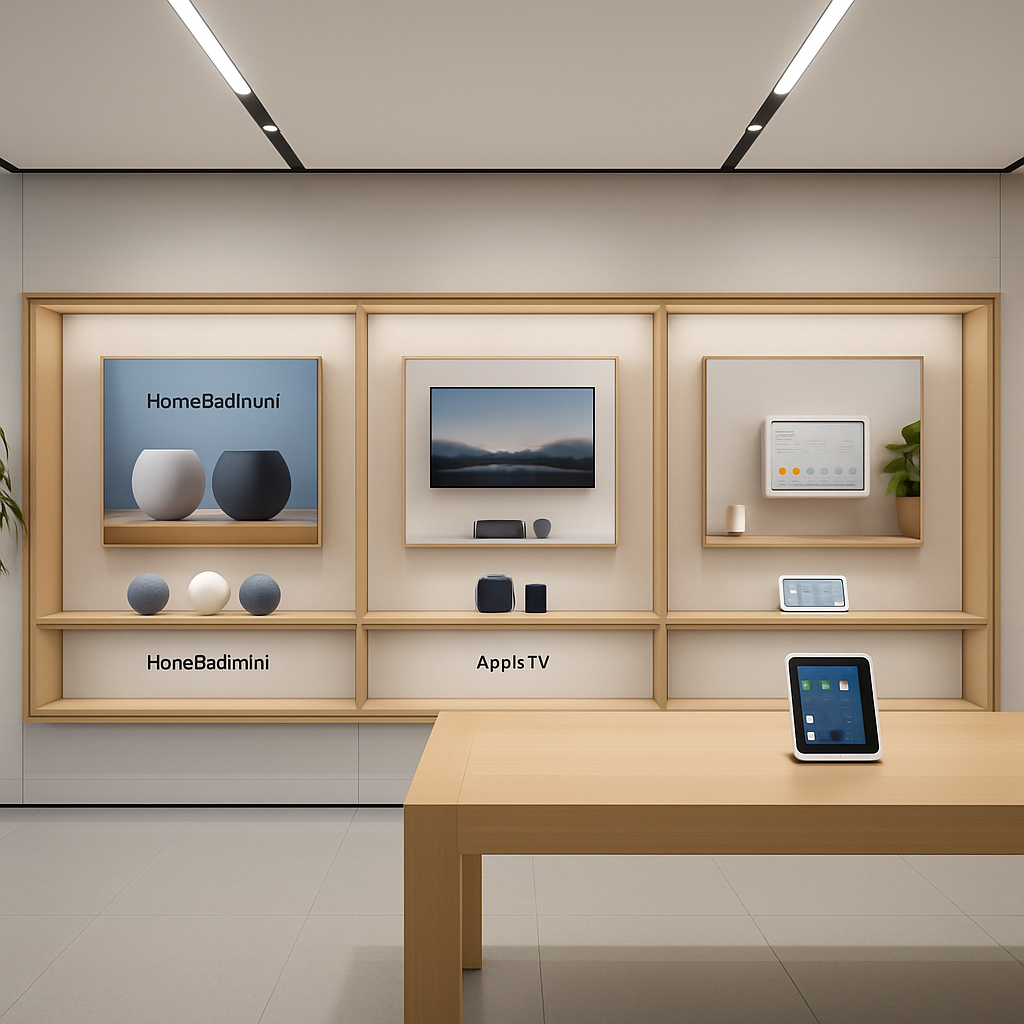
Visitors to Apple Stores this fall will notice more than new devices—they’ll see a redefined layout centered around smart home innovations. The company is preparing major adjustments to its retail space, with more displays devoted to connected home gear such as the updated HomePod mini, an upcoming Apple TV set-top box, and the rumored Home Hub. These changes suggest Apple is not merely updating its lineup but launching a coordinated smart home strategy.
At the heart of the shift are “Avenues,” exhibit walls lining the store’s perimeter where Apple showcases accessories and mid-tier products. Teams overseeing store design are reworking the Avenues to make room for the new smart home hardware. Their repositioning reflects a broad retail strategy in which every new product will receive its spotlight. Space for the Home Hub, especially, appears to be in development—along with dedicated installations to demonstrate its use in home ecosystems. These changes go beyond what would be expected from typical seasonal hardware updates.
This spatial refresh dovetails with anticipated product launches later this fall. Alongside the refreshed HomePod mini and Apple TV, the Home Hub—a device designed as a central management point for smart home networks—is poised to play a pivotal role. As a new product category, it demands its own display area so customers can see where it fits in the broader Apple home ecosystem and understand how it interacts with other devices.
What This Means for the Smart Home Landscape
Apple’s retail redesign isn’t just cosmetic. By elevating the visibility of smart home hardware, the company is signaling a shift in its consumer messaging: smart home tech will no longer play second fiddle to iPhones and Macs. Instead, Apple is crafting an environment where connected devices are central, tangible, and interactive parts of the in-store experience.
The addition of a Home Hub category suggests Apple aims to strengthen its grip on home automation platforms amid rising competition. To deliver a compelling overall user experience, the Home Hub will likely work tightly with existing hardware like the HomePod mini, Apple TV, and other devices in the HomeKit program. Showing off this integration live in stores may prove critical to driving consumer confidence in a more complex, interconnected home setup.
While the exact launch timing isn’t confirmed, Apple’s aggressive layout overhauls and dedicated space planning strongly indicate a rollout this fall. Customers should expect to see both new hardware and retail experiences unified around smart home functionality and ecosystem coherence.
Apple’s upcoming retail revamp is more than a design tweak—it’s a strategic shift. Elevating smart home devices in stores reflects a commitment to making the home ecosystem a pillar of the Apple experience. What to watch: how the Home Hub is packaged, how tightly integrated it is with platforms like HomeKit, and whether the retail changes translate into stronger adoption of smart home products overall.