NVIDIA has pushed a major new insight in its AI research: when it comes to solving extended, complex tasks, the infrastructure that surrounds a large language model—the “harness”—can matter more than the model itself. The company rigged the Claude Opus 5 model with a specialized harness and an added supervisory layer, and the difference was staggering.
The Experiment: Opus 5 vs. the Harness
In tests run on the interactive reasoning benchmark ARC-AGI-3, with no harness at all, Opus 5 hit a 30% score—still the best among models tested without any surrounding structure. But outfitted with a custom harness engineered to manage memory effectively and including a “supervisor” component, Opus 5 achieved a perfect 100%. That leap illustrates how critical the system around a model becomes, especially in long-horizon tasks that require an AI to break down a challenge over many steps rather than just respond once. ([techcrunch.com](https://techcrunch.com/2026/08/21/nvidia-just-showed-that-the-harness-not-the-ai-model-is-now-the-real-hero/))
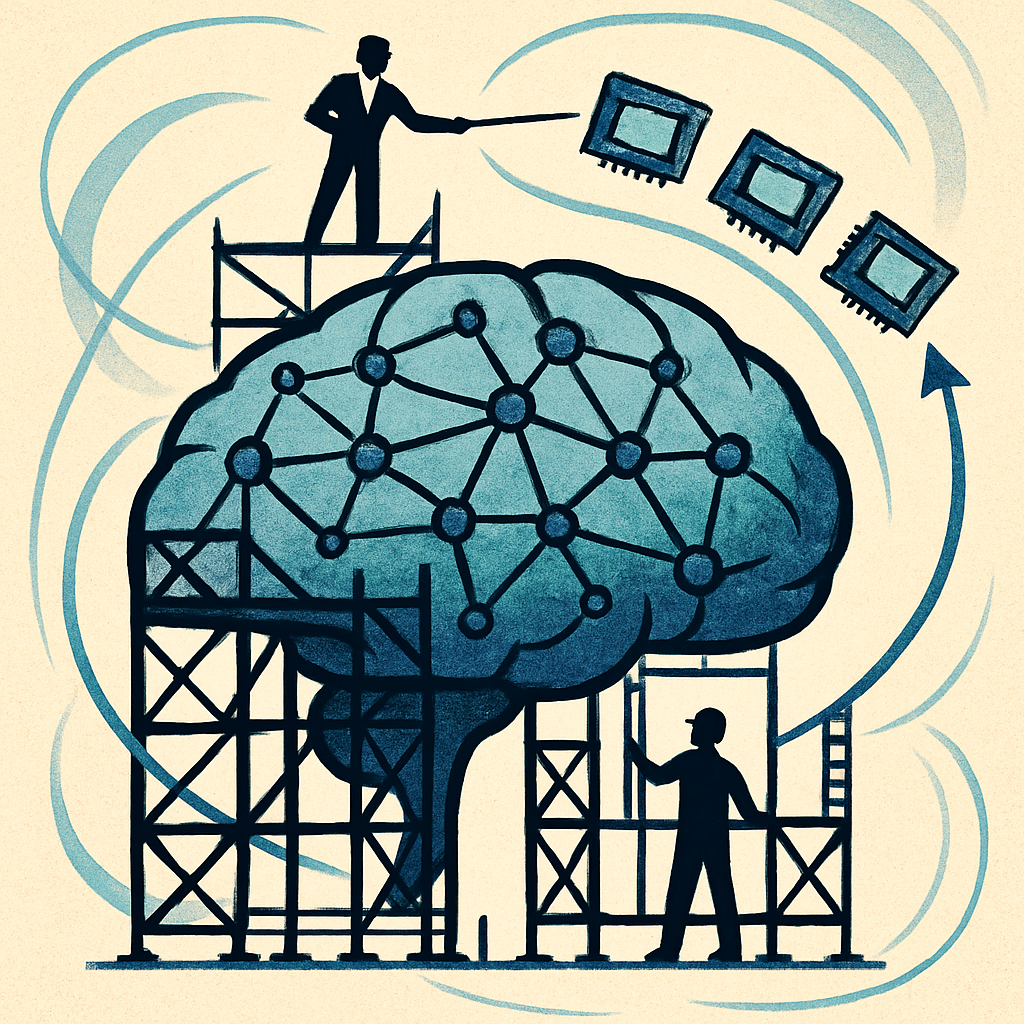
These harnesses manage things like memory, context, feedback loops, and decision enforcement—essential scaffolding for agents working on tasks that may span minutes, hours, or even days. In contrast, a bare model might generate impressive results in isolated instances or simple prompts, but flounder once complexities accumulate. ([techcrunch.com](https://techcrunch.com/2026/08/21/nvidia-just-showed-that-the-harness-not-the-ai-model-is-now-the-real-hero/))
Building the Harness & What Makes It Tick
The harness tested by NVIDIA isn’t just a prompt template or a wrapper. It’s packed with structure: tools, runtime components, memory systems, and a supervisor that monitors and nudges the agent if it veers off course. That supervisor acts like a CEO, intervening when the agent is stuck, drifting, or retracing steps. ([techcrunch.com](https://techcrunch.com/2026/08/21/nvidia-just-showed-that-the-harness-not-the-ai-model-is-now-the-real-hero/))
NVIDIA’s harness is known as Agentic Variation Operators (AVO). It’s part of the broader NeMo/NVIDIA agent stack—not a standalone product—but built with both closed and open components so that developers can inspect and modify core parts. The company argues that openness in harness design empowers users to control behavior, fine-tune performance, and enhance accuracy. ([techcrunch.com](https://techcrunch.com/2026/08/21/nvidia-just-showed-that-the-harness-not-the-ai-model-is-now-the-real-hero/))
Wider Implications Beyond Benchmarks
Other labs have found similar patterns. OpenAI, for example, recently raised its ARC-AGI-3 performance by adjusting harness parameters—tweaks that significantly improved outcomes even without changing the model. But while OpenAI moved the needle, it didn’t reach 100%. NVIDIA’s results set a new ceiling. ([techcrunch.com](https://techcrunch.com/2026/08/21/nvidia-just-showed-that-the-harness-not-the-ai-model-is-now-the-real-hero/))
Cost is another factor. Databricks published work indicating that the harness can influence both performance and economics dramatically. Using the same underlying model but differing harness designs, the cost can easily double if the wrong harness is chosen. ([techcrunch.com](https://techcrunch.com/2026/08/21/nvidia-just-showed-that-the-harness-not-the-ai-model-is-now-the-real-hero/))
Benchmarks like ARC-AGI-3 test agents in environments that present unknown rules, requiring goal discovery, planning, and long-term strategy—not just immediate pattern matching. Under these conditions, models without harnessing struggle, while well-structured agentic systems excel. ([arxiv.org](https://arxiv.org/abs/2603.24621?utm_source=openai))
Why It Matters & What to Watch
For AI practitioners, vendors, and businesses, the takeaway is clear: investing in model architecture is still necessary, but neglecting the harness is a risk. Real-world agent deployment—virtual assistants, robotics, automation—depends heavily on how the model is embedded in a system that can observe, intervene, and steer over time.
We should watch how harness research progresses: whether more open frameworks emerge like NVIDIA’s AVO, if standardization becomes common, and whether model providers begin offering not only raw model APIs but the rest of the scaffold built in. We may see a shift where the harness becomes as critical for AI product success as choice of model.
This is a turning point: the narrative that better models alone will drive AI forward is giving way to one where the orchestration, feedback, and structural scaffolding around those models take center stage. Harness engineering may well become the frontline of frontier AI innovation.