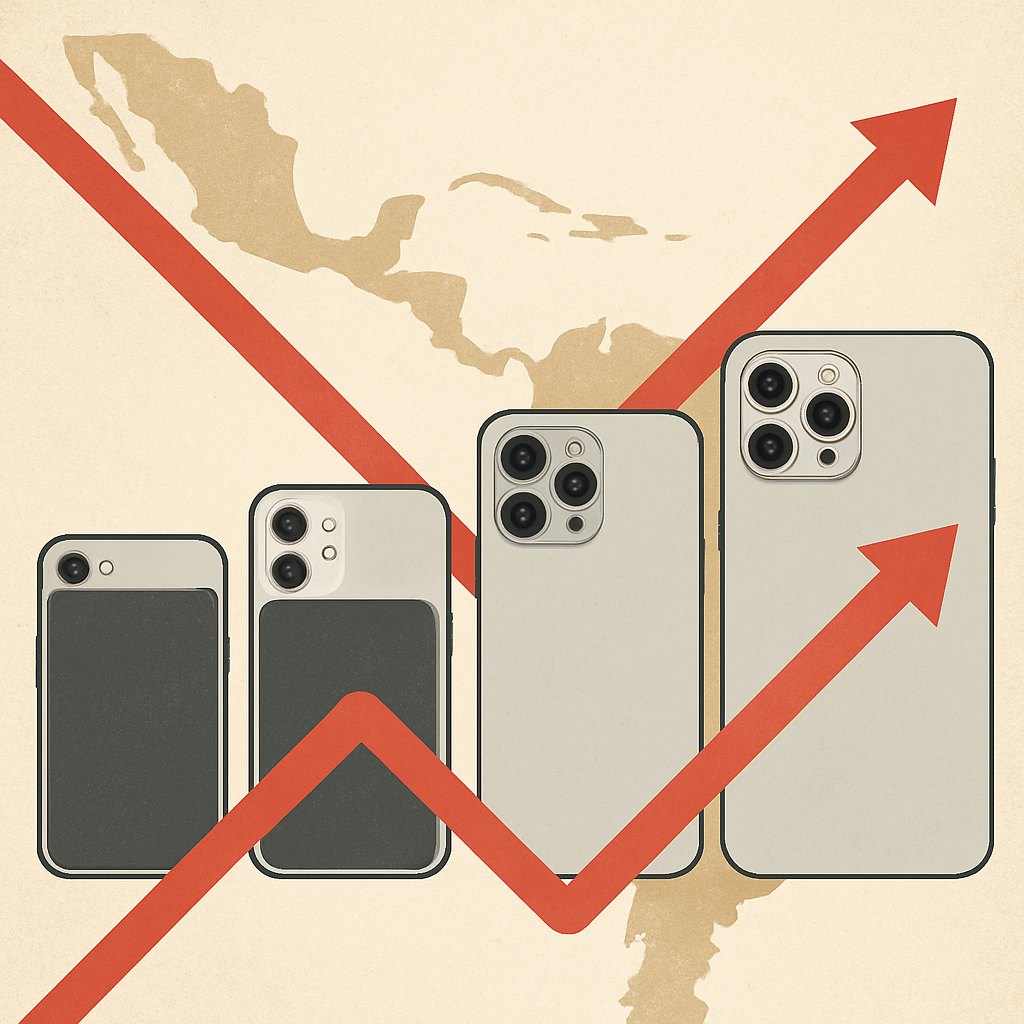
Global smartphone demand continues to slump amid inflation and supply pressures, yet Apple defied the trend in Latin America during Q2 2026. While overall smartphone shipments in the region dropped sharply, the iPhone managed to grow its unit sales by about 5%, cementing its position as one of the few winners in a shrinking market. ([appleinsider.com](https://appleinsider.com/articles/26/08/21/iphone-sales-rise-in-latin-america-even-as-smartphone-market-shrinks/))
Research from Counterpoint reveals that Latin America’s smartphone market declined roughly 10% year-over-year in the second quarter of 2026 — the steepest drop in three years. ([appleinsider.com](https://appleinsider.com/articles/26/08/21/iphone-sales-rise-in-latin-america-even-as-smartphone-market-shrinks/)) Samsung was the only major rival to outperform Apple with about a 6% rise in shipments. By contrast, brands like Xiaomi experienced severe losses, down as much as 27% over the same span. ([appleinsider.com](https://appleinsider.com/articles/26/08/21/iphone-sales-rise-in-latin-america-even-as-smartphone-market-shrinks/))
Premium Picks Power Apple’s Resilience
Apple’s strategy in Latin America leaned heavily on the premium end of its portfolio. High-end models, especially the iPhone 17 Pro Max, and even older flagship units remained in strong demand. Although the mid-2026 launch of the iPhone 17e helped somewhat with new-product momentum, the company mainly benefited from its ability to absorb global cost pressures rather than passing them on. ([appleinsider.com](https://appleinsider.com/articles/26/08/21/iphone-sales-rise-in-latin-america-even-as-smartphone-market-shrinks/))
The decline hit hardest in entry-level and mid-range segments, which make up nearly three-quarters of all smartphone sales in Latin America. Many non-premium brands were unable to maintain margins against rising chip prices and currency volatility, leading to steeper YOY declines. ([appleinsider.com](https://appleinsider.com/articles/26/08/21/iphone-sales-rise-in-latin-america-even-as-smartphone-market-shrinks/))
What’s Ahead: iPhone 18 and Market Projections
Apple’s fiscal Q2, running from April to June, included no major new iPhone launches. However, the iPhone 18 Pro range is expected toward late Q3 (July to September), which could boost shipments. Still, Counterpoint does not foresee a full recovery for Latin America’s smartphone market until around 2028. ([appleinsider.com](https://appleinsider.com/articles/26/08/21/iphone-sales-rise-in-latin-america-even-as-smartphone-market-shrinks/))
Apple remains behind Samsung, Xiaomi, and Motorola in overall market share in Latin America, but its positive growth during a challenging period underscores how strength in premium tiers and older-model appeal can offset broader downturns. ([appleinsider.com](https://appleinsider.com/articles/26/08/21/iphone-sales-rise-in-latin-america-even-as-smartphone-market-shrinks/))
Analytical take: Apple’s performance in Latin America reveals that premium strength and disciplined pricing are more crucial than ever. As cheaper brands struggle with inflation and rising component costs, Apple capitalizes on its brand loyalty and higher margins. Watch closely to see how the iPhone 18 Pro’s release affects market share — it might reshape competitive dynamics in the mid-tier as well as premium segments. **This could signal whether Apple really starts to regain ground across all tiers, or if its growth remains confined to the high end.**