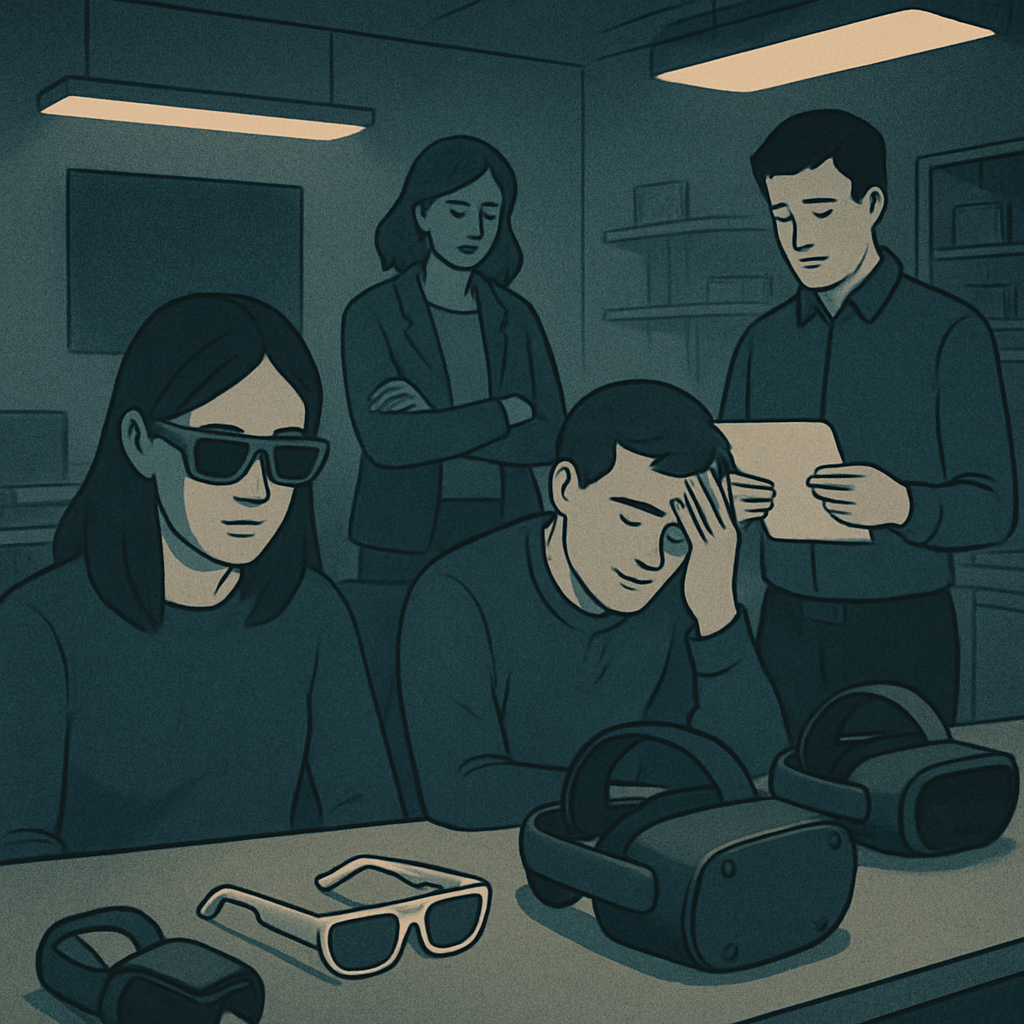
Apple has reportedly laid off upward of 60 people from its Vision team—a move reflecting internal changes in strategy and a realignment of its priorities. The affected employees were part of the Vision Products Group (VPG) or in related roles focused on VR development. Apple hasn’t officially confirmed the job cuts. ([9to5mac.com](https://9to5mac.com/2026/08/20/apple-reportedly-lays-off-60-vision-employees-amid-shifting-priorities/))
Disbanding of Vision Products Group
More than a year ago, Apple broke apart its Vision Products Group, which had combined both hardware and software work for devices like the Vision Pro. Management for the disbanded group was reallocated across Apple’s larger engineering teams. Meanwhile, former VPG lead Mike Rockwell was tasked with overhauling other priorities, most notably the Siri voice assistant. ([9to5mac.com](https://9to5mac.com/2026/08/20/apple-reportedly-lays-off-60-vision-employees-amid-shifting-priorities/))
Despite the reorganization, Apple has emphasized its dedication to spatial computing and visionOS. Senior executives—including Steve Sinclair, the Vision Pro product marketing leader—have repeatedly described the current era as “early innings,” pointing to ongoing work on software like visionOS 27, enterprise, and medical use cases. ([9to5mac.com](https://9to5mac.com/2026/08/20/apple-reportedly-lays-off-60-vision-employees-amid-shifting-priorities/))
Shifting to AI Wearables & New Hardware
Recent reporting suggests Apple is pulling back on developing new closed VR headsets in favor of AI-powered smart glasses. These glasses are said to rely primarily on cameras, Siri, and visual intelligence instead of traditional augmented reality displays. Originally expected to debut at WWDC 2027, the introduction has seen some delays. Privacy concerns—especially amid scrutiny over AI wearables—are thought to be a major factor in pushing back its timeline. ([9to5mac.com](https://9to5mac.com/2026/08/20/apple-reportedly-lays-off-60-vision-employees-amid-shifting-priorities/))
The company’s most notable hardware investment in this space hit earlier this year when the Vision Pro was updated with a new M5 chip, boosting rendering performance by around 10 percent and increasing refresh rates to 120Hz, while maintaining its $3,499 price. In June, that price was bumped to $3,699 amid what has been described as a broader memory-related cost increase across several Apple product lines. ([9to5mac.com](https://9to5mac.com/2026/08/20/apple-reportedly-lays-off-60-vision-employees-amid-shifting-priorities/))
These moves reflect Apple’s understanding that spatial computing remains central to its long-term vision, even as the ways of building and delivering that vision are changing. Efforts continue to focus on enterprise and medical applications, signaling a more select, use-case-driven strategy than expansive consumer-facing VR hardware. ([9to5mac.com](https://9to5mac.com/2026/08/20/apple-reportedly-lays-off-60-vision-employees-amid-shifting-priorities/))
Apple’s shift away from a head-mounted display focus toward AI-led wearable innovation underscores ongoing tensions between pushing forward emerging technologies and managing public and regulatory scrutiny, especially regarding privacy. The layoffs, product delays, and prioritization of software and select hardware lines suggest Apple is rethinking risk and reward. As it moves into 2027, what to watch will be whether those smart glasses launch on time, whether visionOS additions land as promised, and whether Apple can strike the balance between bold hardware and responsible innovation.